How Art Can Deliver Justice for Refugees
In the legal system, art created by refugees and incarcerated people can serve both as a form of therapy and as evidence of mass atrocities.
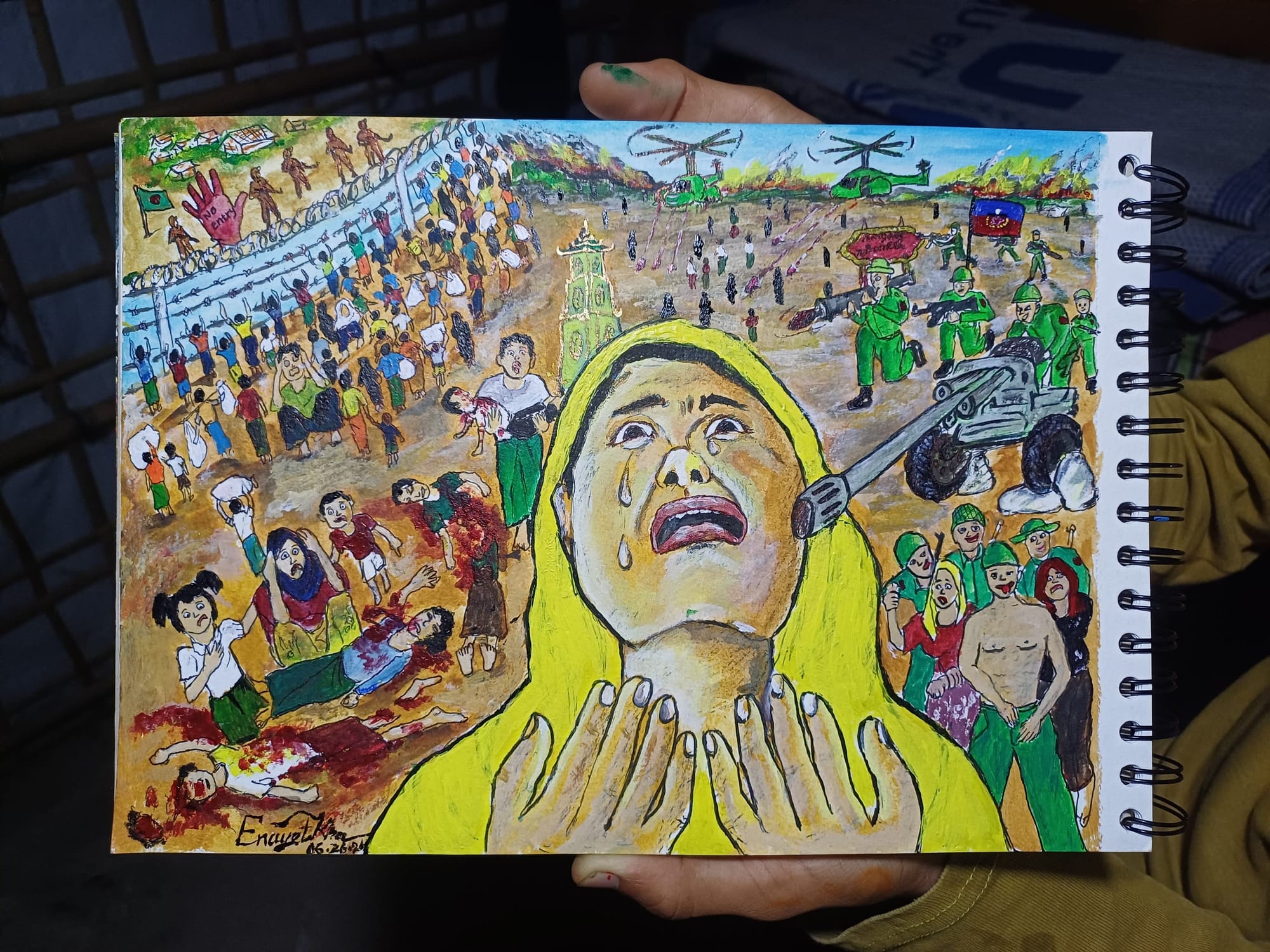
In 2017, Enayet Khan fled Myanmar, journeying through forests with his family as fires closed in. His home had already been destroyed, but they had no time to mourn. Armed soldiers moved swiftly, and Khan witnessed people being shot. The goal was to survive and escape to Bangladesh. They lost everything: home, documentation, property, and security.
Settling in Cox's Bazar, Khan found solace in art, using painting and drawing to process the atrocities he had witnessed. He established the Rohingya Art Club (RAC), encouraging visual storytelling as a form of resistance. Khan is among many refugees who turn to art to record experiences of conflict and violence. Art can also play a role in accountability efforts, conveying testimony, corroborating survivor accounts, and even entering legal proceedings as evidence of mass atrocities.
Around 117.8 million people worldwide are forcibly displaced, a number that has risen for 12 consecutive years. Investigations and prosecutions of genocide, crimes against humanity, and war crimes have increased significantly in the European Union. Today, displaced people are increasingly seeking international courts for accountability.
The International Criminal Court has noted the unprecedented demand for their services. For some legal advocates, art has become a vital tool in meeting this demand. Khan's paintings depicting scenes from the Rohingya genocide, including burning homes and summary executions, served as evidence in a case against the Myanmar military for genocide.
High illiteracy rates among Rohingya people, especially women and children, make traditional statements challenging to record. In such contexts, drawings have become an essential way to convey testimonies.
Written by urgent.news from Hyperallergic's reporting — not their text. Machine-written — may contain errors; check the original before relying on it.