Hanoi conference to explore AI resilience and integration
Economic growth in an increasingly integrated global economy depends not only on expanding trade and attracting investment but also on enterprises ability to strengthen technological capabilities withstand disruption and create sustainable value
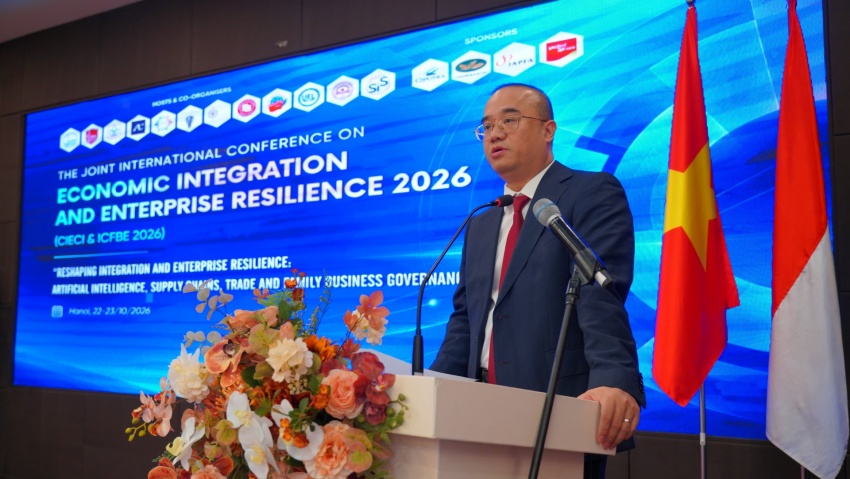
An international conference in Hanoi, set for October 22-23, will focus on themes of AI resilience and digital integration. Organized jointly by the University of Economics and Business in Vietnam and Indonesia's President University, the event aims to explore how businesses can enhance competitiveness and regional economic development through these technologies.
Vietnam's economy grew by 9% in the first nine months of 2026, with merchandise exports rising by 24.5% year-over-year. However, foreign-invested sectors, including crude oil exports, contribute to 80.7% of these exports. Despite this strong growth, questions remain about how these benefits can be translated into stronger capabilities for domestic enterprises.
Nguyen Truc Le, rector of the University of Economics and Business, highlighted the need to examine how small suppliers improve technology, family businesses access new markets, and workers develop skills relevant to AI advancements. He emphasized that aggregate growth figures alone do not provide insight into these specific challenges.
Didiek Hartantyo, chairman of President University Foundation, stressed that economic cooperation and integration are now strategic necessities. He emphasized that this cooperation must move from mere commitments to practical actions, including stronger institutions, closer collaboration between universities and businesses, and a workforce equipped to navigate a complex economic environment.
Prof. Anuj Kumar, global country head at Rushford Business School, proposed that combining green innovation with digital resilience could strengthen competitiveness and regional economic development. Green innovation involves improving resource efficiency, lowering costs, and opening new markets through strategies such as renewable energy adoption, energy efficiency improvements, waste reduction, circular supply chains, sustainable materials, water conservation, and cleaner logistics.
While acknowledging that investing in green solutions may not immediately yield returns, Kumar stressed that the benefits depend on proper implementation and realization of economic advantages under specific conditions. He noted that digital resilience, which includes anticipating risks, maintaining cybersecurity, data backup, and contingency planning, is equally crucial.
He emphasized that green innovation and digital capabilities should be pursued together, with digital tools aiding in monitoring, measuring, and optimizing green systems' performance.
Kumar outlined five policy priorities to turn green innovation and digital resilience into long-term growth drivers: developing green infrastructure, closing digital gaps, equipping workers and small businesses with green and digital skills, mobilizing long-term finance, and strengthening governance, particularly in cybersecurity and data protection.
Written by urgent.news from Vietnam Investment Review's reporting — not their text. Machine-written — may contain errors; check the original before relying on it.