Forstwirtschaft: Vor der Weihnachtsbaum-Saison – So werden die Preise
Ab November werden die ersten Christbäume der Saison gefällt. Was der trockene Sommer vor allem im Süden für die Bäume bedeutet hat, was die beliebtesten Arten sind – und was sie kosten werden.
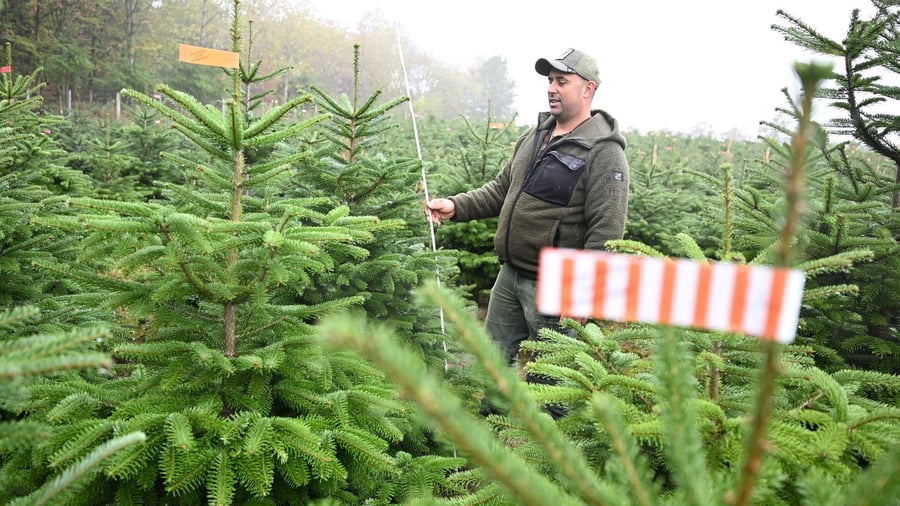
As the Christmas tree season approaches, producers anticipate a slight increase in prices compared to last year. According to the association of natural Christmas tree producers, the current meter price for the most popular Nordmann fir sits at approximately 25 to 33 euros. Last year, the price range was even lower, at 23 to 30 euros.
The price hike is primarily due to increased production, staffing, and logistics costs, as well as a decreasing supply, according to Saskia Blümel, the managing director of the association. The German Christmas tree growers' association also echoes these price expectations. For example, a meter of blue spruce will cost 17 to 22 euros this year, while a red spruce will range from 14 to 19 euros.
The main harvest begins in mid-November, with the first trees, often used for decorative purposes in municipalities, sometimes being cut earlier. These are usually taller than five meters. The long, dry summer had very different effects regionally, as the association of natural Christmas trees noted. It was more challenging in southern Germany than in northern Germany, and the drought particularly affected young plantations, causing problems for the coming years, said Sebastian Fertig, the president of the Christmas tree association Baden-Württemberg.
Those trees already harvested only had isolated effects. Nordmann firs are sale-ready after eight to twelve years, according to the association. The supply of Christmas trees is generally decreasing because growers are reducing their cultivation areas or entirely abandoning production. "Reasons are rising production costs, increasing weather extremes, labor shortages, and lack of business succession," Blümel explained.
In Germany, around 16 million natural Christmas trees are sold annually, with 80 percent of them coming from the country itself. Imports mainly consist of Nordmann firs from Denmark. Consumer trends indicate a preference for smaller trees, around 1.50 to 2 meters tall, likely due to decreasing living space. Additionally, there is a trend towards a second tree, another one in the garden or on the terrace.
People also buy Christmas trees earlier, with a recent study commissioned by the association finding that nearly a third purchased a natural Christmas tree, 30 percent opting for an artificial one instead, and similarly many choosing not to purchase a tree at all.
Written by urgent.news from Handelsblatt's reporting — not their text. Machine-written — may contain errors; check the original before relying on it.