China’s panda diplomacy is losing its charm
Political analysts and lawmakers increasingly view panda loans as more of a charming distraction than a meaningful barometer of bilateral relations.
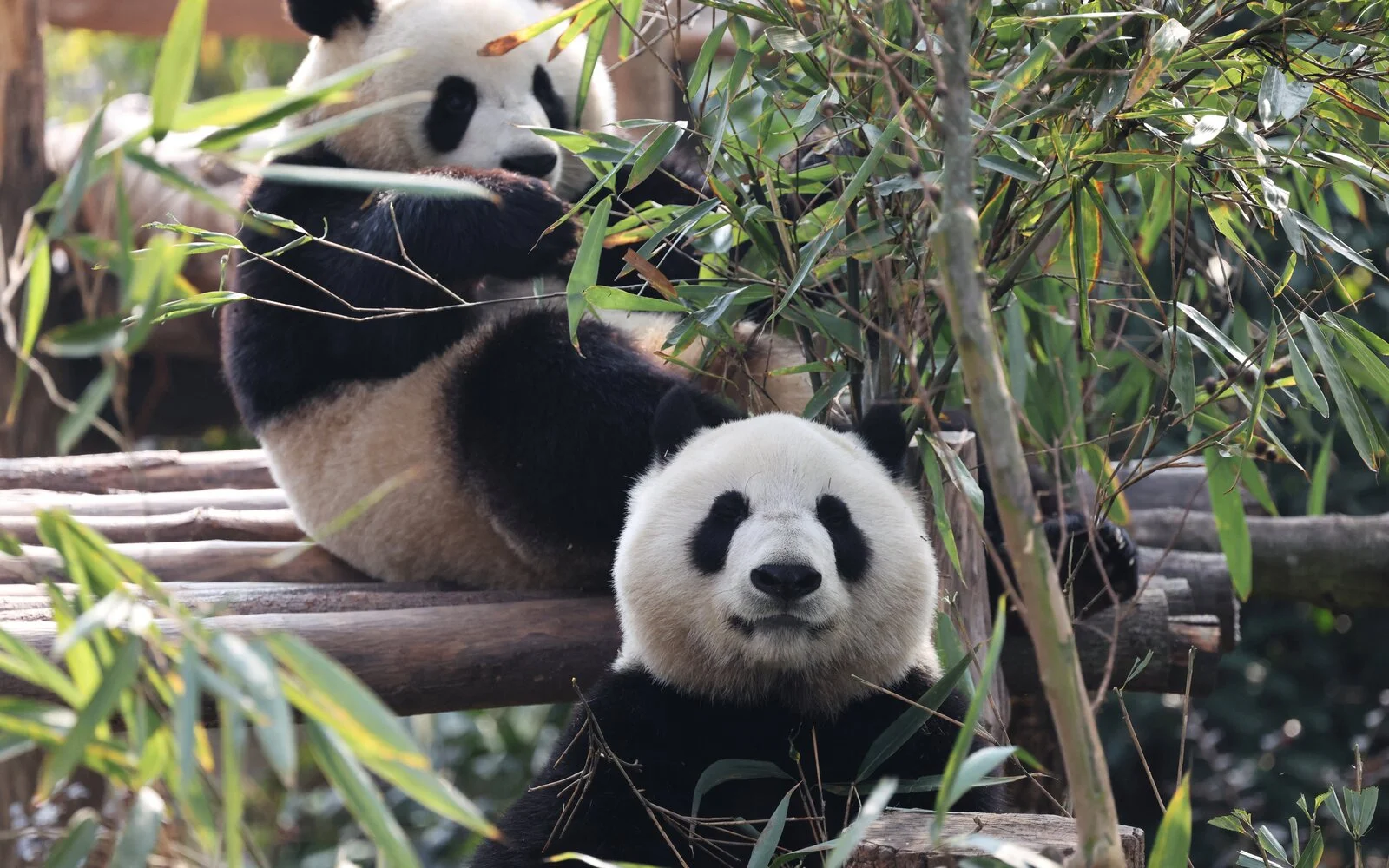
China's use of giant pandas for diplomatic purposes, known as "panda diplomacy," appears to be losing its allure. During President Xi Jinping's recent visit to Washington, China loaned a breeding pair of pandas, named Ping Ping and Fu Shuang, to the Zoo Atlanta. This move is part of a long-standing practice where China utilizes the iconic bear as an instrument of soft power, aiming to portray China not as a threatening force, but as an affectionate and captivating nation.
However, the essence of this diplomatic strategy might be rooted in manipulation and exploitation. China, despite labeling the panda as its mascot, calls the animal's natural habitat, Wolong, located on the Tibetan Plateau, which falls under Sichuan provincial jurisdiction. This region has a unique microclimate due to its varied elevations, fostering the bamboo forests where pandas reside.
Historically a part of the Tibetan region of Kham, Wolong has been under Sichuan's control since China's annexation of Tibet in the 1950s. China has systematically attempted to erase Tibetan culture and identity, incorporating the Plateau's distinct geography, wildlife, and resources into mainstream Chinese national identity.
This appropriation extends to cherry trees, which China claims originated in Tibet, rather than Japan or Korea. The Tibetan Plateau is also home to the endangered red panda. There are fewer than 2,000 giant pandas left in the wild, and China asserts control over almost all of them. This brings us to the second questionable aspect of China's panda diplomacy: it relies on a profitable "rent-a-panda-pair" program.
While China profits from the soft-power benefits of keeping pandas in foreign zoos, it also charges significant fees to those zoos. These include up to US$1.1 million per year for the right to display and breed a pair of pandas, approximately US$600,000 for each born cub, and additional sponsorship and research commitments, sometimes up to US$2 million. From 1994 to 2023, China earned nearly US$300 million from this program.
The contracts China signs with zoos are highly one-sided, allowing China to unilaterally recall pandas for various reasons, even if they pertain to seemingly innocuous matters like public information disclosure. China also uses panda loans to send political messages, as seen when the three remaining pandas at the Smithsonian’s National Zoo were returned in 2023 following President Obama's announcement about meeting with the Dalai Lama.
This practice is not limited to the US; in 2023, Japan returned its last two giant pandas to China, marking the first time since normalizing relations in 1972 that Japan had no pandas.
Yet, China's panda diplomacy seems to be losing its effectiveness. While the public might still find pandas appealing, visits to panda-hosting zoos tend to plateau after novelty wears off. Conservationists criticize the commercial and diplomatic use of a vulnerable species, and political analysts and lawmakers view panda loans as more of a distraction than a meaningful measure of bilateral relations.
This explains why Xi's recent "gift" of pandas to Zoo Atlanta garnered little US media attention. With active international panda-leasing programs dropping from 21 countries in 2019 to just 16 today, even Chinese state media are questioning whether panda diplomacy has "lost its sparkle."
Written by urgent.news from Free Malaysia Today's reporting — not their text. Machine-written — may contain errors; check the original before relying on it.
Also reported by 1 other outlet
- China’s panda diplomacy is losing its charm freemalaysiatoday.com