Breathing new life into organized labor
Fulfilling the ILO’s promise of defending workers’ rights will require more than another declaration or incremental institutional reform: There must be a concerted global effort to create an enabling environment for all workers and their organizations to operate across borders as easily as capital does.
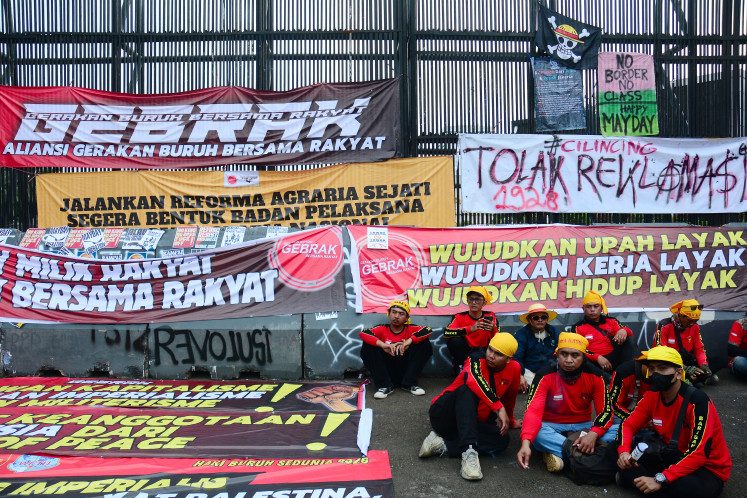
Organized labor faces a daunting challenge in the modern era, as the International Labour Organization (ILO) strives to ensure workers' rights are upheld globally. The ILO was founded at a time when inequality was rife, similar to today's disparities. The ILO Constitution of 1919 posited that collective bargaining could prevent class conflict from escalating into revolution by transforming disputes into mutually beneficial outcomes.
This framework was predicated on the existence of an international standard for labor rights to prevent wage and working condition degradation as countries vie for trade and investment.
Initially, this arrangement proved effective for three decades after World War II, benefiting workers primarily in formal employment within the Global North. However, this paradigm is no longer applicable. The UN Sustainable Development Goals Report 2026 highlights that the weakening of labor rights worldwide is leaving many unable to organize or collectively bargain.
The International Trade Union Confederation's Global Rights Index shows that 80 percent of 121 surveyed countries restricted collective bargaining in 2026, while 87 percent limited the right to strike. The OECD reports a decline in union density across its member economies for decades.
The unraveling of the 1919 compromise was no coincidence. The relationship between firms and workers, along with their corresponding obligations, was intentionally dismantled through vertical disintegration across global supply chains, subcontracting, and labor intermediation. The most recent manifestation of this trend is digital platform work, which exploits widespread employment misclassification, denying millions of workers their legal rights.
Despite global value chains being a longstanding reality for manufacturing and services, insufficient progress has been made in negotiating global rules to safeguard workers' rights and hold major firms accountable.
To foster a conducive environment for labor organizations to operate seamlessly across borders, as capital does, concerted global efforts are required. The ILO's mission must extend beyond mere declarations or incremental institutional reforms. Share your experiences, suggestions, and any challenges faced in this evolving landscape on The Jakarta Post. Your input is invaluable.
Written by urgent.news from The Jakarta Post's reporting — not their text. Machine-written — may contain errors; check the original before relying on it.