Autonomy and control are not opposites, they go together: EY GDS at DevSparks Chennai
Strapline: At DevSparks Chennai 2026, Arvind Purushothaman of EY GDS made the case that moving agents into production is an engineering problem, not a model problem. Gayatri Guha Ask a room of developers about agents today and you will get plenty of answers. Almost everyone has built one, and m
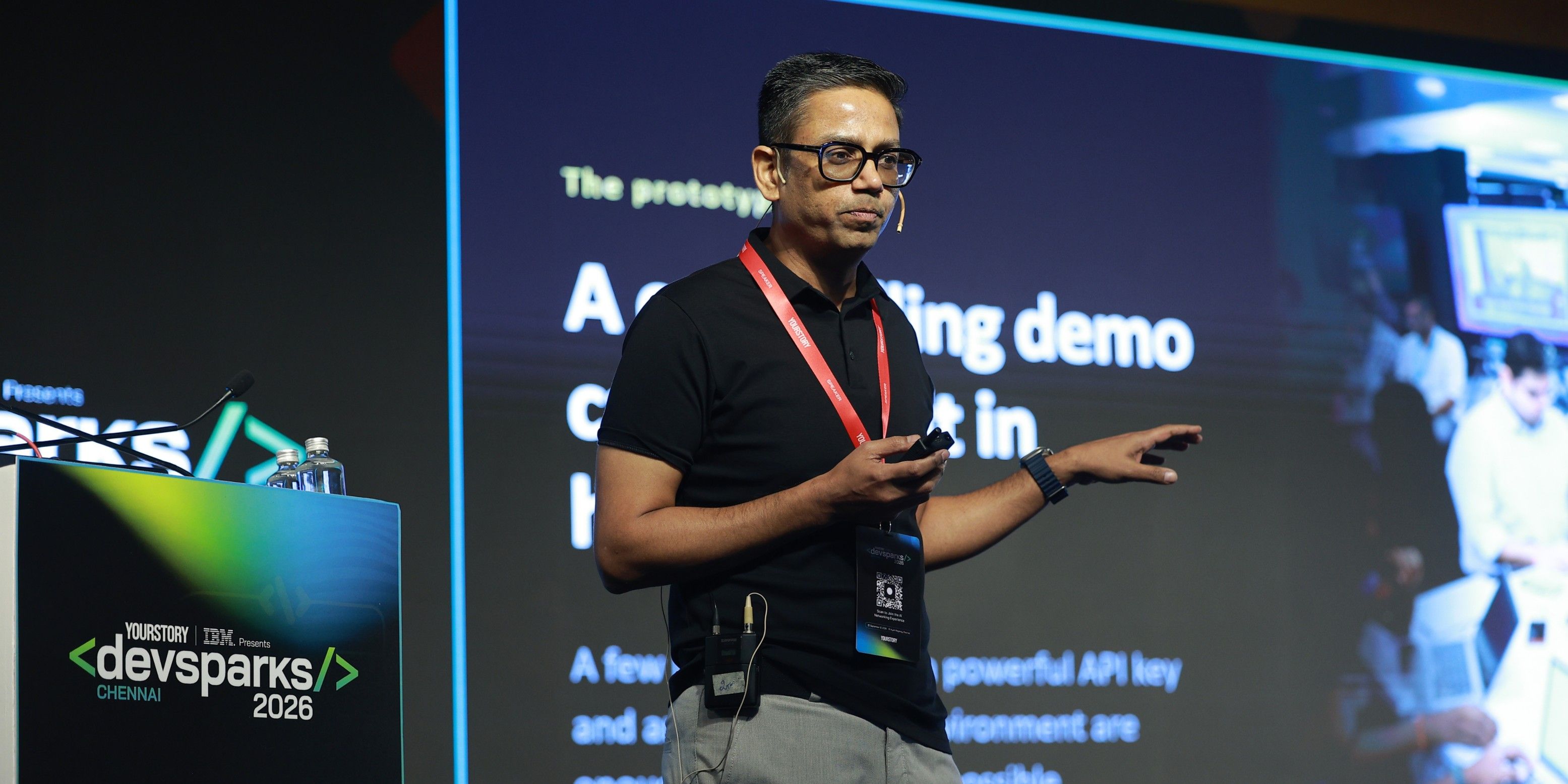
EY GDS' Arvind Purushothaman emphasized at DevSparks Chennai 2026 that autonomy and control are complementary, not opposing, in the development of AI agents. He noted that while building agents has become easier with cloud, low code tools, and open model APIs, industrializing and scaling them remains challenging. Purushothaman compared initial AI agent development to cricket practice, but real-world deployment demands a different level of rigor and reliability to avoid risks such as financial loss or security breaches.
He argued that the transition from traditional deterministic rules to autonomous agents that interpret context, reason about goals, and choose tools to achieve outcomes requires more engineering effort. To ensure safe operation, he introduced the concept of an "agent passport," which includes identity, business and technical ownership, defined permissions, and escalation points, similar to how travel documents verify a traveler's identity and rights.
Purushothaman outlined three maturity levels for AI agents: task-based, goal-oriented, and human-agent teams. Each level requires different ontologies, controls, and platforms to automate, assemble data, and involve human judgment. Ontologies provide business knowledge, controls evaluate outcomes for quality, bias, and risk, and the platform ensures scalability and repeatability.
He stressed that the weakest link in the production system, whether it's data context, cloud and compute, integration APIs, security, responsible AI, or FinOps, determines the system's overall strength.
Purushothaman suggested measuring the success of agents by cost per governed business outcome, including cloud and agent running costs, human effort, and risk profile. He emphasized that the evaluation should align with the complexity of the task. Regarding future challenges, he acknowledged that while attacks on agents will evolve, the fundamental principles of trust, accountability, and repeatability will remain crucial.
Written by urgent.news from YourStory's reporting — not their text. Machine-written — may contain errors; check the original before relying on it.