5 Lessons to learn from Nexus by Yuval Noah Harari
Discover five key lessons from Yuval Noah Harari’s Nexus on information, power, artificial intelligence and how networks shape society.
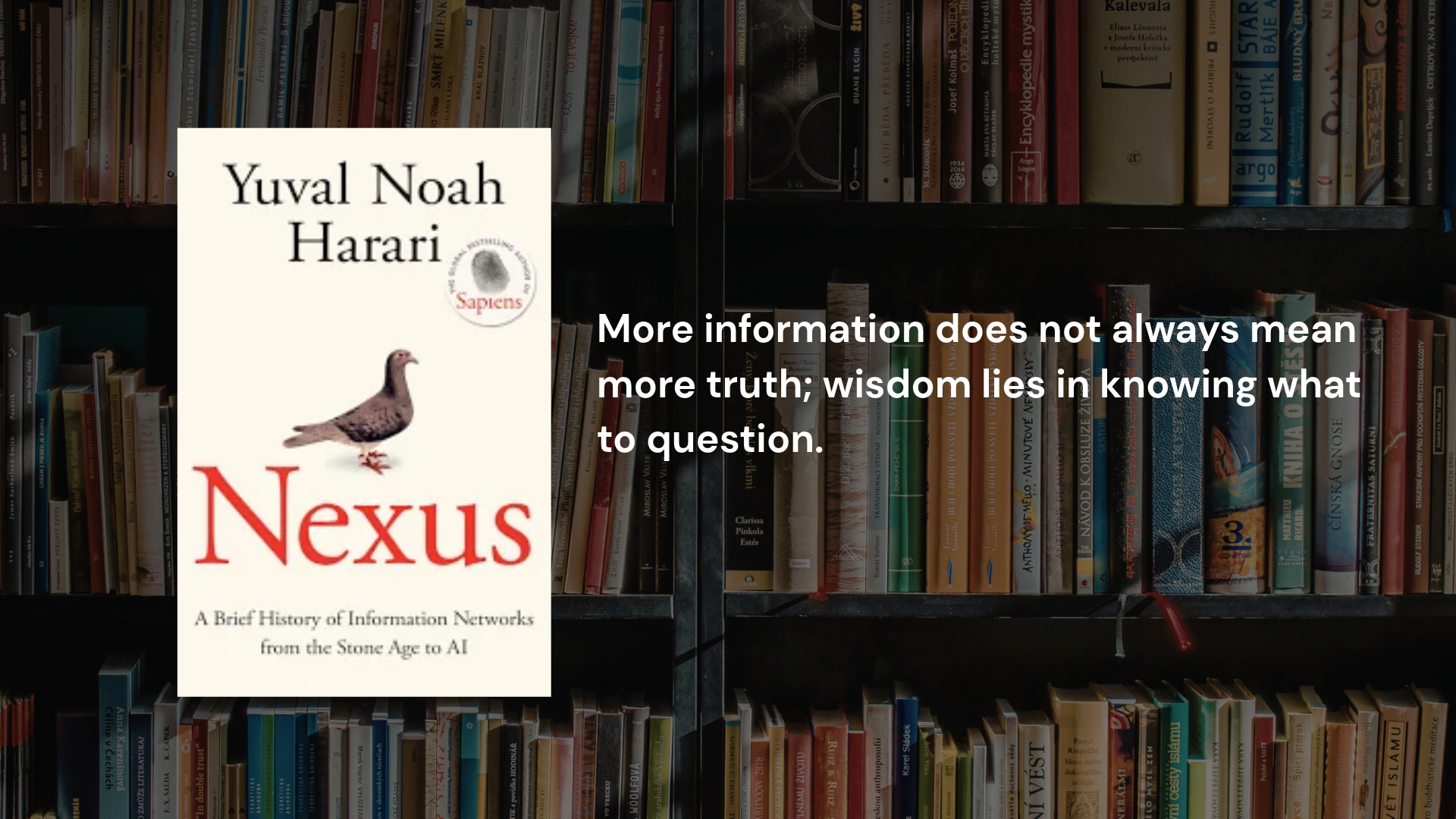
1. Information availability does not guarantee truth
Yuval Noah Harari's Nexus highlights that simply having more information does not make people wiser or better informed. While history shows information networks have been crucial in organizing societies and preserving knowledge, they have also spread myths and misinformation. Today, social media offers instant access to vast amounts of information but also exposes users to misleading headlines, unverified claims, and emotionally charged content.
To navigate this, it is essential to critically evaluate the sources of information, seek supporting evidence, and consider alternative perspectives. Remember, being informed is about discerning reliable information from misleading narratives.
2. Shared stories shape societies
Human societies rely on shared stories to unite communities, establish institutions, and coordinate actions. These narratives can include national identities, cultural traditions, political ideologies, and ideas about societal functioning. In Nexus, Harari discusses how information networks facilitate the spread of these shared stories across generations and large populations.
While such stories can bring people together, they can also reinforce divisions when people accept different interpretations of reality. For example, the same event can be perceived differently by various communities based on their beliefs, experiences, and information sources. Understanding this dynamic is key to resolving disagreements, as presenting more facts may not always suffice.
Sometimes, people are defending broader narratives about their identity, values, or place in the world. Questioning the narratives that influence your thinking is essential for forming independent opinions.
Written by urgent.news from YourStory's reporting — not their text. Machine-written — may contain errors; check the original before relying on it.