The case for low-carbon bamboo fuel starts at $2.75 a gallon.
The fastest-growing plant on Earth can be turned into biocrude with almost no waste. A new study finds it emits 26 times less carbon than petroleum diesel.
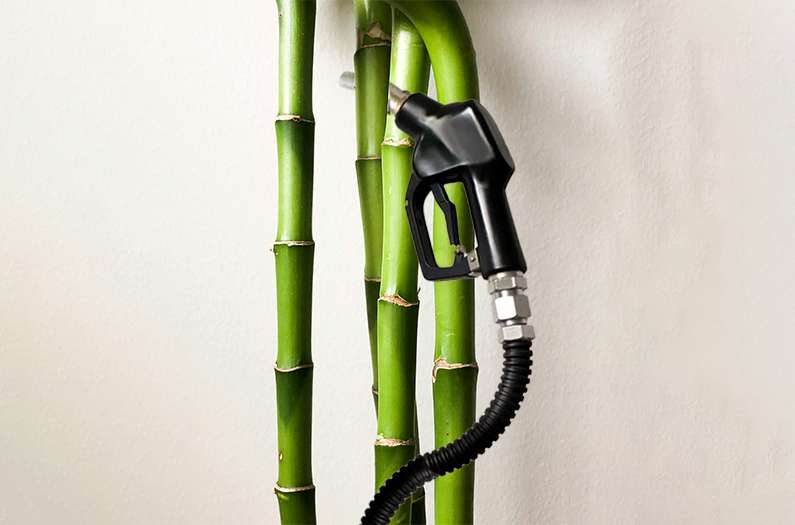
As fuel costs skyrocket, alternative non-petroleum sources are gaining traction. Worcester Polytechnic Institute researchers believe bamboo may serve as a promising low-carbon, low-cost fuel alternative. At mature commercial scale, bamboo could generate fuel at a mere $2.75 per gallon equivalent, emitting greenhouse gases 26 times less than conventional diesel.
Moreover, bamboo proves to be a more sustainable biofuel feedstock compared to traditional options like corn and sugarcane. As a grass, bamboo is one of the fastest-growing plants on Earth, with some species expanding by several inches daily. This rapid growth enables the US to produce substantial fuel from bamboo while using approximately 13% less land than corn ethanol production.
The WPI study, published in the journal Sustainable Energy & Fuels, evaluated bamboo through hydrothermal liquefaction. This process subjects wet biomass or organic waste to high heat and pressure, breaking down polymer chains into a biocrude oil that can then be transformed into liquid fuel products. By heating wet bamboo pulp to 300°C for 10 minutes, researchers converted about 36% of its mass into biocrude.
Unlike conventional biofuel feedstocks, bamboo does not compete for agricultural land, requires minimal water and energy to grow, and has a very low ash content (less than 1% by weight), resulting in minimal waste generation during the fuel production process.
Chemical engineering professor Michael Timko emphasized the importance of this research, stating that it is particularly relevant given the current high fuel prices and the transportation sector's significant greenhouse gas emissions in the U.S. Bamboo's use of distinct land from food production eliminates any potential food versus fuel trade-off, benefiting both farmers and consumers. Prof. Timko concluded that bamboo might ultimately provide industry with a means to generate low-carbon liquid fuels on a large scale.
Written by urgent.news from Anthropocene Magazine's reporting — not their text. Machine-written — may contain errors; check the original before relying on it.