Should children be involved in political campaigning?
Justice D. Bharatha Chakravarthy of the Madras High Court recently said that it was for Parliament to consider whether involving children in campaigning should be made a ground for setting aside the election of candidates
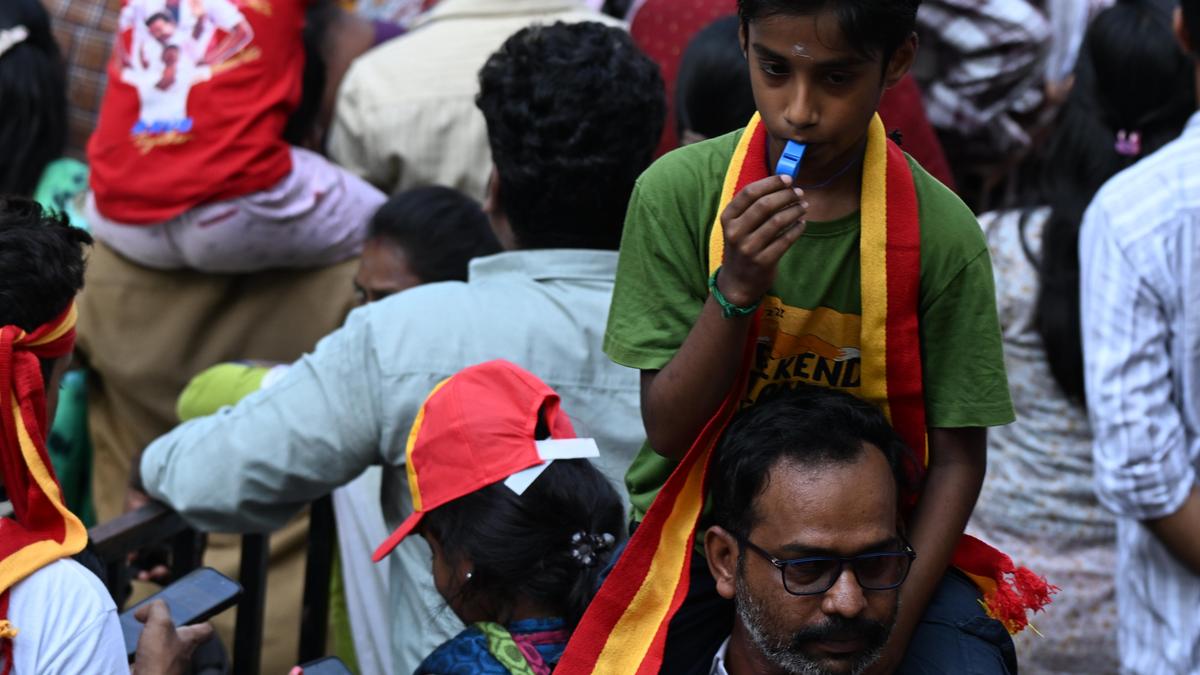
Tamil Nadu recently held an election where the newly formed Tamilaga Vettri Kazhagam (TVK) party secured victory, driven by its appeal to young voters, particularly those of actor Joseph C. Vijay, the current Chief Minister of Tamil Nadu. During the election campaign, many older voters confided that their children and grandchildren had urged them to vote for Mr. Vijay.
A candidate from the Dravidar Munnetra Kazhagam (DMK) filed a petition in court, alleging that Mr. Vijay's appeals to the youth to persuade their parents to vote for the TVK were inappropriate. The High Court dismissed the complaint but expressed strong disapproval of the practice. Justice D. Bharatha Chakravarthy remarked that involving young children in elections was improper, citing poor parenting and questionable political tactics.
The court also suggested that it was up to Parliament to decide whether such practices should invalidate a candidate's election. Should children be involved in political campaigning? Andrew Sesuraj and Anil Pillai explore this question in a discussion moderated by M. Kalyanaraman. Sesuraj argued that children possess the right to engage in politics, as affirmed by the UN Convention on the Rights of the Child.
However, he cautioned that the issue arises when children are used as tools for adult persuasion. He pointed to instances where children pressured their parents to vote for Mr. Vijay, often based on emotional attachment to the actor rather than informed judgment. Pillai likened this strategy to consumer marketing, where companies use children's enthusiasm to influence adult purchasing decisions.
This crossover into electoral marketing, he said, undermines genuine political agency in favor of emotional manipulation. Should children be involved in political campaigning at all? Sesuraj suggested a clear distinction between empowering children to voice their political opinions and coercing them into voicing predetermined adult agendas.
The UNICEF's guidelines differentiate between genuine participation and manipulative tactics, emphasizing that while children have a right to express their political views, their voices should not be exploited for political gain. Sesuraj found this method of election marketing highly manipulative and disturbing, particularly when children were prompted to vote based on their love for an actor rather than the merits of the candidate.
He contended that adults, like children, possess agency and are capable of making informed choices, but children lack this capability. The legal framework also supports this view, as Section 123 of the Representation of the People Act addresses undue influence, recognizing that compelling a child to vote against their will is unjust.
Sesuraj emphasized that democracy thrives on informed decisions, not emotional coercion. Therefore, he argued that involving children in such tactics not only violates their rights but also undermines the integrity of the electoral process.
Written by urgent.news from The Hindu's reporting — not their text. Machine-written — may contain errors; check the original before relying on it.