Plants Have an Electrical Language. This Startup Built an AI to Decipher It
Electric Plant, a startup that uses artificial intelligence (AI) to interpret plants’ electrical signals, has raised US$11.2 million in seed funding to develop technology that helps growers understand what their crops need. The company announced its launch on Oct. 20, backed by Onto Ventures, Climactic and other investors. Its AI model, Bombadil, draws on three […]
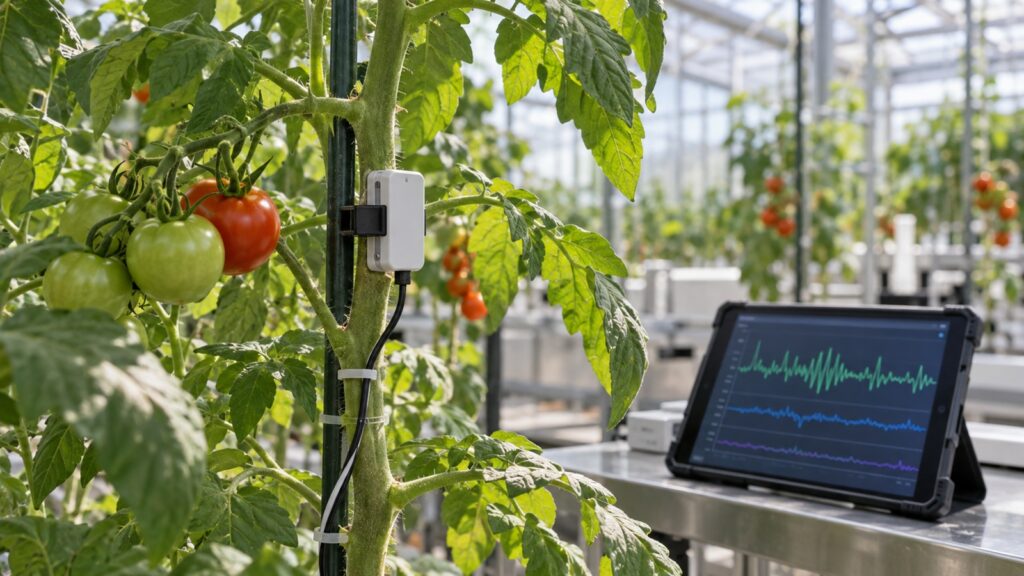
Electric Plant, a startup leveraging artificial intelligence (AI) to interpret plants' electrical signals, has secured US$11.2 million in seed funding to develop crop monitoring technology. The company unveiled its AI model, Bombadil, on October 20, with backing from Onto Ventures and Climactic. Bombadil seeks to assist growers in recognizing crop stress and making informed decisions regarding irrigation and fertilization.
Co-founder and CEO Justin Mast conceived the idea after observing a plant connected to a motorized stand that moved towards light in response to electrical signals. Mast subsequently partnered with neuroscientist Lee von Kraus to transform this curiosity into a business venture.
Plants generate minor voltage fluctuations while photosynthesizing, transporting water, and reacting to stress. Although researchers have investigated these signals for years, Electric Plant asserts that Bombadil can analyze them at a scale that could prove beneficial to growers. The company's assertions regarding enhanced crop yields and water conservation necessitate independent verification, as existing research indicates that accuracy can differ significantly across species and environmental conditions.
Bombadil comprises two components: an affordable sensor and an AI model that interprets the data. The sensor, roughly the size of a folded iPhone, is affixed to a plant using stainless steel screws that reach the cambium layer, enabling it to measure changes in microvolts (millionths of a volt). The sensor then transmits its readings via a low-power wireless network to a base station. Bombadil subsequently processes the data in the cloud and provides growers with guidance to modify watering or fertilization practices.
Mast states that a few sensors per acre are sufficient, and each sensor costs tens of dollars, while traditional tools frequently exceed thousands and may not accurately reflect plants' real-time needs. Bombadil was trained on recordings from over 100 plant species, spanning from ferns and redwoods to tomatoes and dahlias. Mast describes it as the most diverse model ever constructed for biological electrical signals.
The company's press release claims that the model learned without labels, meaning humans did not instruct it on what each signal signified, and can estimate seven stress markers, including a widely utilized measure of water stress known as the Crop Water Stress Index. Mast contends that such a system could boost yields while reducing water usage by 20% or more, but these claims originate from the company and require independent validation.
Written by urgent.news from Colombia One's reporting — not their text. Machine-written — may contain errors; check the original before relying on it.