Inside the institution where Ukraine races to counter Russia's evolving drones
In a government office, researchers of drones and electronic warfare gather around a small metal device recovered from a Russian Geran drone. Its purpose — to measure the Earth’s magnetic field for navigation. "This is the most recent component we found, about a week or two ago," said one of the researchers. Outside, a Russian drone’s jet engine roared — a sound that has become almost constant in…
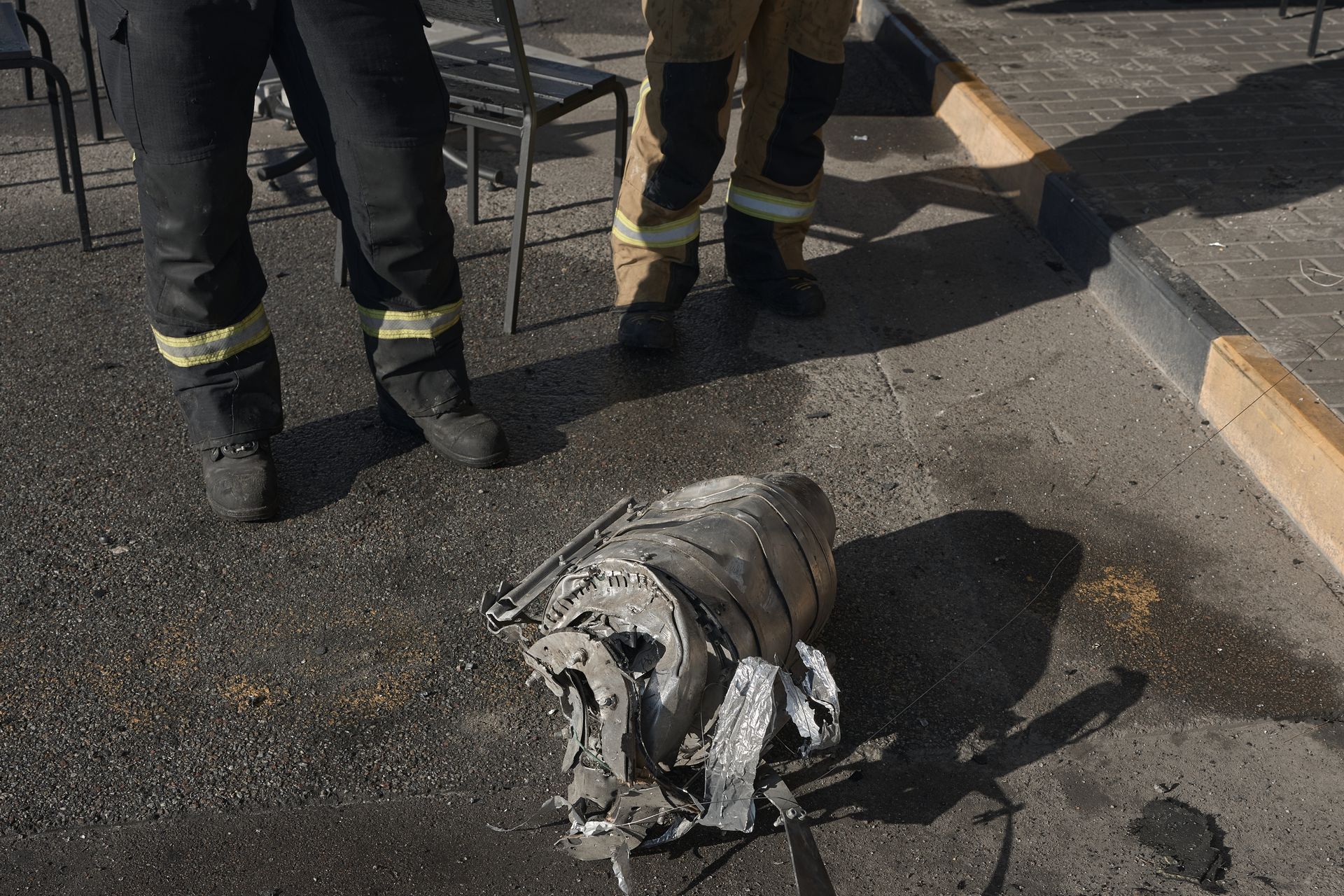
In a government office in Kyiv, a team of researchers from an institution under Ukraine’s Defense Ministry is working tirelessly to counter Russia's evolving drone technology. Inside, they meticulously study components recovered from Russian drones, including a magnetometer sensor that could enhance the threat posed by Russian drones.
This sensor, which measures the Earth's magnetic field for navigation, may allow drones to maintain course even when satellite navigation is jammed, intensifying the risk of sustained Russian attacks. The researchers estimate that developing effective countermeasures typically takes four to six months, while Russia can introduce further modifications after just two or three months.
Despite their efforts, understanding the complex components remains challenging, as does determining whether Russia intends to deploy them at scale. The researchers work in fluorescent-lit hallways filled with various drone parts, from missile noses taller than a grown man to portions of Russian Oreshnik missiles. They trace the evolution of Russian drone technology by meticulously dismantling recovered drones, identifying features, dismantling them to understand internal systems, and reconstructing how each part functions.
This process reveals how Russia adapts its drones in response to Ukrainian defenses, constantly introducing new technologies to overcome previous vulnerabilities.
Written by urgent.news from Kyiv Independent's reporting — not their text. Machine-written — may contain errors; check the original before relying on it.