Impunity for military ends, may justice for all begin
By dismantling the shield of military courts for ordinary crimes, the Constitutional Court's landmark ruling reclaims civilian supremacy and demands an end to institutional impunity in Indonesia.
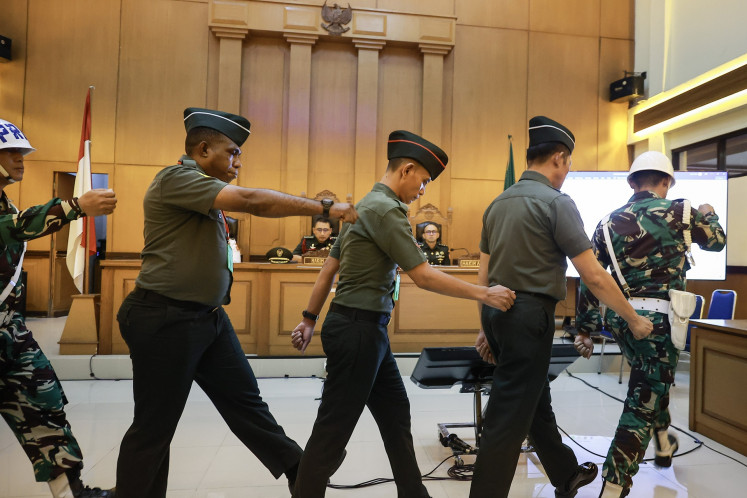
The Constitutional Court of Indonesia has ruled that military courts no longer have jurisdiction over ordinary crimes, dismantling the barrier that enabled institutional impunity. This landmark decision, Decision No. 260/2025, established a new paradigm where justice is centered around victims, not institutional status. The ruling mandates a comprehensive revision of the Military Courts Law within two years, a deadline that must not be seen as a grace period for delay, but as a crucial opportunity for a systemic overhaul across the entire justice sector.
The move was driven by the experiences of two civilian women, Lenny Damanik and Eva Meliani Pasaribu, who sought justice for killings committed by military personnel. Lenny lost her 15-year-old son to severe beatings by military personnel, while Eva lost her entire family due to a fire allegedly set by a soldier in retaliation for her father's investigative reporting on illegal gambling.
The petitioners challenged provisions in the Military Courts Law that created legal disparities, particularly Article 9, which assigned jurisdiction to military courts based solely on the offender's status as a service member, rather than the nature of the crime. This subjective approach fostered legal uncertainty and conflicts of interest.
The Court emphasized that any hesitation to implement these reforms is a violation of the Constitution and an evasion of equality before the law under Article 27(1) of the 1945 Constitution.
Written by urgent.news from The Jakarta Post's reporting — not their text. Machine-written — may contain errors; check the original before relying on it.