'GPS is the first operational link an adversary severs': US Navy tests software that lets drones land on moving ships using onboard cameras alone
The US Navy has tested software enabling autonomous drones to land on moving ships using onboard cameras and motion sensors without GPS.
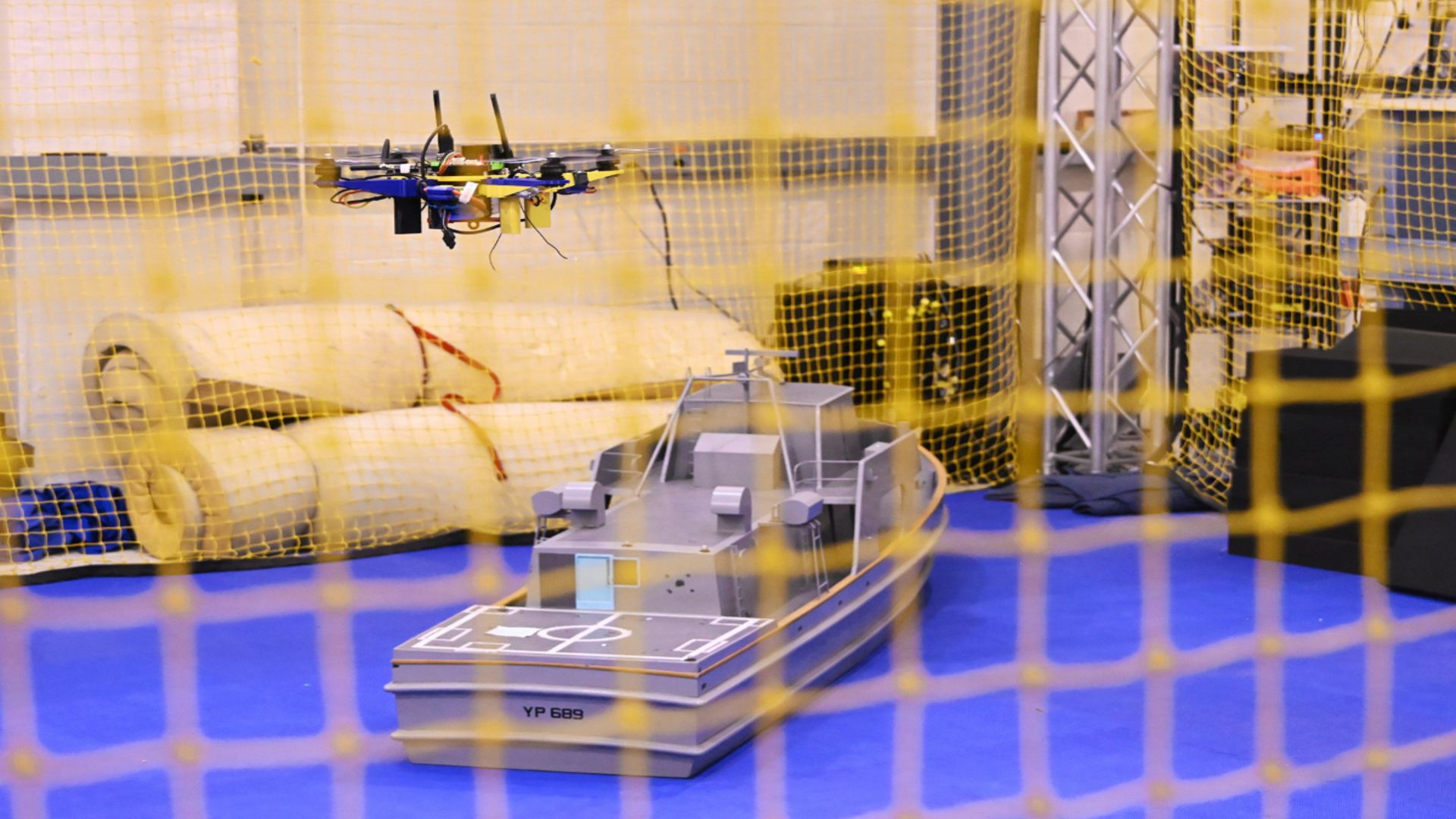
The US Navy has successfully tested autonomous drones capable of landing on moving ships without the need for GPS, according to a recent demonstration. The aircraft utilized onboard cameras, motion sensors, and advanced algorithms to navigate toward a vessel experiencing deck movement. The software developed by the Naval Air Warfare Center Aircraft Division (NAWCAD) could potentially eliminate the need for expensive shipboard tracking equipment during autonomous aircraft recovery operations.
Traditionally, such recoveries required specialized shipboard tracking hardware, additional landing equipment, and vessel modifications, which increased costs and complicated integration. The Navy previously relied on shipborne radar for autonomous recoveries, as demonstrated by the RQ-8A Fire Scout's landing aboard USS Nashville in 2006.
NAWCAD's software analyzes visual information from the vessel, calculating its movement and allowing the drone to adjust its approach before touchdown. This visual guidance system remains effective even when satellite signals are unavailable, which is a crucial advantage in high-end maritime conflicts where adversaries may attempt to disrupt GPS.
Rear Adm. Todd Evans, commander of NAWCAD, emphasized that autonomy provides a significant advantage in contested areas where satellites and communications are jammed. The Navy plans to incorporate this technology into larger uncrewed aircraft programs, such as the Small Tactical Unmanned Aircraft Systems and Collaborative Combat Aircraft initiatives.
The technology could also support the Defense Advanced Research Projects Agency's Early VTOL Aircraft Demonstration initiative, which aims to develop uncrewed aircraft capable of taking off and recovering from ship decks without conventional launch or recovery equipment. The development effort was funded by the Naval Innovative Science and Engineering Program and the Office of Naval Research, and the technology is now moving towards operational testing.
Written by urgent.news from TechRadar's reporting — not their text. Machine-written — may contain errors; check the original before relying on it.