Google wouldn’t call it a data-center ‘backlash,’ but ‘there are often community questions to be addressed’
Sam Burleigh, who helped start Concerned Citizens of Montour County in rural northern Pennsylvania, said big tech commitments are just “propaganda."
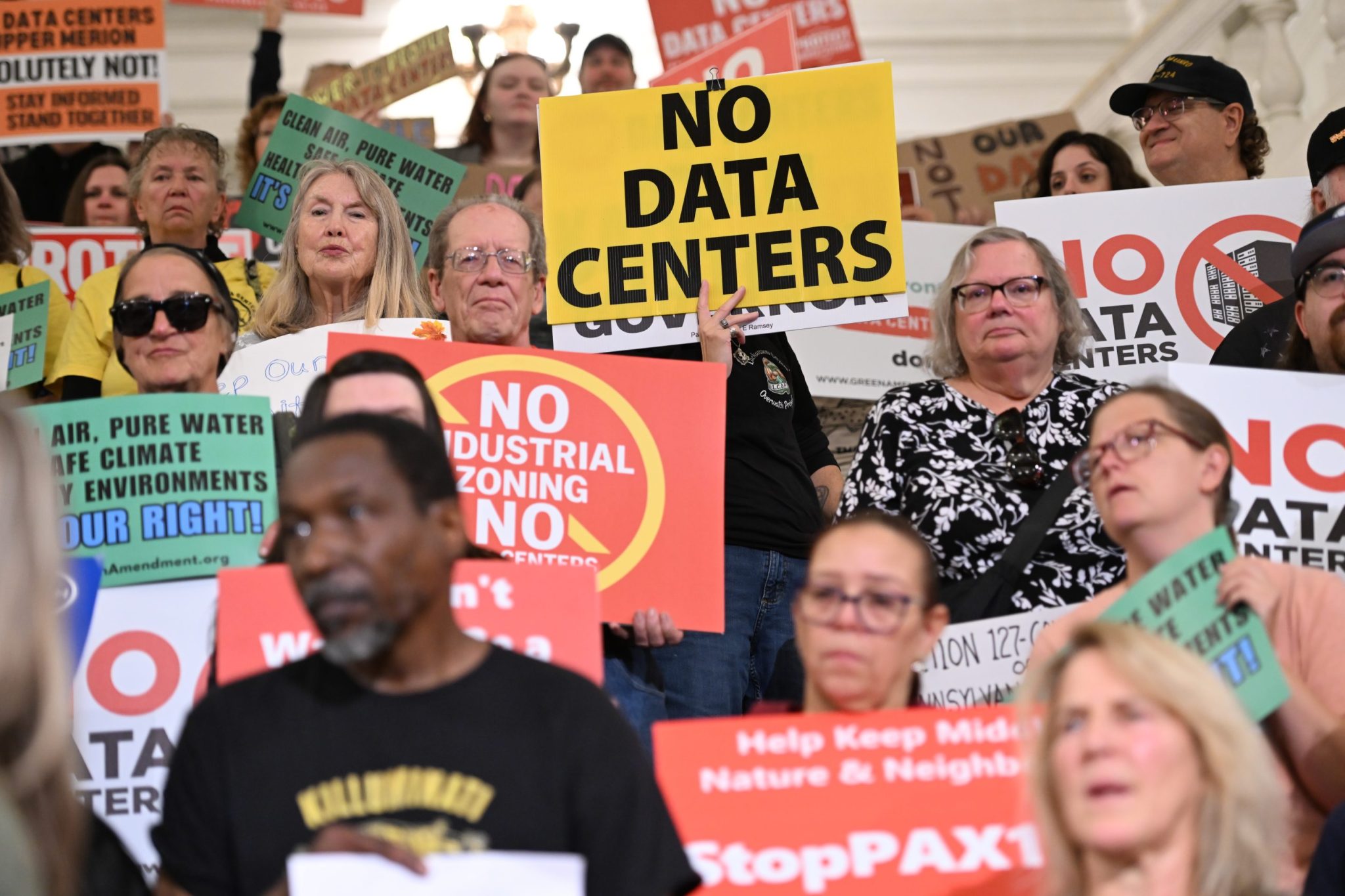
Across the United States, towns are growing increasingly hostile towards gargantuan data centers, prompting America's tech behemoths to pledge a range of concessions in an effort to win over the communities willing to accept the server warehouses. This newfound focus on appeasing host communities comes as anti-data center sentiment has emerged as a potent issue in the upcoming midterm elections, with control of Congress and 36 governors' offices at stake.
Despite support from President Donald Trump, the data centers, which power the artificial intelligence boom, have become politically volatile. Community opposition has become a significant hurdle, and the tech giants could face even more challenges if more public officials skeptical of data centers are elected next month.
Google and Meta, two giants in the tech industry, have taken steps to address the mistrust of these large facilities. In conversations with The Associated Press, Google's global head of community development and engagement, Devi Thomas, refrained from labeling opposition to data centers as a "backlash." Instead, Thomas emphasized that "there are often community questions to be addressed."
She highlighted that early public consultation is becoming increasingly crucial in the process and that Google and its teams have done their best to ensure communities are involved from the start.
Earlier this month, Amazon unveiled its "Amazon Data Center Commitment," which included pledges to enhance the environmental rating of its backup diesel generators and disclose more information about its data centers' energy and water usage. Similar to Amazon, Microsoft and Google have also pledged to stop requiring government officials to sign non-disclosure agreements, a practice that has left residents of host communities with little or no knowledge of projects until they appear on a municipal board's voting agenda. Critics argue that this practice raises suspicion about the true nature of these projects.
Meta is continuously assessing its approach to sharing information with communities, as expressed by Lindsay Elin, Meta's vice president of public policy and external affairs. In a statement to the AP, she confirmed that the company is reviewing its use of non-disclosure agreements. In a recent report that harshly criticized data center giants like Amazon, Google, Meta, and Microsoft, several Senate Democrats pointed out that these companies have resorted to using non-disclosure agreements to exclude the public and aggressively seek state and local tax breaks.
They also noted that companies do not cover the entire cost of the electric-grid buildout required for energy-intensive data centers. In response, Amazon, Google, Meta, and Microsoft have all pledged to spend over $600 billion this year on capital projects, primarily data center construction in the U.S.
Written by urgent.news from Fortune's reporting — not their text. Machine-written — may contain errors; check the original before relying on it.