First Death Marker on the Trail of Death in Rochester, Indiana
The first death during the forced removal and march was that of a child on September 5, 1838. This is a small portion of the tragic story of greed, western expansion, and lies that became known as the Potawatomi Trail of Death. On September 4, 1838, 859 Potawatomi Indians were forced to begin a 660-mile march from Twin Lakes, Indiana, near present-day Plymouth, to a reservation in what is now…
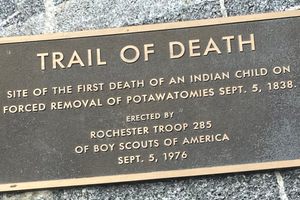
On September 5, 1838, the Trail of Death began with the death of a young Potawatomi child near Rochester, Indiana. This marked the start of a heartbreaking journey for 859 Potawatomi Indians who were forced to march 660 miles to a reservation in Kansas. Over the course of 42 brutal days, 42 more members of the tribe would perish due to harsh conditions, scarce water, and the lack of sufficient horses for transportation.
The forced removal was driven by the desire for westward expansion by the State of Indiana and the federal government. In 1832, construction of the Wabash Canal had begun, leading to the need for the lands the Potawatomi lived on. Despite previous peaceful moves west by some Potawatomi, Chief Menominee and his tribe refused to leave, despite the August 5, 1836 treaty deadline.
On September 4, 1838, the militia, led by General John Tipton, burned the village and crops to prevent any potential return. The Potawatomi's journey ended on November 4, 1838, when they arrived in Kansas, having spent the bitter winter at Sugar Creek. Today, a marker stands alongside Mud Creek near Rochester, Indiana, commemorating the 42 lives lost along this tragic route.
Written by urgent.news from Atlas Obscura's reporting — not their text. Machine-written — may contain errors; check the original before relying on it.