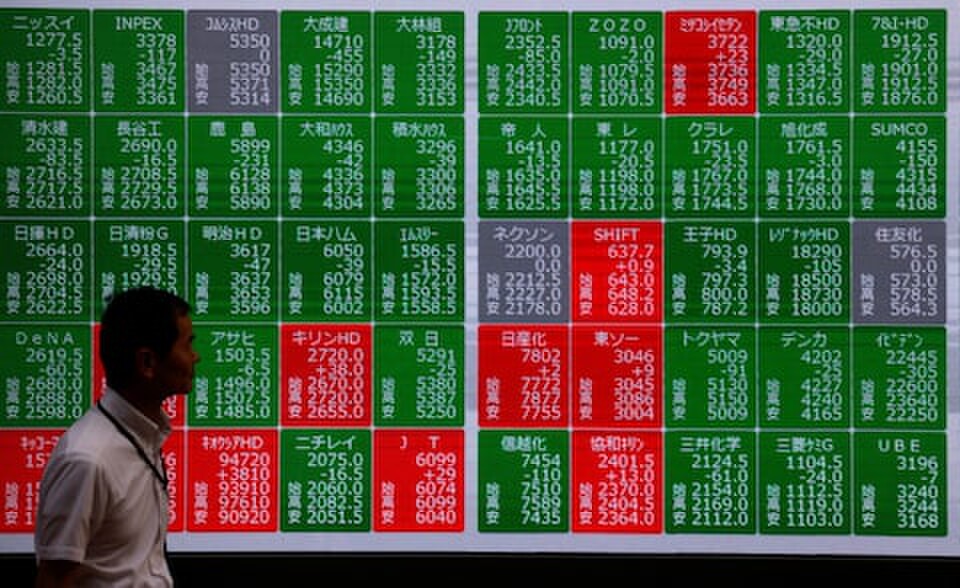
Dip in the dollar takes a breather with Fed in focus
SINGAPORE: A downdraft in the dollar took a pause on Thursday as investors began hunkering down ahead of a slew of central bank meetings next week, where hawkish holds are expected on interest rates in Japan, the US and Europe. The currency market is long the dollar on the assumption the AI boom keeps the US economy humming and that strong growth supports interest rates staying higher for longer.…
The dollar experienced a temporary respite on Thursday as market participants prepared for a series of central bank meetings scheduled for the following week, with expectations of hawkish stances on interest rates, particularly in Japan, the United States, and Europe. The currency market predominantly favored the dollar, based on the assumption that the ongoing AI boom would sustain the US economy and that robust growth would maintain higher interest rates for an extended period.
Recent gains for the British pound and currencies in Canada, Australia, and New Zealand, which have recently reached their highest levels relative to the dollar in several weeks, indicate that some investors have reduced their exposure to the dollar, although the adjustments were modest. The British pound, which reached a one-month peak of $1.3409 earlier in the week, has recently been buoyed by stronger-than-anticipated British inflation and has steadied at $1.33955.
The Australian dollar, which achieved a three-week high on Wednesday, remains above 70 US cents at $0.7025. Meanwhile, expectations for a rate increase next week in New Zealand could propel the kiwi to a one-month high of $0.5709. The Deputy Governor of the Reserve Bank of Australia, Andrew Hauser, noted on Wednesday that the inflation outlook is "materially worse" due to high oil prices, which could influence market expectations regarding the timing of the next interest rate hike in Australia, potentially as early as next month.
The Bank of Canada is also anticipated to raise rates next week, supporting the Canadian dollar near a one-month high of C$1.4032 per dollar. The euro and yen have settled into narrower price ranges, with the possibility of intervention and the likelihood of interest rate hikes keeping the Japanese currency around 158 to the dollar.
The euro has been declining for about a month, serving as a popular vehicle for investors betting on a stronger dollar, as concerns over France's fiscal situation and the fragility of Europe's energy sector have attracted short sellers. French 10-year yields hit their highest point since 2022 on Wednesday, reflecting the political challenges France faces in bringing its budget deficits under control.
However, the euro has maintained a relatively steady position above $1.12, with Spectra Markets' president, Brent Donnelly, stating that "the euro cannot sell off—and it cannot rally." "We are in a stalemate where the overhang of bad news just about perfectly offsets the market positioning." The European Central Bank is expected to maintain its benchmark rate at 2.5% next week, although a rate hike is anticipated before the end of the year.
Markets also anticipate a similar outcome in Tokyo, with the next interest rate hike—projected at 1.5%—expected early in the new year. The Federal Reserve is expected to hold steady in October, with the federal funds rate range at 3.75-4%, but a rate increase is anticipated in December.
Written by urgent.news from Business Recorder's reporting — not their text. Machine-written — may contain errors; check the original before relying on it.
Also reported by 1 other outlet
- Dip in the dollar takes a breather with Fed in focus investing.com