Clustering changes how charged polymers separate in water, challenging old assumptions
A polymer science revelation about how liquid mixtures separate could have major implications for human health, metabolism and disease, new research indicates. In a brief report published in the Proceedings of the National Academy of Sciences, University of Chicago Pritzker School of Molecular Engineering (UChicago PME) Professor Matthew Tirrell and Freie Universität Berlin Professor Matthias…

New research from the University of Chicago and Freie Universität Berlin reveals previously unconsidered factors in the separation of charged polymers in water, challenging long-held assumptions in the field since the 1950s. Professor Matthew Tirrell of UChicago's Pritzker School of Molecular Engineering and Professor Matthias Ballauff of Freie Universität Berlin re-examined experimental data from 2018 and found that polyions, charged molecules acting as a single unit, cluster and form different sized and concentration groups during the separation process.
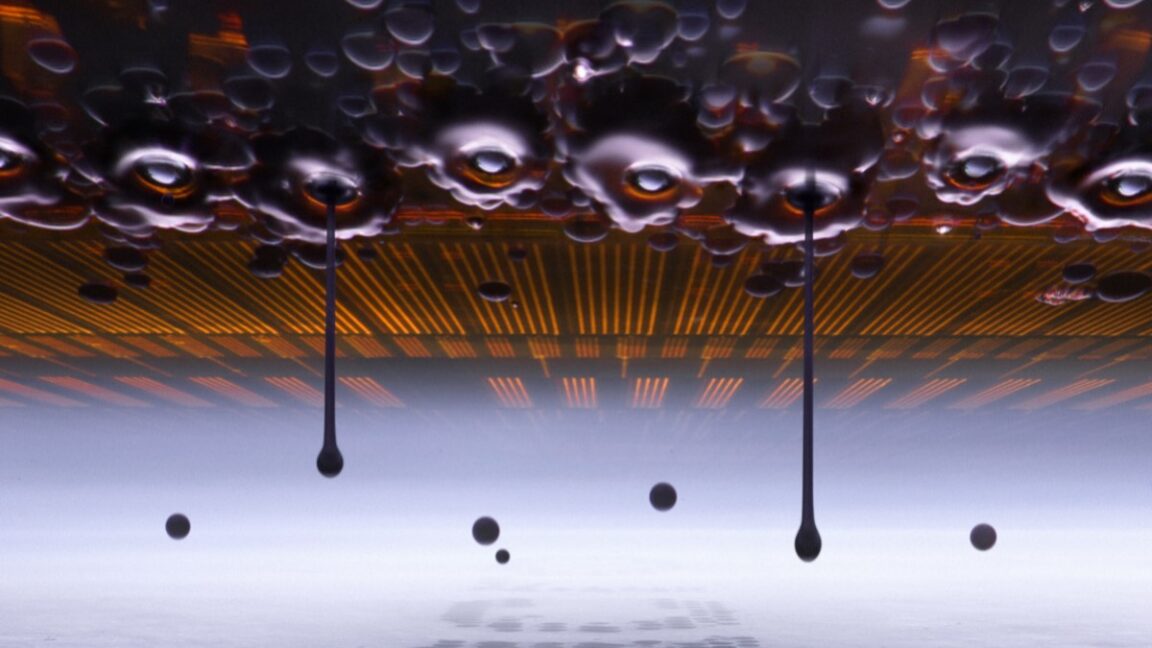
This clustering alters the composition of the resulting phase-separated components based on the initial mixture composition, a behavior not accounted for in the classical Voorn-Overbeek model. The study highlights the complexity of liquid-liquid phase separation, a crucial process in creating biomolecular condensates—membraneless cellular structures involved in critical biological functions like stress response, signal transduction, metabolism, and gene regulation.
The findings, published in Proceedings of the National Academy of Sciences, could have significant implications for human health, metabolism, and disease.
Written by urgent.news from Phys.org's reporting — not their text. Machine-written — may contain errors; check the original before relying on it.