Claude Designed 211 Proteins in Two Days. The Memes-in-Slack Phase Took Two Months
Citrini Research used an unreleased Anthropic model to design scorpion toxin binders in 64 hours, then spent two months waiting on a wet lab. 17 of 211 bound.
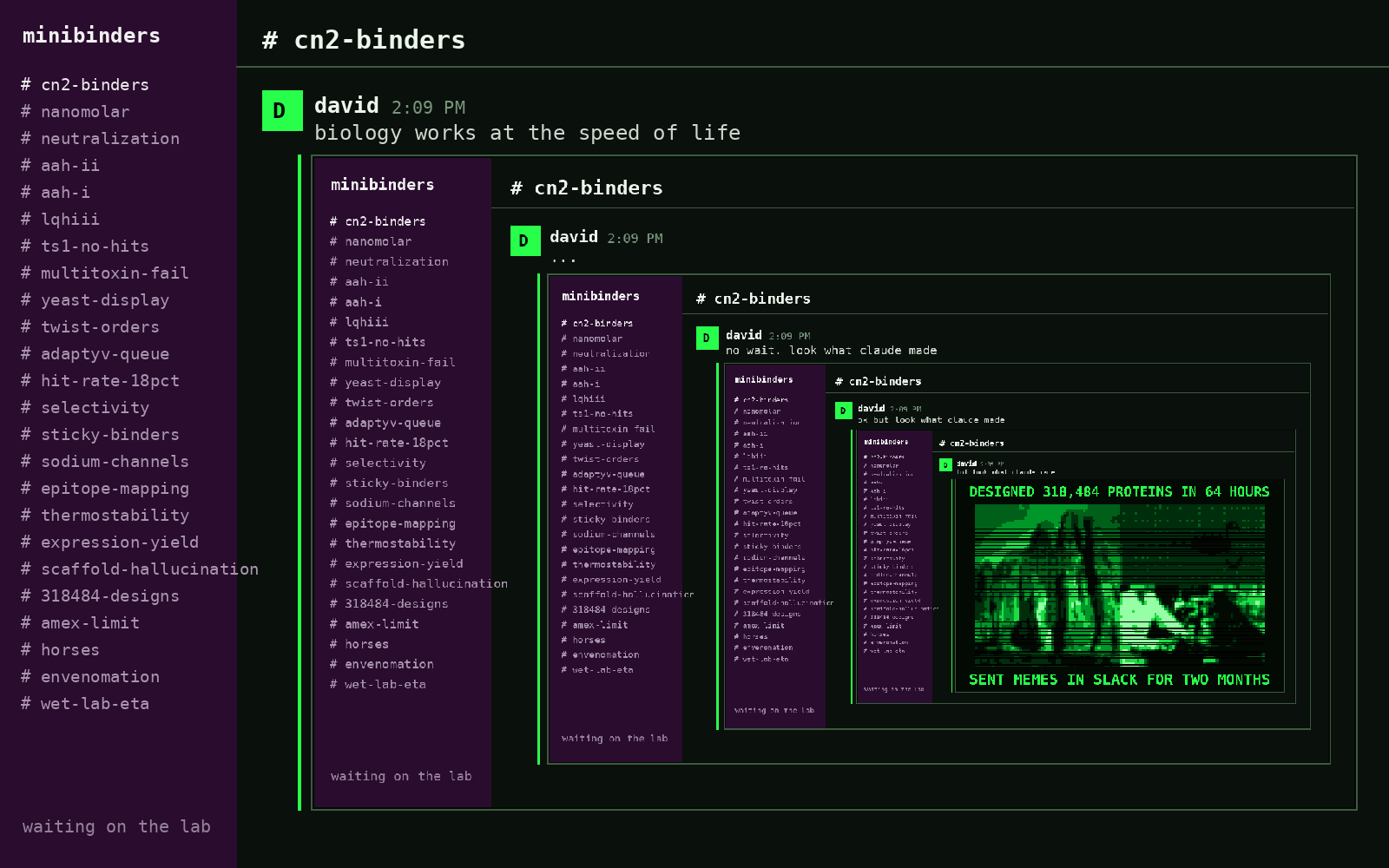
Citrini Research, a firm specializing in thematic equity research, collaborated with Anthropic to test whether non-experts could design proteins capable of binding scorpion toxins. The two-day visit involved running an unreleased Claude model against five scorpion toxins, with the team receiving the results within 40 days. The project involved generating 318,484 protein designs, narrowing down to 180 for lab testing, and ultimately identifying 17 designs that met Anthropic's binding criteria.
None of the designs were tested for neutralization in cells or in animals, and some binders were flagged as potentially sticky. While the project demonstrated the potential of AI in drug discovery, experts cautioned that it is not a replacement for traditional methods, such as polyclonal antivenoms. The project also highlighted the slow and complex nature of laboratory turnaround times, emphasizing that the real bottleneck in the drug discovery process lies in wet lab throughput, not computational cleverness.
Written by urgent.news from HackerNoon's reporting — not their text. Machine-written — may contain errors; check the original before relying on it.