China moves to set global standards for brain-computer interface technology
China has taken a major step in spearheading the standardisation of brain-computer interface (BCI) technologies, as it now chairs the secretariat of a subcommittee jointly overseen by two key international organisations and lists the technology applications as a national development priority. The China-led subcommittee, known as ISO/IEC JTC 1/SC 43, was set to formulate global standards regarding…
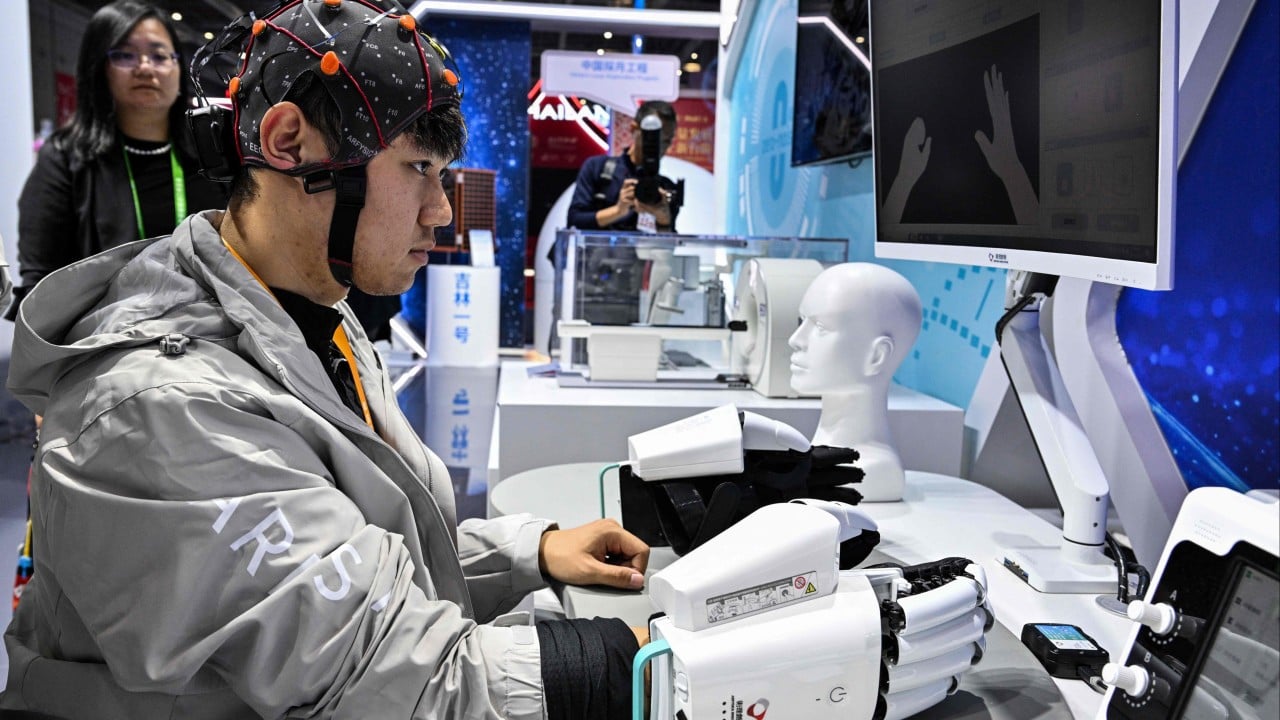
China is taking the lead in setting the global standards for brain-computer interface (BCI) technology, positioning itself as a potential heavyweight in the burgeoning industry. The country currently chairs the ISO/IEC JTC 1/SC 43 subcommittee, a collaborative effort between two key international organisations to create worldwide standards for BCI communication and interaction.
This subcommittee, led by Yu Yuntao, a technical director at the China Electronics Standardization Institute, has already published several standards, including vocabulary, data format for non-invasive brain information collection, reference architecture, and use cases.
The Chinese government is heavily investing in BCI, viewing it as a promising sector with the potential to rival other thriving industries like electric vehicles. According to Xiaomeng Lu, director of geo-technology at Eurasia Group, this move is a significant step for both Chinese and global BCI companies. BCI, which translates neural signals into commands for external computers, enabling humans to control technology with thoughts, has been identified as one of six industries of the future under China's 15th five-year plan.
The Chinese government's commitment to BCI was reaffirmed this year when two top policy authorities released a joint call to accelerate the industrialisation and commercialisation of the technology. Analyst Altynay Junusova from the Berlin-based think tank MERICS emphasized the importance of overseas access for China's advanced BCI products. She noted that China's leadership on the ISO document would enable it to secure global terms for its BCIs.
Lu suggested that China's approach to BCI mirrors the research roadmap of Elon Musk's Neuralink, a leading company in the field. While Washington has yet to show significant interest in this emerging sector, focusing instead on more established technologies like semiconductors and AI models, China's BCI market is expected to reach 6.14 billion yuan (US$919.88 million) by 2028, with a projected annual growth rate of 17.7%.
Written by urgent.news from SCMP Tech's reporting — not their text. Machine-written — may contain errors; check the original before relying on it.
This story
This is one outlet's version. Read the fullest account.