Centre for Wildlife Studies research reveals fire activity increased in Eastern Ghats and Central India, but decreased in Western Ghats.
The study says that in over two decades, approximately 16,667 square kilometers burned across 13 reserves, reflecting that some areas burned more than once
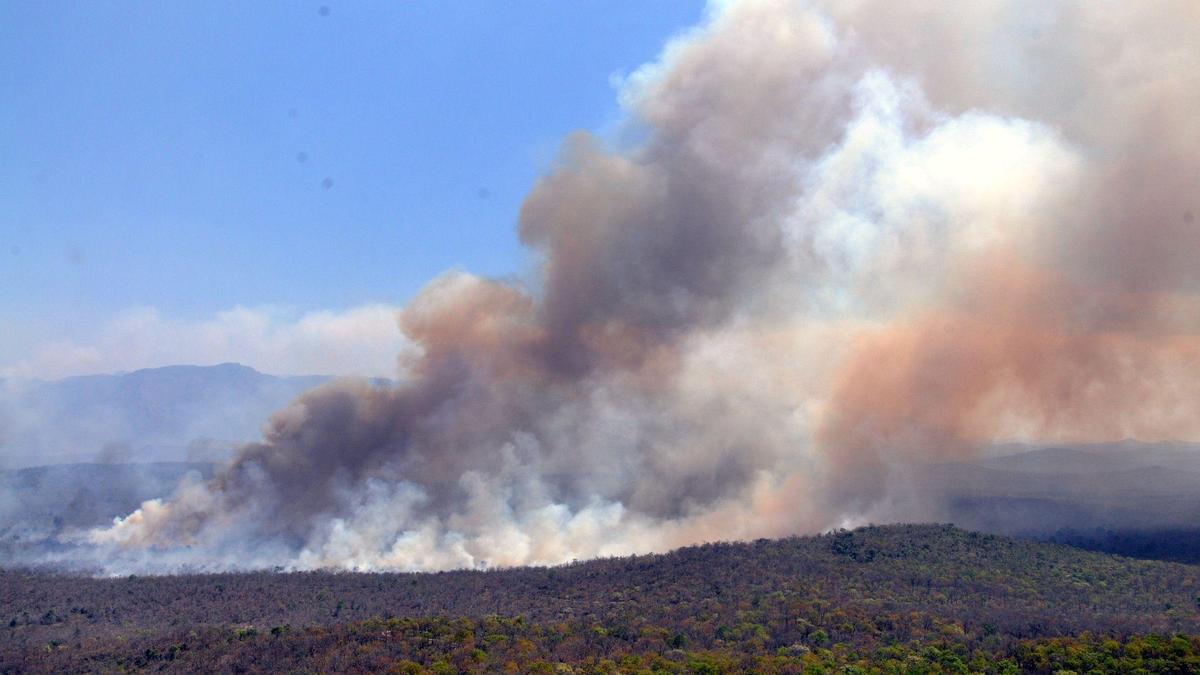
A recent 20-year satellite study by the Centre for Wildlife Studies (CWS) has uncovered significant changes in wildfire activity across 13 wildlife reserves in peninsular India. The research, published in Ecosphere, reveals that fire activity increased by approximately 9% annually in the Eastern Ghats and modestly in Central India, while experiencing a significant decline of around 11% per year in the Western Ghats.
The study, led by Narendran Kodandapani and co-authored by Krithi K. Karanth, analyzed satellite-derived burned area data from NASA’s MODIS sensor, covering roughly 20,000 square kilometers of protected forest in Central India, the Eastern, and the Western Ghats from 2002 to 2022. The scientists combined this data with climate records, human population density, and forest cover loss information to identify key factors associated with year-to-year changes in burned area across each reserve.
Climate and human factors were found to account for between 21 and 77% of annual fire activity across the reserves. Drought conditions, measured using indicators such as climatic water deficit and the Palmer Drought Severity Index, emerged as the primary drivers of fire activity in most reserves. Human population density was also strongly linked to more frequent fires in Kawal Wildlife Sanctuary and Nagarjunasagar-Srisailam Tiger Reserve, where local communities utilize fire for harvesting forest products and improving grazing land.
Conversely, human activity was associated with fewer fires in Nagarahole and Bandipur National Parks, likely due to land-use changes and active fire suppression efforts by the Forest Department. The study highlights the importance of integrated fire management that considers climate, vegetation, and human factors to effectively address wildfire challenges in Indian ecosystems.
Written by urgent.news from The Hindu's reporting — not their text. Machine-written — may contain errors; check the original before relying on it.