AI could displace one in 11 workers, Goldman says, but the layoffs are likely waiting for a recession
Goldman’s Joseph Briggs finds companies have historically saved automation layoffs for downturns and he's updating his projection of the AI jobs impact.
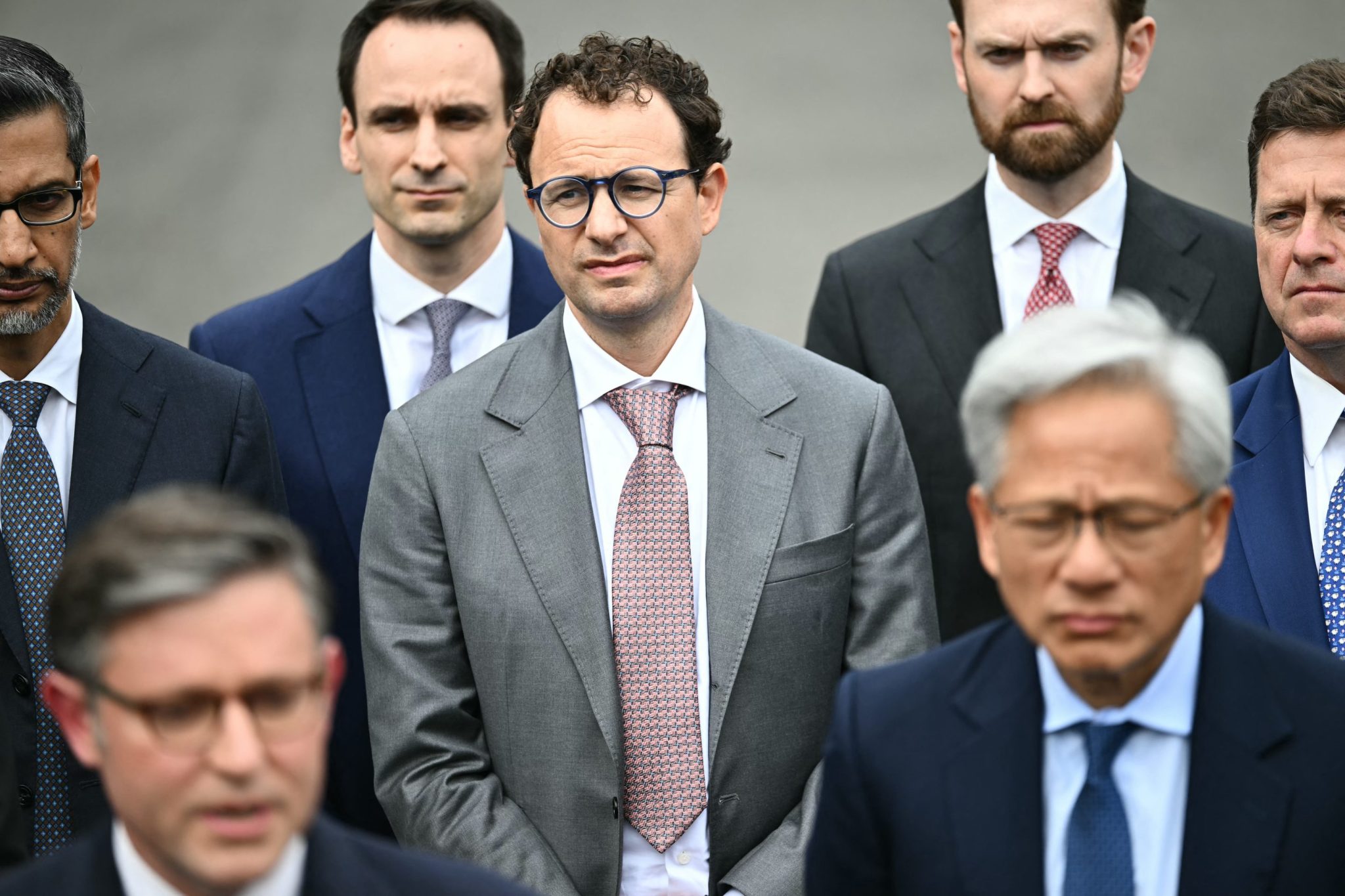
Goldman Sachs predicts that artificial intelligence could displace up to 9% of workers in the U.S. and other developed economies during the AI transition, equivalent to roughly one in 11 workers. However, the bank believes that these layoffs are likely to be triggered by a recession rather than coming to fruition during the current AI boom.
Joseph Briggs, a Goldman economist, argues that automation-related labor disruption is limited when the economy is healthy but accelerates during cyclical slowdowns. "AI-related labor disruptions could well amplify the broader business cycle," Briggs wrote.
Historically, companies tend to automate work and shed labor costs when the economy starts to slow. During past recessions, the share of Americans in routine jobs, such as clerks, secretaries, factory machine operators, and mechanics, has declined sharply. These industries are the most vulnerable to AI-driven job displacement.
Briggs points to the same pattern in past recessions, including the early 1980s, 2001, 2008, and 2020, where the unemployment rate increase due to technology-driven productivity gains was 0.1 to 0.2 percentage points larger when the overall jobless rate was rising.
While the current displacement estimate is higher than Goldman's previous projections of 6% to 7% of the U.S. workforce being displaced, Briggs emphasizes that the displacement is temporary. He expects that the unemployment rate increase in any given year would be less than one percentage point.
Written by urgent.news from Fortune's reporting — not their text. Machine-written — may contain errors; check the original before relying on it.
This story
This is one outlet's version. Read the fullest account.