Advancing Astronomy at MIT with X-ray Reverberation Mapping
Professor Erin Kara of MIT's Kavli Institute for Astrophysics and Space Research is helping advance our understanding of the most extreme objects in the Universe by analyzing X-ray reverberations and other astrophysical data.
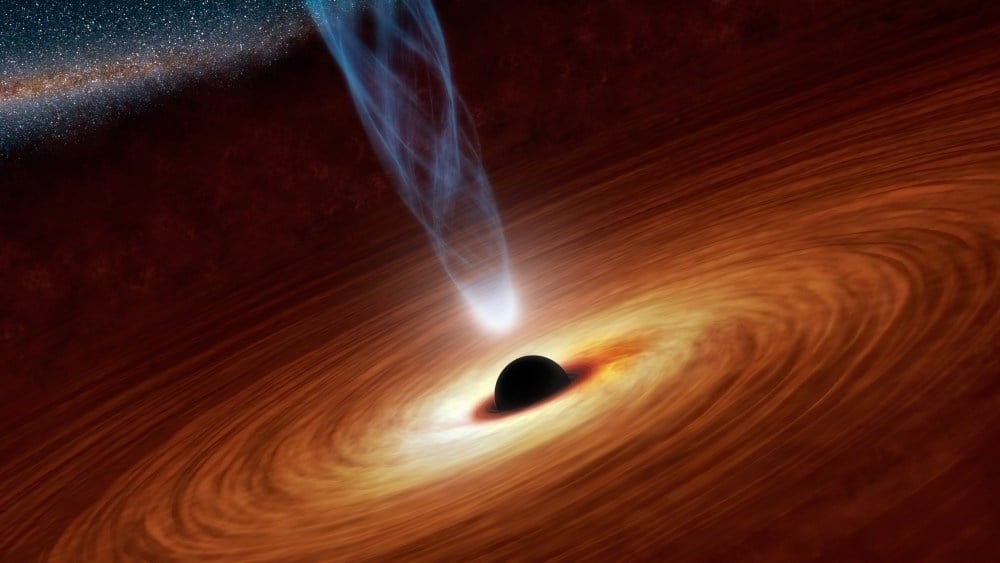
Black holes have long confounded scientists due to their name and perceived nature. However, these celestial objects are actually the collapsed cores of massive stars, with gravitational forces so intense that not even light can escape. At the MIT Kavli Institute for Astrophysics and Space Research, Professor Erin Kara leads a team investigating black hole physics, utilizing data from space and ground-based telescopes to study their properties and effects on their surroundings.
Kara, who began her academic journey at Cambridge University, completed her Ph.D. on the novel subject of black hole X-ray reverberation under the guidance of Royal Society Research Professor Andy Fabian. In 2009, Fabian's team discovered odd time delays in X-ray data, which they interpreted as the first evidence of X-ray reverberations around black holes.
These reverberations arise from X-ray radiation reflecting off the accretion disk surrounding a black hole. Kara expanded on this discovery, utilizing extensive archival data to map regions near black holes. After her Ph.D., she conducted postdoctoral research at the University of Maryland and NASA's Goddard Space Flight Center, where she contributed to the Hitomi mission, whose data later informed the XRISM mission.
Kara continues to advance the X-ray reverberation technique, applying it to data from various missions, including NICER and upcoming observatories like ULTRASAT and LISA. These efforts have led to surprising discoveries about black holes, challenging previous assumptions and revealing their rapid changes and interactions. Kara's work aims to shed light on some of the most puzzling aspects of supermassive black holes, offering new insights into these enigmatic cosmic entities.
Written by urgent.news from Universe Today's reporting — not their text. Machine-written — may contain errors; check the original before relying on it.