US coaxing refiners to produce more diesel as prices surge, energy officials say
TITUSVILLE/HOUSTON: Two top US Energy Department officials said on Tuesday they were working with refiners at home and abroad to boost fuel output as a diesel shortage has raised prices, driving dissatisfaction among voters with the White House ahead of the November midterm elections.
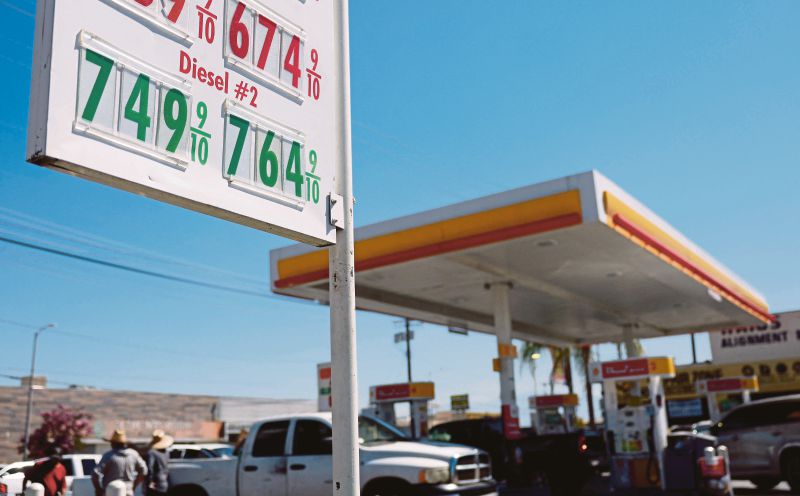
TWO top officials from the United States Department of Energy announced on Tuesday their efforts to collaborate with refiners in the nation and other countries to increase fuel production. This comes as a diesel shortage has led to a surge in prices, causing voter dissatisfaction with the White House as the November midterm elections approach.
Diesel prices have skyrocketed to record highs due to disruptions caused by the Iran war and Russian refineries being attacked in Ukraine. The average retail diesel price was reported at approximately $6.32 per gallon on Tuesday by the motorist group AAA.
The Trump administration has implemented several measures to attempt to reduce fuel prices, which have risen since the beginning of the Iran war on February 28. These actions include relaxing restrictions on Russian diesel exports, using the Defense Production Act to boost output, and allowing commercial vehicles to operate on red-dyed diesel, which is typically reserved for off-road equipment.
Diesel fuel is essential to the global economy, as it powers various sectors such as transport, agriculture, and heavy industry that are fundamental to global trade and economic activity. The high cost of fuel has left voters unhappy with President Donald Trump's economic management, with 36 percent approving of his performance on this issue, according to the latest Reuters/Ipsos opinion poll.
Energy Secretary Chris Wright stated in Houston that they are discussing the reopening of every refinery possible. However, he acknowledged the challenge and added that it is not guaranteed that all these plans will come to fruition. US refineries are operating near full capacity, and several facilities have closed recently, leaving limited room to quickly increase domestic output, according to analysts.
Expanding refineries is a capital-intensive process that can take months or even years, depending on the complexity of the enhancements.
Wright explained that the US is also working with India to boost refining output there to supply products to global markets. Mike Sommers, the chief executive officer of the American Petroleum Institute, told Reuters during an energy forum in Titusville, Pennsylvania, that US refiners are running at 95 to 100 percent of capacity.
He mentioned that they are postponing planned maintenance due to high prices. Sommers stated that the American refiners are doing everything they can, and using the Defense Production Act to restart idle plants, as the administration has proposed, would require significant capital investment.
Last week, Vice President JD Vance mentioned that the administration would utilize the Defense Production Act to expand the capacity of a Texas refinery owned by Delek US Holdings. In 2021, Congress passed legislation that allocated $1 billion in Defense Production Act funding for energy-related initiatives deemed critical to national security.
Wright mentioned there is more work to be done on refining and the Defense Production Act but did not provide further details. Sommers highlighted China's spare refining capacity, asserting that their government is currently prohibiting diesel exports. He emphasized that Beijing will be crucial in bringing down long-term prices.
A spokesperson for the Chinese embassy in Washington stated that resolving the issue hinges on achieving a ceasefire in Iran. The embassy expressed readiness to maintain communication with all parties to ensure global energy security and supply chain stability.
The Trump administration has been urging Europe to release more fuel to stabilize global markets. While the administration has pushed for Europe to release 50 million barrels of diesel, an agreement among industrialized nations did not meet this target. The Paris-based International Energy Agency (IEA) announced that it would expedite the release of crude and oil products pledged in March, including more than 20 million barrels of diesel as soon as possible.
Fatih Birol, the chief of the IEA, noted that the group is prepared to coordinate additional oil releases by member countries if necessary.
Written by urgent.news from New Straits Times's reporting — not their text. Machine-written — may contain errors; check the original before relying on it.