The oil market's 2027 relief hopes are fading fast
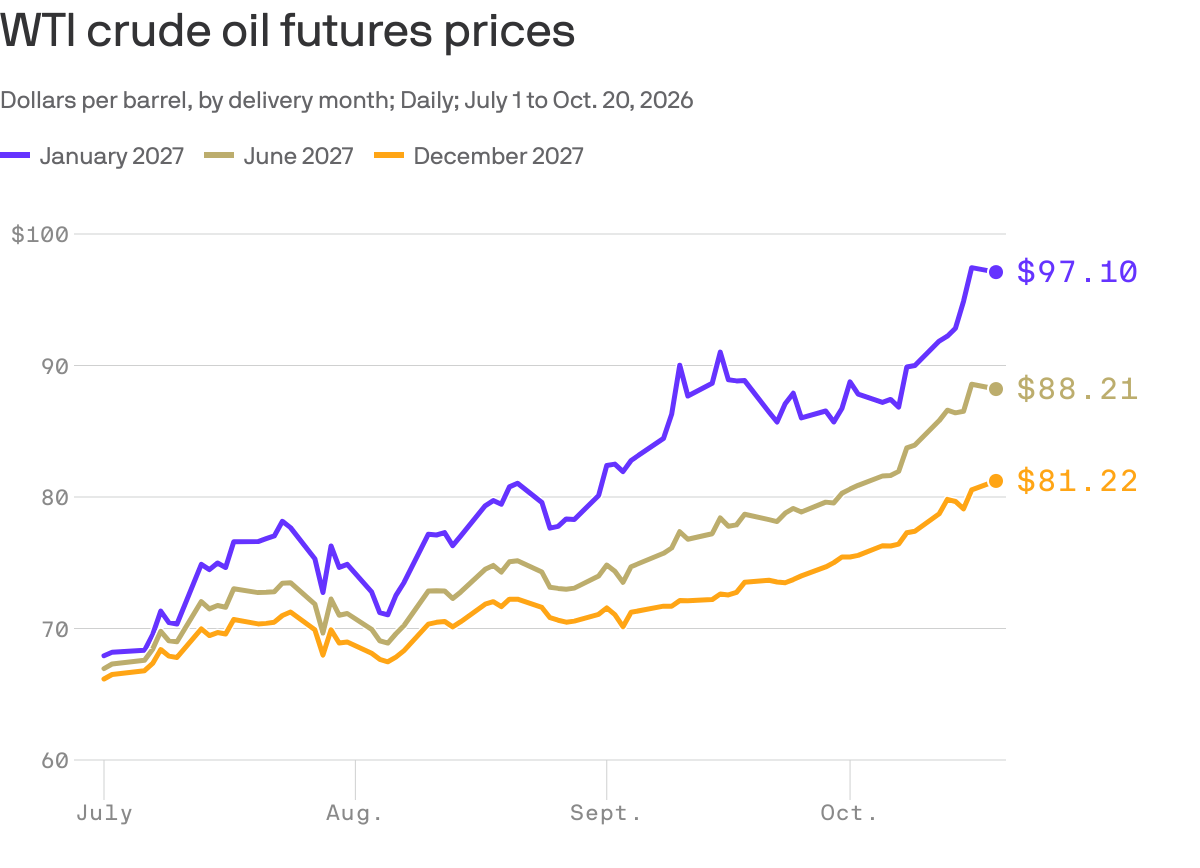
Data: FactSet; Chart: Courtenay Brown/Axios Traders are betting that oil prices will remain elevated for longer than they anticipated just weeks ago, threatening to prolong the inflationary pressures that businesses and consumers have weathered for months. Why it matters: Oil inventories have helped cushion the blow from disrupted Middle Eastern supplies, but much of that buffer has been depleted…
The outlook for oil prices in 2027 is becoming increasingly bleak, according to recent market developments. Traders are now anticipating that elevated oil prices will persist longer than initially expected, potentially exacerbating inflationary pressures. This shift is due to the depletion of oil inventories that initially helped absorb the impact of disrupted Middle Eastern supplies.
Oil inventories have been crucial in mitigating the effects of supply disruptions, but much of this buffer has been consumed since the beginning of the conflict. The prospect of sustained inflationary pressures next year challenges the conventional wisdom among central banks that energy price shifts are temporary rather than indicative of an ongoing inflationary trend.
Oil futures for delivery in 2027 have reached their highest levels since the Iran war began, with January 2027 prices up 17% since early September to over $97 a barrel. While markets still anticipate some relief next year, the level of optimism has significantly diminished since just weeks ago. June futures have jumped 18% to $88 a barrel, while December futures are up 13% to around $81.
The situation in the Persian Gulf has improved, with crude oil exports surpassing pre-war levels in the week ending October 18, according to the Wall Street Journal. However, the recovery has faced limitations due to costly workarounds such as ship-to-ship transfers, which have been hindered by security risks in the Strait of Hormuz.
Christopher Haines, global head of oil at Energy Aspects, highlights the constraints on moving significant volumes out of the Middle East despite these alternative processes. Restoring confidence among shipping companies and insurers to operate safely in the region will prove exceptionally challenging.
Economist Robin Brooks suggests that oil prices are more influenced by higher shipping costs and fears of further attacks rather than actual shortages. His analysis estimates that Persian Gulf crude exports have recovered to 91% of pre-war levels, with an additional $20 a barrel attributed to temporary fear factors. The Trump administration's efforts to ease fuel prices ahead of the midterms through increased Russian diesel imports may provide minimal relief, as Ukrainian attacks have damaged Russian refineries and sanctions complicate repair efforts, limiting additional exports.
In summary, the market's perception of oil prices has shifted from temporary fluctuations to a new normal, signaling potential lasting consequences for economic growth, inflation, and interest rates.
Written by urgent.news from Axios's reporting — not their text. Machine-written — may contain errors; check the original before relying on it.