The anti-AI writing police are everywhere. What are they looking for?
On October 6, the Zimbabwean author Simbarashe Kundizeza won the Caine Prize for African Writing, for the short story “The Blue Fighter.” Less than a week later, The Atlantic published a piece declaring that the story’s narrator “has all the personality of a chatbot.” “The AI detector Pangram flags almost the entire story as AI-generated,” … The post The anti-AI writing police are everywhere.…
In October, Zimbabwean author Simbarashe Kundizeza was awarded the Caine Prize for African Writing for his short story "The Blue Fighter." However, less than a week later, The Atlantic published an article stating that the story's narrator "has all the personality of a chatbot." The article claimed that an AI detector, Pangram, flagged nearly the entire story as AI-generated.
Kundizeza strongly denied using any generative AI tools, asserting in a statement on X that he wrote the story entirely on his own. The Caine Prize, which comes with a £10,000 award, has become embroiled in a controversy surrounding the use of AI writing tools, raising concerns within the literary world. Scandals about suspected AI use have emerged throughout the industry this year.
In March, Hachette canceled the U.S. release of Mia Ballard's self-published novel "Shy Girl" after a New York Times report suggested the book may have been written using AI. In May, Trinidadian author Jamir Nazir was accused of using AI to write "The Serpent in the Grove," which won the Commonwealth Short Story Prize. In July, Stony Brook University researchers suggested that H.M.
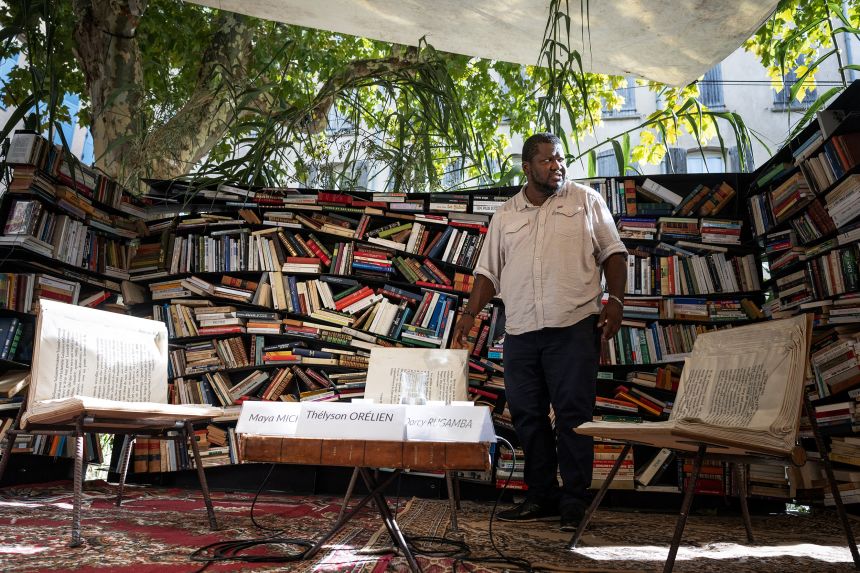
Wolfe's national bestseller "Daggermouth" contained 60% AI-written content based on a data set provided to The Atlantic. Additional accusations followed, including a claim that debut author Jerry Falade's debut novel was pulled due to suspicions of AI use, and a claim that Haitian Canadian author Thélyson Orélien's story had failed an AI detection test, leading the Goncourt prize jury to remove him from the longlist.
As generative AI becomes more prevalent, it is increasingly difficult for readers, prize judges, and publishers to determine if a piece of writing was created by human thought or a machine. Companies now offer AI detection platforms, such as Pangram, which claim to accurately distinguish between human and synthetic writing. However, these platforms often produce conflicting, biased, or inconsistent results.
Pangram's CEO, Max Spero, states that the company aims to protect the literary ecosystem from the potential harms of powerful AI models. Spero acknowledges his lack of background in literature and creative writing, but emphasizes that Pangram seeks to clarify what constitutes AI-generated text and what does not.
Written by urgent.news from Egypt Independent's reporting — not their text. Machine-written — may contain errors; check the original before relying on it.