‘Tap dancing through a minefield’: Elon Musk’s $3.5 trillion Tesla-SpaceX merger talks expose his power—and scant accountability
The SpaceX IPO pushed Musk past $1 trillion on paper. Pension funds, a federal judge, and workplace-safety data show how little stands between him and the companies he runs.
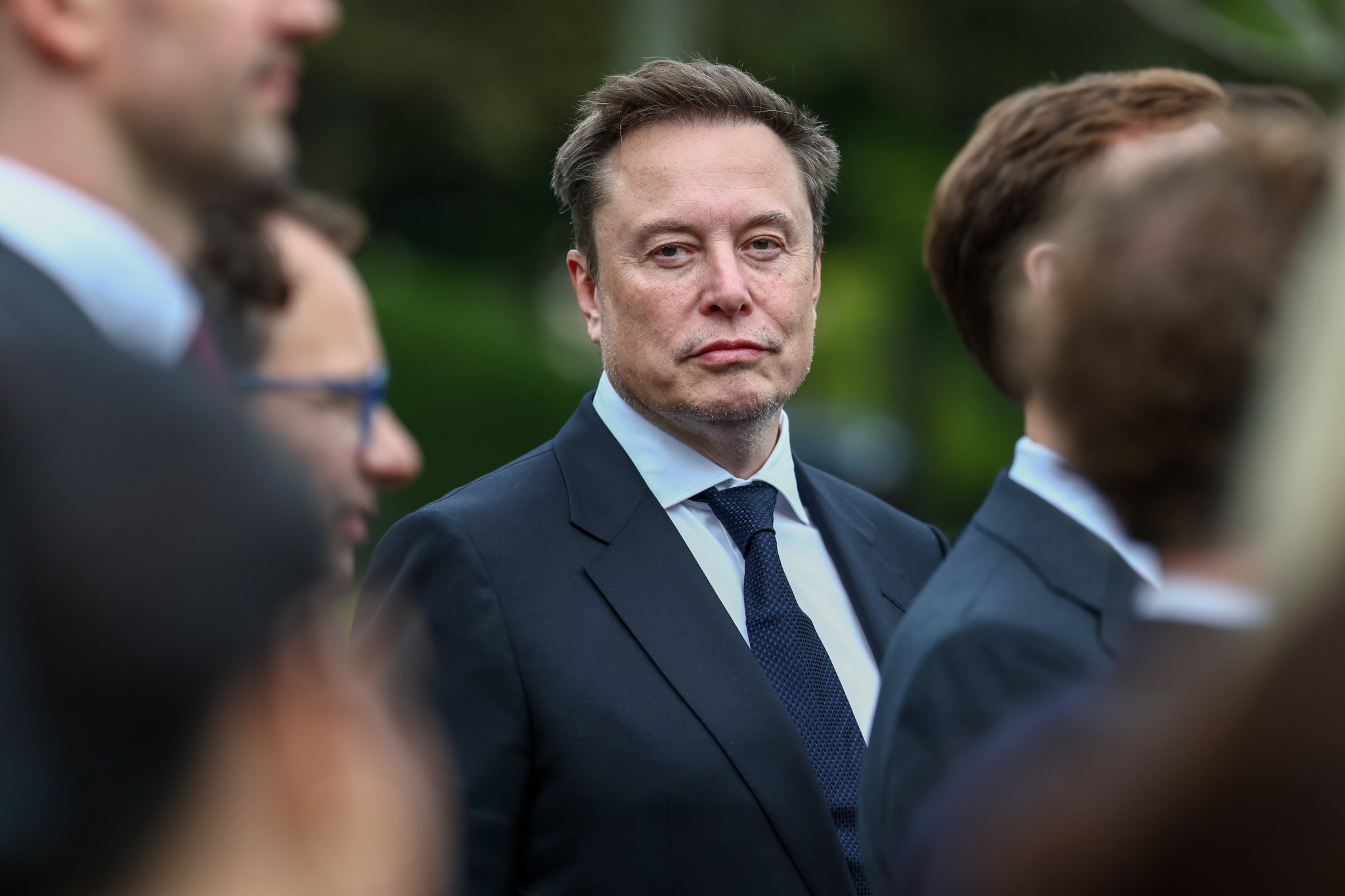
Elon Musk announced on Tuesday that independent directors at Tesla and SpaceX have formed special committees to discuss the possibility of merging the two companies, a deal that would result in a roughly $3.5 trillion conglomerate. Musk himself could not participate in the discussions, citing his conflicted interest in both companies. During SpaceX's quarterly earnings call, Musk described the talks as "tap dancing through a minefield," emphasizing that a merger was not guaranteed.
The talks have brought renewed focus to a long-standing question about Musk's immense wealth and control of numerous companies. Musk became a trillionaire, at least on paper, when SpaceX went public in June 2023. At the time of the IPO, he held about 4.8 billion shares and 350 million options, which, at the offering price, pushed his net worth above $1 trillion. However, Musk has since described himself as a "former trillionaire," with his fortune fluctuating around the $1 trillion mark.
The scale of Musk's wealth is difficult to comprehend, with only 19 countries boasting a GDP above $1 trillion. Nabil Ahmed, Oxfam America's senior director of economic justice, described Musk's status as a "new Gilded Age" of wealth inequality. A significant concern is how SpaceX, a company controlled by Musk, is governed. The company employs a multi-class share structure, with Class B shares granting 10 votes per share, while Musk owns approximately 45% of the company but holds 82% of its voting power.
The share structure allows Musk to remove himself from the CEO, chairman, or director positions if necessary. Musk's governance over SpaceX has also led to criticisms regarding its governance structure, which has been labeled as heavily favoring management. In addition to governance concerns, Musk's business dealings present another area of scrutiny.
In November 2025, Tesla, under Musk's leadership, faced a non-binding proposal to invest in xAI, an AI startup created by Musk. Despite the proposal being rejected by Tesla shareholders, Tesla later proceeded with a $2 billion investment in xAI. Furthermore, SpaceX acquired xAI, valuing the combined company at $1.25 trillion. These business transactions raise questions about Musk's control over his companies and the potential for conflicts of interest.
Musk's influence extends to other regulatory matters as well. In 2018, Musk faced criticism from the National Labor Relations Board (NLRB) for making a threatening statement about unionizing Tesla's workforce. The NLRB ruled that the tweet was an illegal threat and ordered its removal. In 2025, the Securities and Exchange Commission (SEC) sued Musk for allegedly waiting too long to disclose his Twitter stake, resulting in financial losses for other shareholders.
Musk settled the case with a $1.5 million penalty, though he did not admit to any wrongdoing. Lastly, safety concerns have been raised at SpaceX's Starbase site in South Texas, where a TechCrunch analysis revealed an injury rate nearly six times higher than the average for comparable space-vehicle manufacturers and triple the rate for aerospace manufacturing overall.
Despite these concerns, SpaceX contracts with NASA do not automatically trigger safety action due to a high injury rate.
Written by urgent.news from Fortune's reporting — not their text. Machine-written — may contain errors; check the original before relying on it.