Solving a 31-year-old grand challenge in mathematics – the KLS conjecture
For decades, a fundamental question about the difficulty of computing in high-dimensional spaces has resisted proof. New research resolves this question, removing a major theoretical obstacle to understanding the efficiency of randomized algorithms used across science and computing. The Kannan–Lovász–Simonovits (KLS) conjecture was proposed in 1995. It asks whether, for a broad class of…
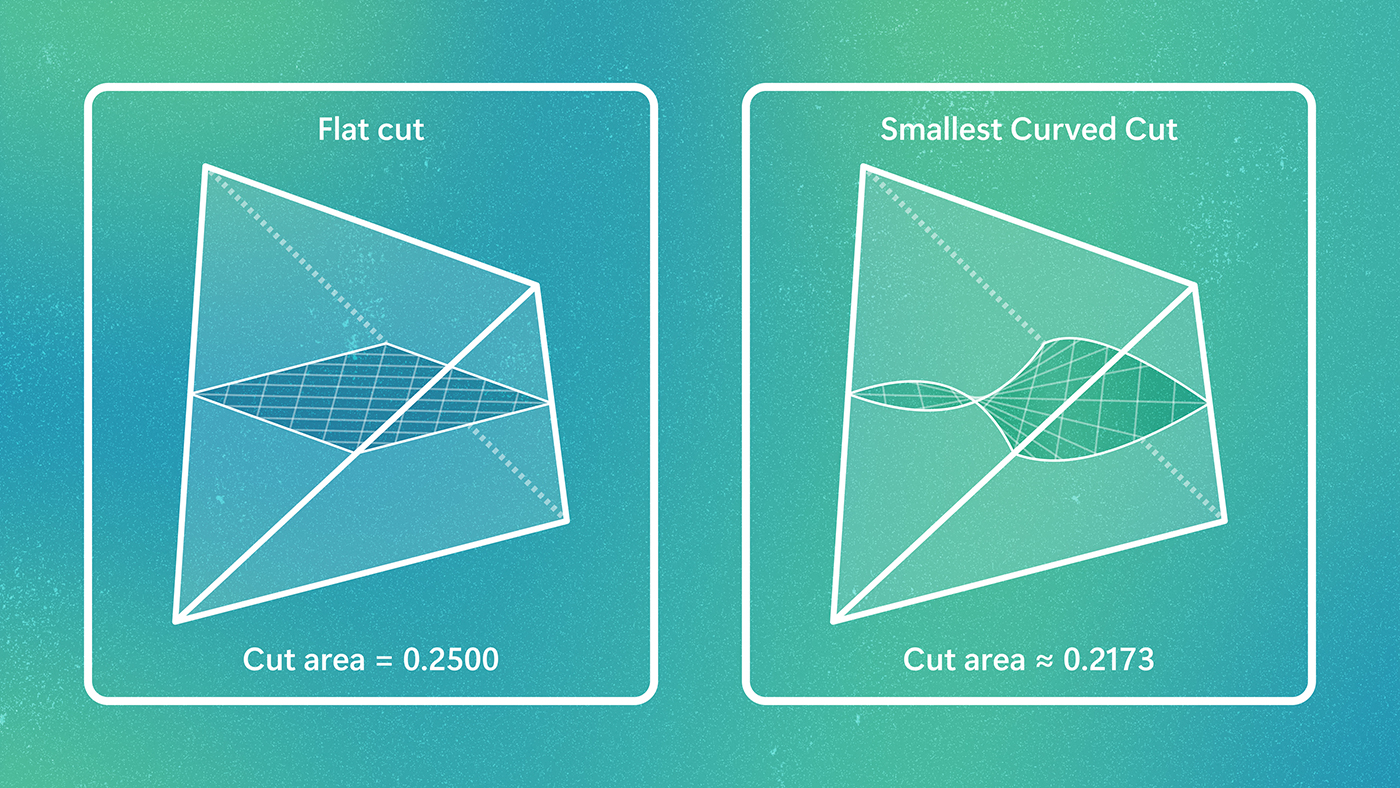
For three decades, mathematicians have grappled with the Kannan-Lovász-Simonovits (KLS) conjecture, a central open question in high-dimensional geometry that questioned the effectiveness of flat cuts in high-dimensional probability distributions. A team of Microsoft researchers, collaborating with human-directed AI, finally resolved the conjecture, establishing a universal geometric principle that simplifies the understanding of high-dimensional spaces.
The breakthrough, published in October 2026, showed that simple flat cuts can capture the narrowest bottlenecks within a fixed factor, regardless of the number of dimensions. This result has significant implications for statistics, optimization, algorithms, and computer science, confirming that high-dimensional spaces are less complex than previously believed.
The research combined human insight with AI exploration of mathematical possibilities, marking a significant shift in how complex problems can be tackled in the modern era.
Written by urgent.news from Microsoft Research's reporting — not their text. Machine-written — may contain errors; check the original before relying on it.