Snail shell rings could hold prehistoric cyclone information
Snail growth could be linked to extreme weather rather than annual patterns, enabling researchers to determine past cyclones.
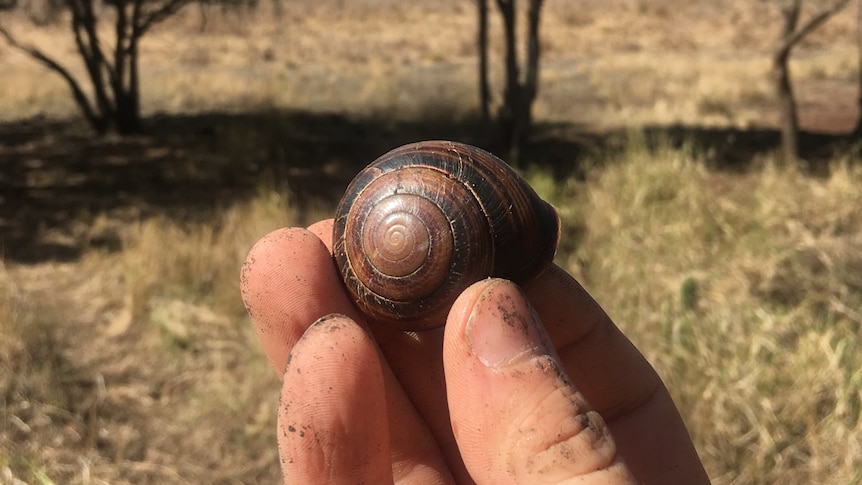
Researchers from the University of Queensland have discovered that the growth rings of a snail in Queensland's Wide Bay can reveal information about past weather events, including cyclones. The study focused on the Biggenden banded snail (Figuladra bayensis), which was found to not grow continuously throughout its life but instead experienced periods of rapid growth and periods of little or no growth.
These growth spurts corresponded with extreme weather events, such as cyclones, that dumped significant amounts of water on the site where the snails were found.
The researchers collected tiny samples from dead snail shells and analyzed the oxygen and stable carbon isotopes to determine the age of the snail, its lifespan, and the weather conditions during its lifetime. The snail lived for about 4.5 years, and by examining radiocarbon levels from the 1960s nuclear tests, the researchers were able to date the growth bands and reveal the snail's experiences with rainfall.
Another researcher, Honoray Professor James Shulmeister, explained that the snail grew in spurts following big rainfall events, likely from cyclones or ex-cyclones. This finding could help map historical weather events, particularly extreme rainfalls, as official rainfall records in Australia only began in 1900. The research, published in The Holocene, opens up the possibility of reconstructing past cyclone events and understanding rainfall patterns in the region by analyzing older snail shells.
The study's lead author, Dr. Nicholas Patton, believes that there are several preserved snail shells in sediment cores from Coalstoun Lakes National Park, which could provide a more extended record of past weather events. Dr. James Shulmeister, known as the "snail whisperer," emphasized the potential of land snails to provide valuable insights into past rainfall patterns and ecosystem functioning.
He hopes that this research will spark further interest in studying land snails, as they can serve as an important tool for paleoclimatology.
Written by urgent.news from ABC News AU's reporting — not their text. Machine-written — may contain errors; check the original before relying on it.