Rebrand Masterclass urges business leaders to build beyond the founder
A central question challenged participants to consider whether their businesses could continue serving customers, making decisions, and meeting obligations if they became unavailable for 30 or 60 days.
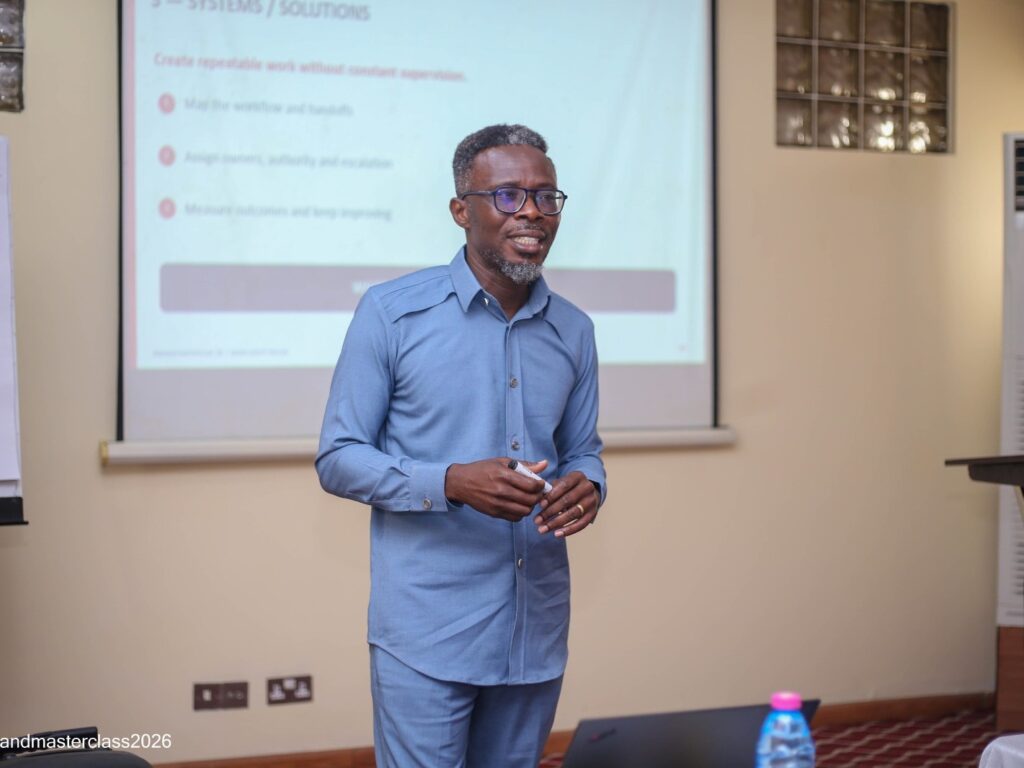
Business leaders were urged to prepare their companies to function independently of personal involvement at the Rebrand Masterclass 26, held at the Charleston Hotel Ltd in Accra. The Brand Legacy Edition brought together founders, CEOs, family business leaders, and entrepreneurs to discuss preserving value and ensuring continuity through leadership changes and generational transitions.
The event featured Bernard Kelvin Clive, Lom Nuku Ahlijah, Samuel Koranteng Adjei, and Jonathan Agyeman. Their presentations covered brand strategy, legal planning, corporate governance, and security technology to reduce founder dependence and establish systems for long-term business sustainability. Participants were challenged to consider whether their businesses could continue operating if they became unavailable for 30 or 60 days.
The GRASS Legacy Framework, introduced by Clive, comprises Grooming, Records, Ambition, Systems and Solutions, and Succession. Grooming emphasizes preparing potential successors through meaningful responsibilities, while the Records pillar stresses documenting critical business knowledge and assets. Ambition sets the direction and standards for successors, and systems and solutions translate this direction into repeatable processes. Succession brings these elements together through deliberate plans for leadership transitions.
Lom Nuku Ahlijah discussed legal arrangements to protect founders' intentions and minimize uncertainty during transitions. He emphasized distinguishing personally owned property from assets belonging to a registered company, aligning wills, company records, shareholder agreements, and property documents with succession plans. Ahlijah also addressed planning for a shareholder's death, incapacity, or proposed exit, stressing the importance of clear agreements for valuation, share transfers, and dispute resolution.
Samuel Koranteng Adjei addressed corporate governance as a mechanism for directing an organization, holding management accountable, and protecting long-term value. He distinguished between ownership, board oversight, and day-to-day management, recommending the creation of boards with independent perspectives to challenge assumptions and address gaps in experience.
Effective oversight depends on reliable information, including agendas, minutes, resolutions, policies, and action trackers, as well as financial reports covering performance, cash flow, customers, operations, and risks.
Written by urgent.news from MyJoyOnline Ghana's reporting — not their text. Machine-written — may contain errors; check the original before relying on it.