Panel urges NASA to fetch Apollo 15 poop bags and hardware from moon
A National Academies of Sciences report released Wednesday urges NASA to consider landing sites beyond the south pole on the moon.
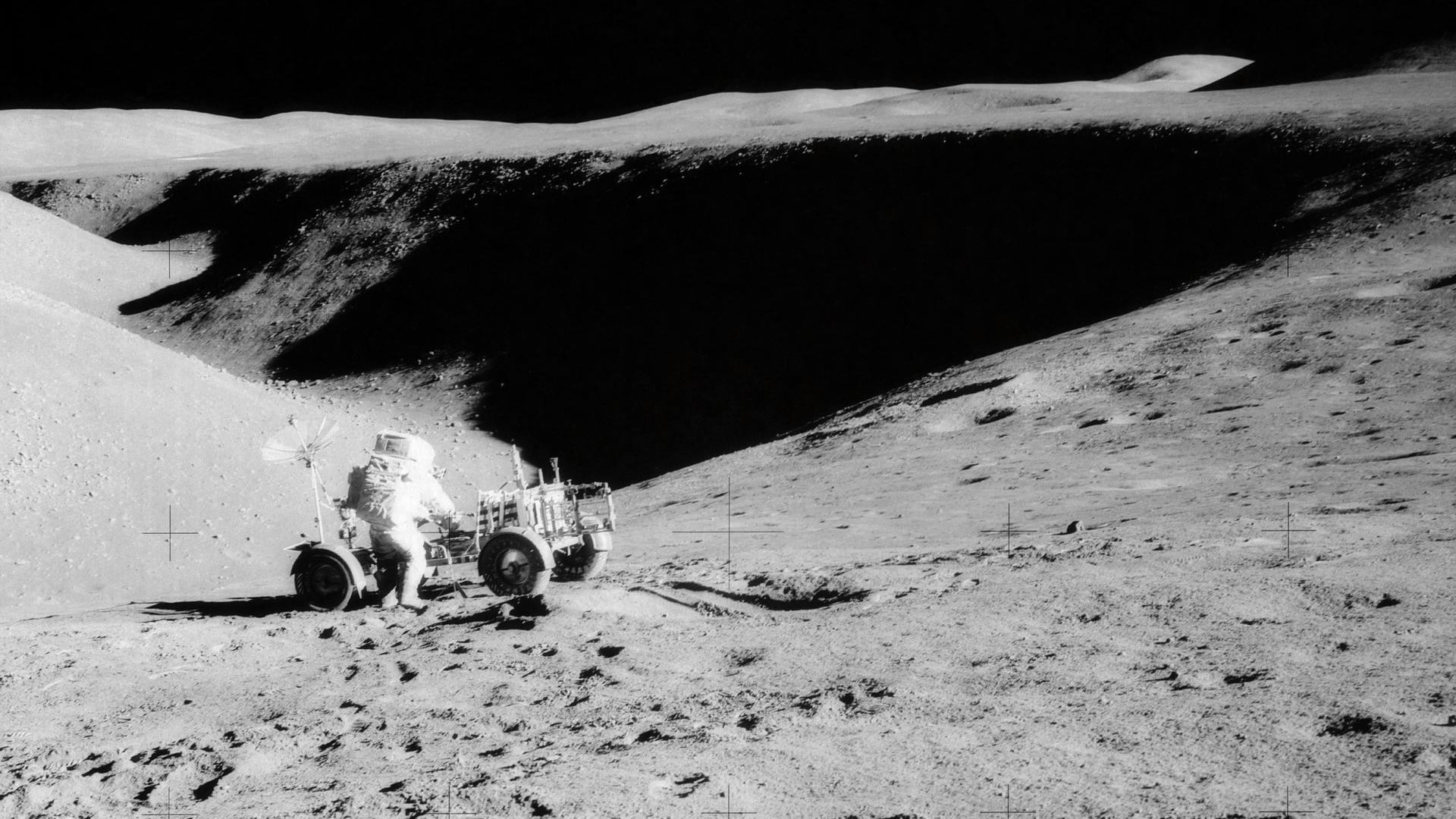
A NASA panel recommended astronauts revisit the Apollo 15 landing site on the moon to collect hardware and biological material from the historic 1971 mission. The astronauts would fly to Mons Hadley, a location selected to minimize damage to the site. After inspecting the lunar rover, lander, and equipment, the crew would study how decades of radiation and temperature fluctuations have affected the hardware.
Scientists could analyze the urine and feces left by the original astronauts to understand how biological materials change in the lunar environment. This information would be crucial for designing future lunar bases. The recommendation came from a National Academies committee tasked by NASA to suggest future moon landing sites. The committee prioritized four non-polar areas—Bhabha Crater, Mons Hadley, Orientale Basin, and Aristarchus Plateau—believing human explorers would benefit more than robots.
Each mission would consist of one to four moonwalks within a 2-kilometer radius of the landing site, a distance currently set as a limit by NASA. The committee selected Bhabha Crater as the top pick due to its potential to help determine the age of the solar system's largest and oldest crater. Another site, Orientale, would allow astronauts to collect deep crustal rocks and set up a gravitational wave detector.
Finally, the Aristarchus Plateau, featuring volcanic deposits, could reveal the presence of water on the moon. The committee emphasized the need for continued lunar mapping from orbit, instruments that can function in the lunar night, and a communication system that enables constant contact with Earth, even from the far side of the moon.
Written by urgent.news from Mashable's reporting — not their text. Machine-written — may contain errors; check the original before relying on it.
This story
This is one outlet's version. Read the fullest account.