Pakistan and the US factor as China looks to sell its J-35 stealth jets
Last month, the US published the fine print of a US$686 million upgrade deal for Pakistan’s F-16 fighter jets. The deal is for data link systems, new encryption gear and a refit that keeps the jets flying until 2040. The notice says Pakistan can protect the technology to “substantially the same degree” as the US government. The Pakistan Air Force is also the only declared interested buyer of…
In a recent development, the United States outlined the specifics of a $686 million upgrade deal for Pakistan's F-16 fighter jets. The agreement encompasses data link systems, enhanced encryption equipment, and a refit that will prolong the jets' operational lifespan until 2040. Pakistan's Ministry of Defense announced the deal, asserting that the country can safeguard the technology "substantially the same degree" as the United States.
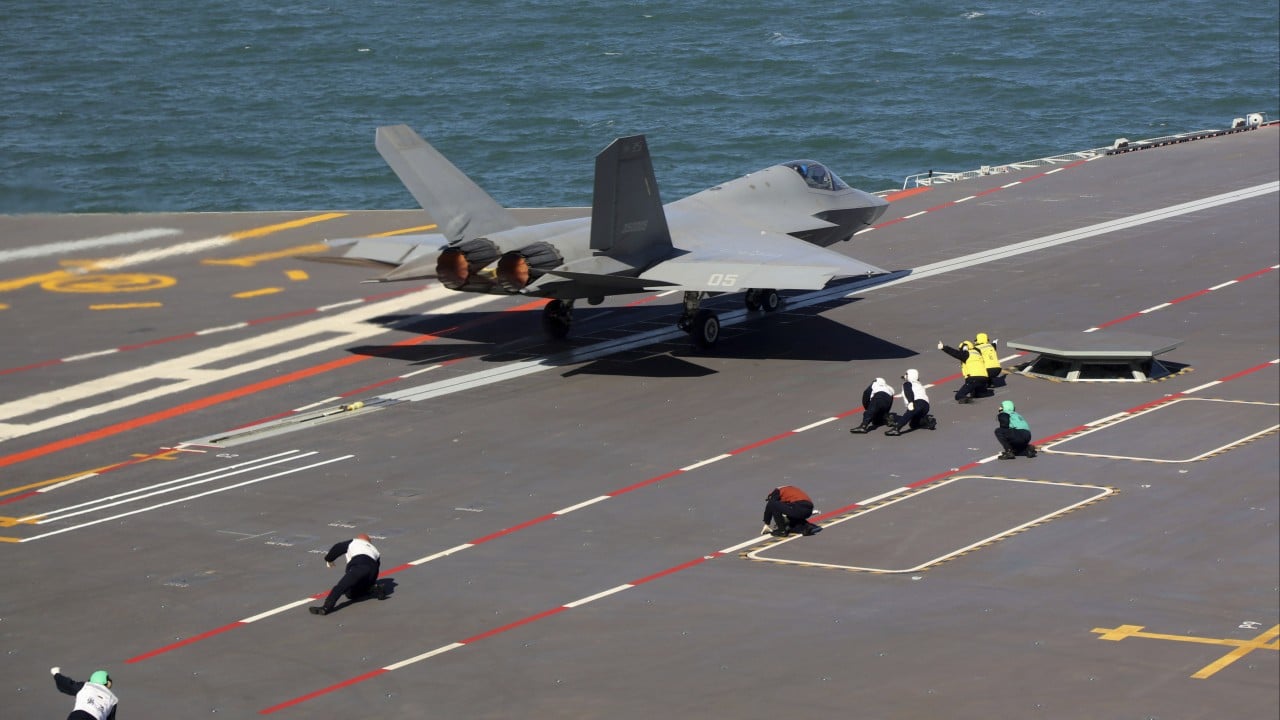
The Pakistani Air Force (PAF) is the sole confirmed buyer of China's J-35 stealth fighter jet, a significant technological leap. The J-35 first took to the skies at the Zhuhai air show in 2024 and could potentially appear again at the upcoming biennial event in December. The Aviation Industry Corporation of China (AVIC) positions the J-35 as a more cost-effective alternative to the United States' F-35 stealth fighter jet.
In June 2023, Pakistan's government hinted at a potential purchase of 40 J-35s, along with KJ-500 early-warning aircraft and HQ-19 air defenses. However, the announcement was swiftly removed. In May 2024, the Pakistani Air Force signed an initial collaborative agreement to acquire the J-35, though details remain undisclosed. Earlier this year, Defense Security Asia reported that the first J-35s would arrive by early 2026; however, no aircraft have arrived yet. Neither government has made an official announcement about deliveries.
Pakistan's defence budget for the current fiscal year is 3.01 trillion rupees (approximately $10.7 billion), with the air force receiving 573 billion rupees. This allocation must cover salaries and other expenses. The funds are also subject to a $7 billion International Monetary Fund loan.
Despite the financial constraints, Pakistan's defense budget remains committed to advanced weaponry. In February 2025, the Trump administration allocated an additional $397 million from previously frozen foreign aid to support the F-16 acquisition program. The United States takes such deals seriously. In July 2019, the US removed Turkey from the F-35 stealth jet program after it purchased Russia's S-400 air defense system, citing concerns about intelligence collection and potential interference with the F-35.
In July 2024, US President Donald Trump mentioned the possibility of lifting sanctions on Turkey and rejoining the F-35 program, but as of now, a sale has not materialized due to unresolved S-400 issues.
Pakistan's current fleet includes F-16 jets upgraded under a 2001 deal and Chinese-built J-10CEs, which arrived in 2022. The F-16s are hosted at Shahbaz and Mushaf airbases, while the J-10CEs are stationed at Minhas airbase. The situation becomes more complex when considering stealth jets like the J-35. There is speculation that Pakistan's aging F-16 fleet, which will reach 50 years of service by 2030, might be replaced by the stealthier J-35s.
However, the specifics of maintenance, software, and data link control remain undisclosed. Other potential buyers, like the United Arab Emirates (UAE), have faced similar challenges. In 2021, the UAE suspended its F-35 acquisition plans due to US concerns over the protection of American technology while maintaining close ties with China. The UAE's Al Fursan aerobatic team is scheduled to perform at the Zhuhai air show in December.
Written by urgent.news from Reuters Business via SCMP's reporting — not their text. Machine-written — may contain errors; check the original before relying on it.
This story
This is one outlet's version. Read the fullest account.