Outback students create song with award-winning country musician
Not all Australian children can see their friends at school every day, but a music video has connected students in WA's remote Pilbara region.
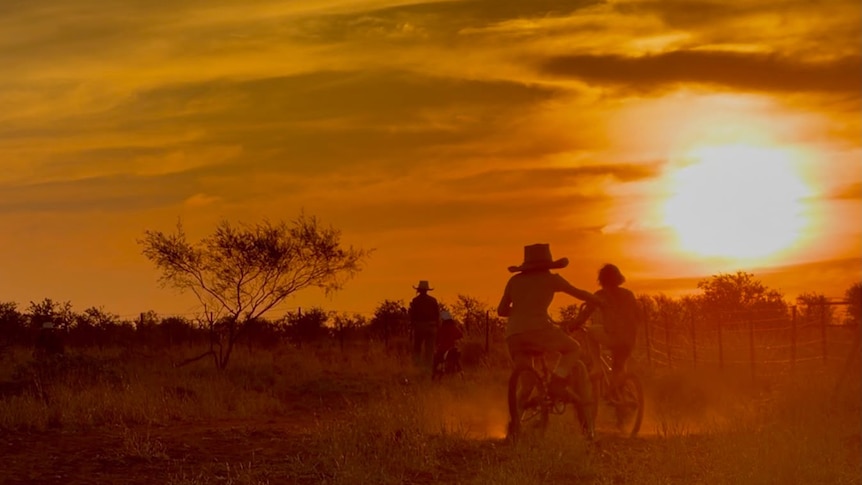
Children from a remote region of Western Australia have joined forces with a renowned country musician to create a song that showcases the unique rural education experience of students living on cattle stations. The School of the Air, which provides distance education to students across the Pilbara's vast interior, collaborated with Josh Arnold, a celebrated Australian country musician, to produce the song "Kids from the Pilbara."
The group recorded the song and its accompanying music video on Yarrie Station, a 250,000-hectare cattle operation about 1,500 kilometers north of Perth.
Tanami Fox-Coppin, a nine-year-old student, is one of 21 pupils attending the School of the Air at Port Hedland. She explained that her education involves online lessons, schoolwork, and fun activities, often conducted in various outdoor locations across the bush. Tanami usually sees her school friends only three times a year, making the opportunity to film the music video with her classmates particularly exciting.
The music video captures various aspects of station life in the Pilbara, including horse riding, motorbike riding, singing around the homestead, and a campfire singalong.
Josh Arnold, who has recorded over 400 songs with rural and remote students across Australia, shared that the project gives students a sense of pride in their school and identity as station kids. He grew up on a sheep and wheat farm and has been striving to give country kids a voice for over 15 years. Arnold expressed his joy at seeing the students come together, reunited after long periods apart, and emphasized the special nature of the experience, noting that people all around Australia and the world will watch and hear the song.
Tanami's mother, Annabelle Coppin, highlighted the importance of the School of the Air for families living in the bush, emphasizing its flexibility and personalized nature compared to mainstream school. While the teacher-to-student ratio is higher in the School of the Air, it comes with challenges such as the need for more resources and emotional difficulties stemming from students learning from parents or governesses.
The establishment of School of the Air in 1951 marked a significant shift in providing education to remote students, transitioning from using a radio to employing computer technology for real-time communication.
Written by urgent.news from ABC News AU's reporting — not their text. Machine-written — may contain errors; check the original before relying on it.