New project aims to create AI medical image-processing system in Japan
The goal is to realize the real-time image processing required at medical sites with the use of advanced semiconductors.
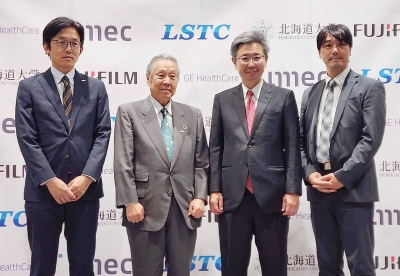
Japan's Leading-edge Semiconductor Technology Center (LSTC) and partners, including Hokkaido University and Fujifilm, announced on Tuesday a collaborative effort to develop an AI-based medical image-processing system. The project's goal is to implement real-time image processing at healthcare facilities while minimizing power consumption.
Fujifilm will focus on developing AI for imaging tests and ultrasound examinations, while Hokkaido University handles AI design and evaluation. The LSTC, comprising chipmaker Rapidus among others, will be responsible for designing the necessary semiconductors. The system is anticipated to utilize 2-nanometer circuit line width semiconductors from Rapidus, which plans to mass-produce these advanced chips.
These semiconductors would enable image-processing speeds up to five times faster than traditional graphics processing units, with over ten times the energy efficiency. LSTC Chairman Tetsuro Higashi, who also serves as chairman of Rapidus, expressed this vision during a Tokyo news conference on Tuesday, emphasizing the aim to leverage cutting-edge semiconductors to create beneficial technologies for medical sites.
Written by urgent.news from Japan Times's reporting — not their text. Machine-written — may contain errors; check the original before relying on it.