Locusts could help detect chemical weapons
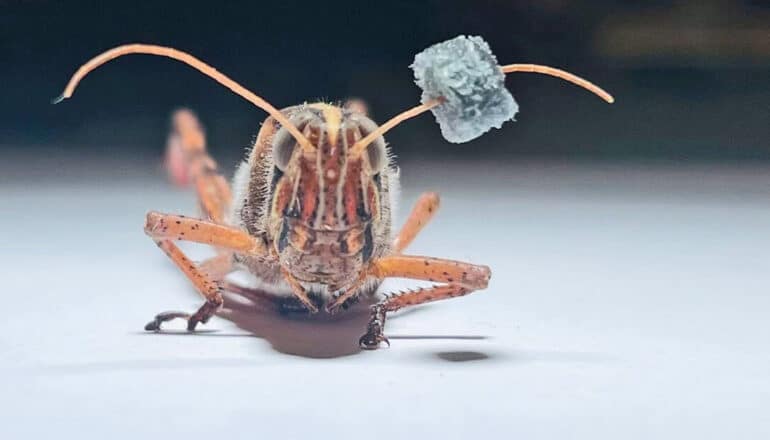
Scientists at Washington University in St. Louis have developed a hybrid chemical sensing system that combines the natural abilities of locusts with nanomaterials to detect chemical compounds. This innovative approach could have potential applications in search-and-rescue operations, chemical weapons detection, and disaster zone mapping.
By adding a surface-enhanced Raman scattering (SERS) substrate to the locusts' antennae, the researchers were able to enhance the insect's odor-detecting capabilities without interfering with its other functions. The SERS technique boosts signals from molecules on or near nanostructure metal surfaces, making it particularly useful for identifying trace chemicals.
In tests, locusts equipped with the SERS coating outperformed both non-enhanced locusts and synthetic chemical sensors, demonstrating improved odor-detection performance across a range of chemicals, including the chemical signature for TNT. This hybrid system represents a significant step forward in creating a superior sensing system by marrying the best biological abilities with engineering principles.
Written by urgent.news from Futurity's reporting — not their text. Machine-written — may contain errors; check the original before relying on it.