Interview: Forscher: „Selbst wenn Meta nachts Instagram abschaltet, soll niemand glauben, dass die Pisa-Leistungen explodieren“
Olaf Köller sieht starke Defizite im deutschen Bildungssystem. Als Hauptursache nennt er nicht Zuwanderung oder Social Media, sondern einen ganz anderen Punkt.
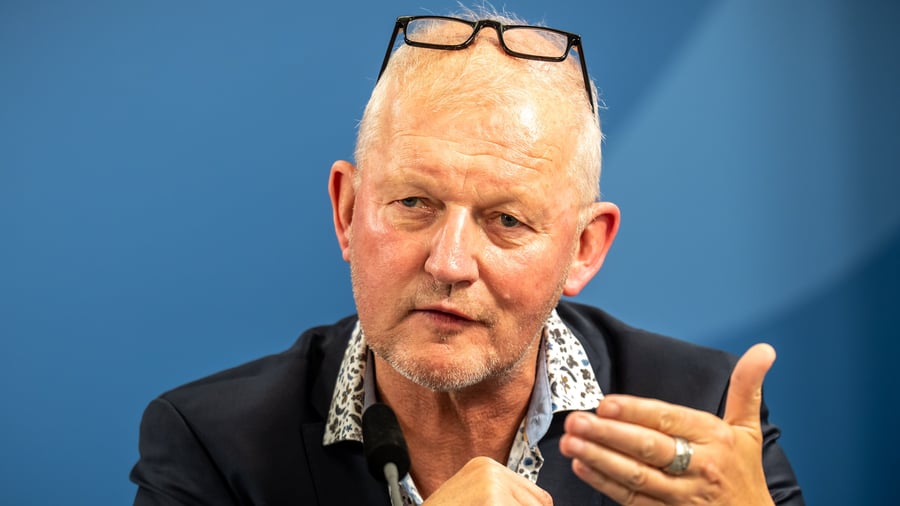
Professor Köller pointed out that recent education tests, including the latest Pisa study, have revealed devastating results for the German education system. Germany's students performed as poorly as ever in reading, arithmetic, and natural sciences. The concerning issue lies in the risk group: 32% of 15-year-olds fail to meet the minimum reading level, and 34% fail in mathematics.
Due to their low competencies, these young individuals have little chance of obtaining a qualified vocational training. They cannot read fluidly, especially not meaningfully. Even in mathematics, they are at best on the performance level of sixth-graders. To address the fundamental skills, more substantial efforts in basic skills promotion are necessary.
After the first Pisa shock 25 years ago, it seemed the country was rattled. Is this response just as strong this time? In fact, we had a significant linguistic promotion offensive in kindergarten and other educational stages after 2001. However, many of these programs were project-based and have since ended. We lack sustainability in the system.
Now we are starting again, but we have neglected it for at least ten years. What was missed specifically? Let's look at mathematics at the gymnasium: Germany has lost 55 Pisa points since 2009. This means our 15-year-olds in 2025 are roughly two school years behind those from 2009. Something has gone wrong in improving the quality of teaching.
This likely has little to do with immigration, social media, or the emotional difficulty faced by everyone. Rather, something needs to change. We need a 21st-century education that connects more closely to the students' everyday lives. We talk about global crises, climate change, pandemics, energy problems, and the mathematics curriculum continues to grind through routine tasks in many school classes.
This distracts from the teacher's focus. Yes, we must reject the belief that teaching methods and tasks, which were effective in 2000, are still relevant today. Tasks that were created 20 years ago or earlier no longer motivate students. We need a development of didactics and a realignment of the culture of tasks. Digital media can help here, specifically intelligent tutoring systems that support students in their work.
Teaching must be "catchy." How could this look? Use data on climate change or biodiversity to evaluate, graphically represent, interpret, and draw conclusions from. Understand that correlation between two quantities does not automatically mean one is the cause of the other, for example, questioning the correlation between smartphone usage and school performance – what is the cause and what is the effect?
Pisa tests contain such interesting tasks. Fewer than expected are seen in the classroom. At many focus schools, it is difficult to reach the students at all. Yes, there is a lack of educational aspirations. Especially with the particularly weak students, attending school becomes a choice, being bad and not wanting to work later becomes an option.
These students with performance-unimproving identities cannot be addressed only with German and mathematics support. The school must better address the challenging psychology of these students. Education Minister Karin Prien believes that the promotion promise in Germany does not work right now. Do you agree? I do not share that view.
Empirical evidence suggests otherwise. Every additional Pisa point contributes to the well-being of individuals and society. We need a narrative that positions education and high competency levels as central to individual advancement. Conversely, the students from the risk group are the ones who later rely on the benefits of the welfare state.
Should we be too easy on them? We see a lowering of standards. What was a grade 3 ten years ago is now a grade 2. It appears that standards are being evaluated very liberally. This is also evident in the large contrast between high grades and the grades in central final exams. We no longer repeat a school year when children have weak learning results, but we also fail to adequately support them.
We simply turn a blind eye and let them pass until they end up in the risk group in Pisa. Does Germany need more performance, more discipline? It cannot be the goal of the school to simply make all students feel comfortable. The school must impart a culture of effort, where children and youth learn that their efforts lead to learning success.
Challenging tasks are needed, where students can utilize their intellectual resources. The use of social media is a topic worth discussing. What role does it play in the negative trend? There are worldwide studies focusing precisely on this issue. However, there is a classic hen-and-egg problem here. Whether excessive social media usage leads to poor performance or poor performance drives excessive use of social media is unclear. Regardless, the impact is very weak. We need more.
Written by urgent.news from Handelsblatt's reporting — not their text. Machine-written — may contain errors; check the original before relying on it.
This story
This is one outlet's version. Read the fullest account.