India’s GCCs move up the value chain to build products for global markets
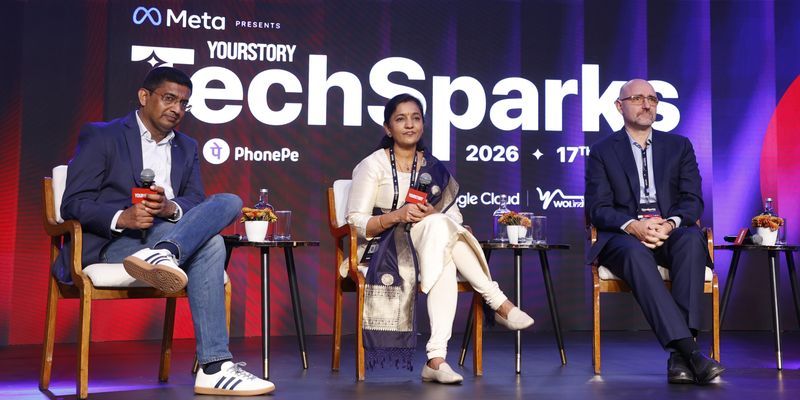
At TechSparks 2026, leaders from Mercedes-Benz Research and Development India, Siemens Healthineers and Lufthansa Systems India discussed how local problem-solving, product ownership, and innovation can help India build for global markets.
India has traditionally been a major hub for technology services, but its engineering capabilities are expanding, allowing engineers to develop products, create intellectual property (IP), and take ownership of innovation. As multinational companies establish research and development (R&D) centers in the country, Indian teams are transitioning from merely executing assigned tasks to tackling complex problems and building solutions for global markets.
At the TechSparks 2026 conference, executives from major corporations shared their experiences and insights on how India's global capability centers (GCCs) can ascend the value chain.
For Kalavathi GV, Executive Director and Head of the Global Development Centre at Siemens Healthineers, tailoring healthcare solutions for the Indian market is crucial. She explained that what works in the US does not work in India due to differences in lifestyles, disease prevalence, affordability, and access to care. Instead of merely adapting products designed for developed markets, Siemens Healthineers now collaborates with Indian clinics, hospitals, and customers to co-create solutions that meet local healthcare needs.
One example is a C-arm imaging system that was developed locally to address specific requirements. This product has since expanded to serve 40 other markets and has an installed base of 1,400 units.
Luigi Celmi, CEO of Lufthansa Systems India, emphasized the importance of India's established engineering ecosystem and advances in automation. With over 1,000 employees in India across its operations, Lufthansa Systems sees opportunities to leverage the country's capabilities and partnerships. Bangalore's expanding aviation and aerospace ecosystem also appeals to the company, as reliability and domain expertise are paramount in this sector. Celmi noted that engineers often spend more time validating changes rather than creating them.
Manu Saale, Managing Director and CEO of Mercedes-Benz Research and Development India, described the shift from task-based execution to ownership of broader engineering challenges. While the vehicle remains a global product, the head unit—the digital interface inside the vehicle—offers opportunities for customization. Saale highlighted that the shift enables Indian teams to take responsibility for entire systems and subsystems, rather than simply following daily instructions from global headquarters.
He emphasized the importance of moving beyond technology services and building products for domestic use and export markets, aiming to develop the expertise needed to own the entire stack.
Written by urgent.news from YourStory's reporting — not their text. Machine-written — may contain errors; check the original before relying on it.
Also reported by 1 other outlet
- IMF advises India to let rupee move as first defence amid oil shock thehindubusinessline.com