There are an estimated 10 quintillion insects alive on Earth at any given time. That's 10,000,000,000,000,000,000 individual insects. But how many species are there, why do we need them, and what would happen if their numbers continued to fall? Dr. Alex Dittrich, a zoologist at Nottingham Trent University, explains why these small creatures play such a big role in keeping our planet functioning.
After trapping a positron for the first time, physicists plan to use the resulting data to look for answers to one of particle physics’ biggest questions
One of the most effective ways to protect the environment is to make markets work for environmental goals rather than against them, using tools such as tradable permits and payments for ecosystem…
A new study in Nature by researchers at Baylor College of Medicine answers a long-standing question about astrocytes, star-shaped cells that are the most abundant support cells in the brain and spinal…
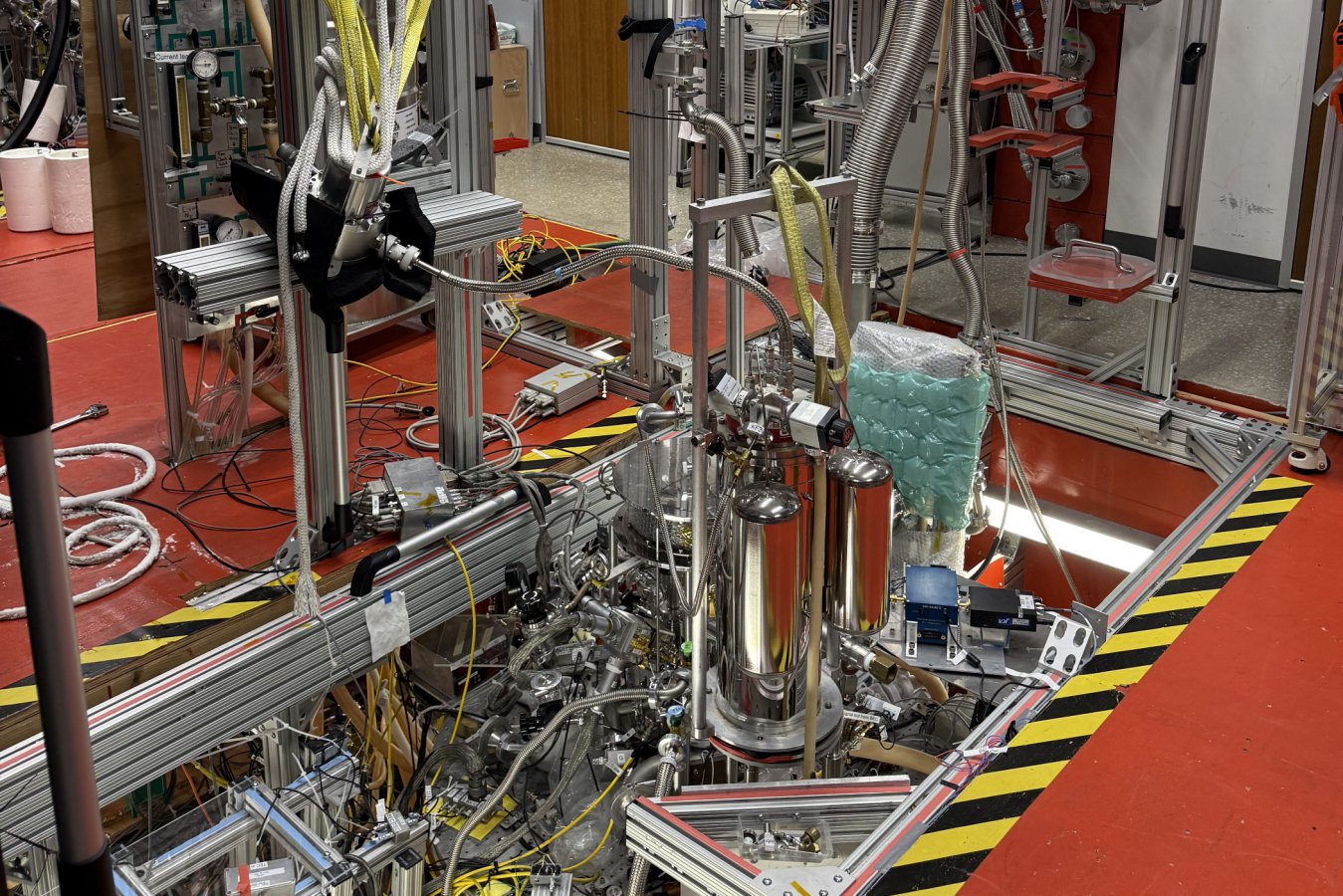
For the first time, Northwestern University physicists have coaxed a single positron—the antimatter counterpart of an electron—into an exquisitely controlled quantum state.
Earlier this year, an outbreak of Andes hantavirus on a cruise ship, which killed three passengers and sickened 13, highlighted the lack of approved vaccines or treatments for the virus.