GM promises smarter cars, faster updates, and autonomous dry-cleaning runs
General Motors is still very much in the business of selling gas-guzzling trucks and massive SUVs. But if you listen to its leadership, the Detroit giant is rapidly transforming into a nimble, software-defined tech player with a tightened grip on AI. That was the pitch today, when GM hosted its tech-focused Onward event to unveil […]
General Motors is shifting its focus towards software-defined technology and artificial intelligence, according to the company's leadership. This transformation was highlighted during GM's tech-focused Onward event, where the company unveiled a variety of initiatives centered around electric vehicles (EVs), autonomous vehicles, and AI advancements.
The primary objectives of these initiatives are to reduce vehicle development times by half, enhance compute power by up to 40 times, accelerate battery chemistry modeling, and implement eyes-off autonomous driving features in their top-selling trucks and SUVs. The goal is to transition GM from a traditional automaker into an AI-centric tech enterprise utilizing its extensive resources for electric and gas-powered vehicles.
While this strategy has been proposed before, GM is aiming to achieve a quicker development cycle of just two years through a digital thread virtualization approach, which unifies design, engineering, and manufacturing processes from the outset. To demonstrate the effectiveness of this new method, GM cited its battery development program as a success story, where over 300,000 virtual battery designs were tested before a single physical prototype was built.
This approach led to the creation of lithium manganese rich (LMR) batteries, which offer 33% higher energy density than traditional lithium iron phosphate cells at a similar cost, and 20% better efficiency per kilowatt-hour. These batteries will power GM's fourth-generation EV platform, which is being manufactured at Spring Hill, Tennessee by the joint venture between GM and LG Energy Solution.
In addition to these advancements, GM is also simplifying its electronic setup by integrating dozens of small control units into a single central computer that is liquid-cooled and connected by high-speed lines. This change is expected to result in faster screens, more intelligent voice controls, and seamless over-the-air updates for automated driving features and battery management.
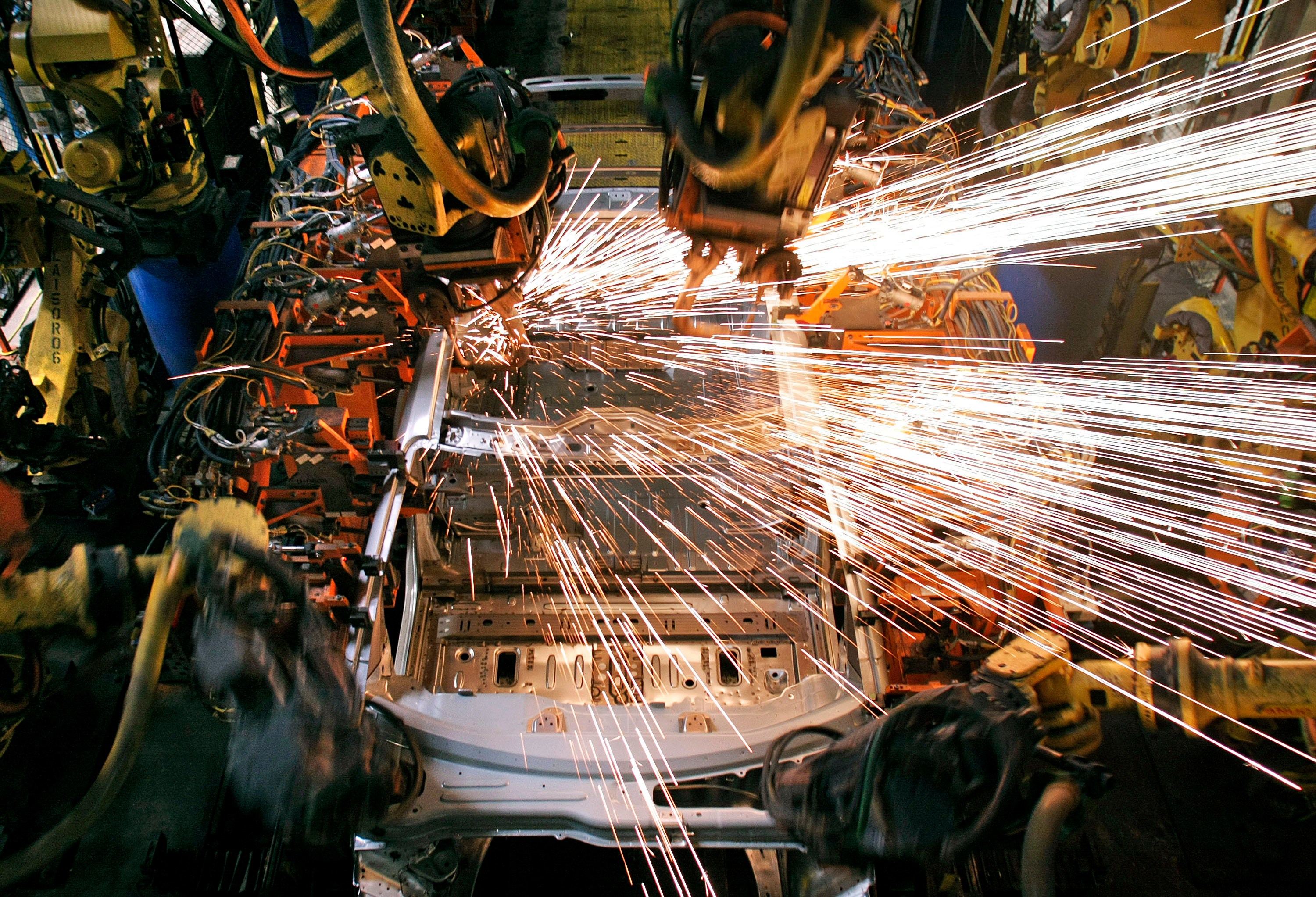
Real-time factory floor data combined with digital-twin simulations across various production stages aims to minimize errors and bottlenecks before they affect actual production, as part of GM's PlantBrAIn project. The new compute platform will debut in the 2028 Cadillac Escalade IQ, which will also offer hands-free, eyes-off highway driving capabilities across GM's entire lineup of electric and gas-powered vehicles.
Written by urgent.news from The Verge's reporting — not their text. Machine-written — may contain errors; check the original before relying on it.