Ghana faces revenue gap that could hinder economic growth, ISSER warns
Ghana's push for faster, more robust economic growth faces a major financing constraint because its revenue generation remains below the sub-Saharan African average. The Institute of Statistical, Social and Economic Research (ISSER) says this gap makes it harder for the government to pay for development and could lead to spending cuts. ISSER shared this warning at the launch of its State of the…
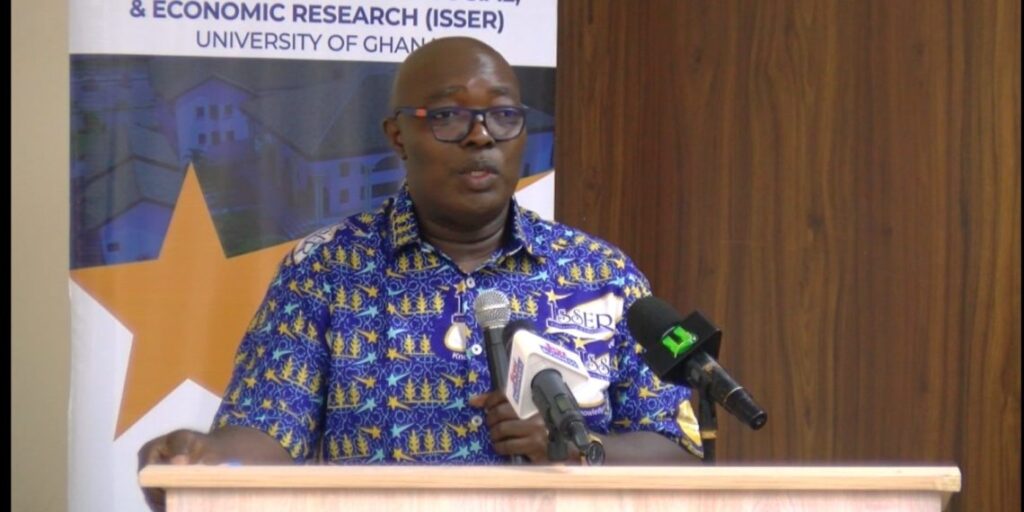
Ghana’s quest for faster, more robust economic growth has hit a significant roadblock due to its revenue generation lagging behind the sub-Saharan African average. The Institute of Statistical, Social and Economic Research (ISSER) has issued a warning about this funding gap, which could hinder the government's ability to fund development initiatives and potentially result in spending cuts.
This concern was highlighted at the launch of the State of the Ghanaian Economy Report 2025, as the nation experiences a stronger economy under the government's efforts to build upon the progress made in 2025.
At the report's presentation, ISSER's Director, Professor Robert Darko Osei, emphasized that Ghana's tax revenue constituted around 30% of the GDP in 2025 – a figure below the sub-Saharan African average. This points to a revenue gap that Ghana must address to maintain its growth trajectory. Osei stressed that the solution lies in expanding the tax base rather than exerting more pressure on existing taxpayers. He advocated for increasing the number of taxpayers to boost revenue generation.
However, Osei also cautioned that Ghana's upcoming economic rebasing could negatively impact the tax-to-GDP ratio if revenue collection does not keep pace with the economy's expansion. He noted that Ghana's improved fiscal position in 2025 was largely due to reduced spending rather than higher revenue or grant allocations. To address this issue, Osei recommended reevaluating spending priorities while simultaneously striving to generate more revenue domestically.
He further pointed out that Ghana's average tariff rates are higher than those in neighboring countries, underscoring the importance of broadening the domestic tax base to avoid excessive reliance on current revenue sources.
Ghana's primary challenge now is transitioning from stabilizing its economy to creating sufficient budgetary space to fund the next phase of growth. According to ISSER's analysis, unless Ghana successfully broadens and strengthens its tax base, exceptional economic growth may not translate into additional funds for infrastructure, employment creation, and economic diversification.
Written by urgent.news from Joy Business's reporting — not their text. Machine-written — may contain errors; check the original before relying on it.