Executives are more likely to trust AI than themselves
Executives are twice as likely as rank-and-file workers to trust AI over their own judgment, per a survey out Wednesday morning. Why it matters: It's a worrying development. Leaders are hired for their experience and knowledge. Outsourcing that to AI raises the risk of making decisions that don't line up with reality, which then reverberate across companies and beyond. By the numbers: 32.8% of…
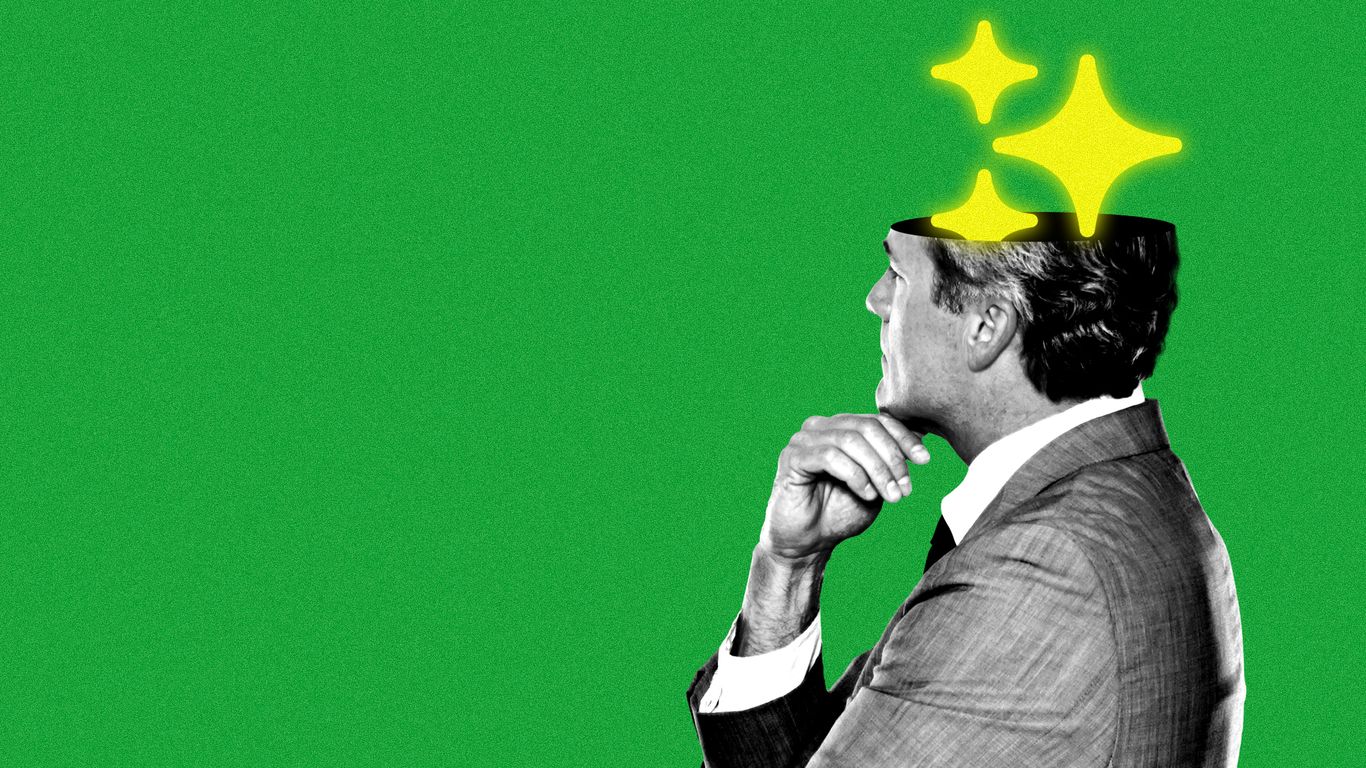
According to a recent survey, executives are twice as likely as their direct reports to trust artificial intelligence over their own judgment, a finding that raises concerns about decision-making and potential risks. The survey, conducted by workplace research and media company Charter, polled 5,002 U.S. office workers at companies with at least 100 employees.
The results revealed that 32.8% of executives trusted AI more than their own judgment, compared to just 16.3% of individual contributors. The gap persisted at the managerial level, with 34.8% of managers expressing the same belief, as opposed to 16.3% of individual contributors.
The researchers suggest that cognitive offloading, or using tools like AI to alleviate mental effort, is a primary reason behind this trend. Executives, despite their extensive experience, are relying on AI more than anyone else, the coauthors noted. Brian Elliott, a former Slack executive and current executive-in-residence at Charter, attributed this behavior to the pressure executives face to provide quick answers to complex questions.
He argues that AI's tendency to provide seemingly authoritative and confident responses reinforces executive tendencies to "fake it until they make it."
While the survey paints a generally positive picture of AI's potential benefits in the workplace, the researchers also highlight a significant friction point: the fear of job loss among workers. As workers become more proficient with AI, they become increasingly aware of the tasks that can be automated, leading to a persistent tension between the benefits of AI and the potential for job displacement.
However, Elliott remains optimistic, stating that the likelihood of an AI-powered CEO taking over a company is "excruciatingly low."
Written by urgent.news from Axios's reporting — not their text. Machine-written — may contain errors; check the original before relying on it.