Einride expands Nvidia partnership to deploy AI reasoning model for self-driving trucks
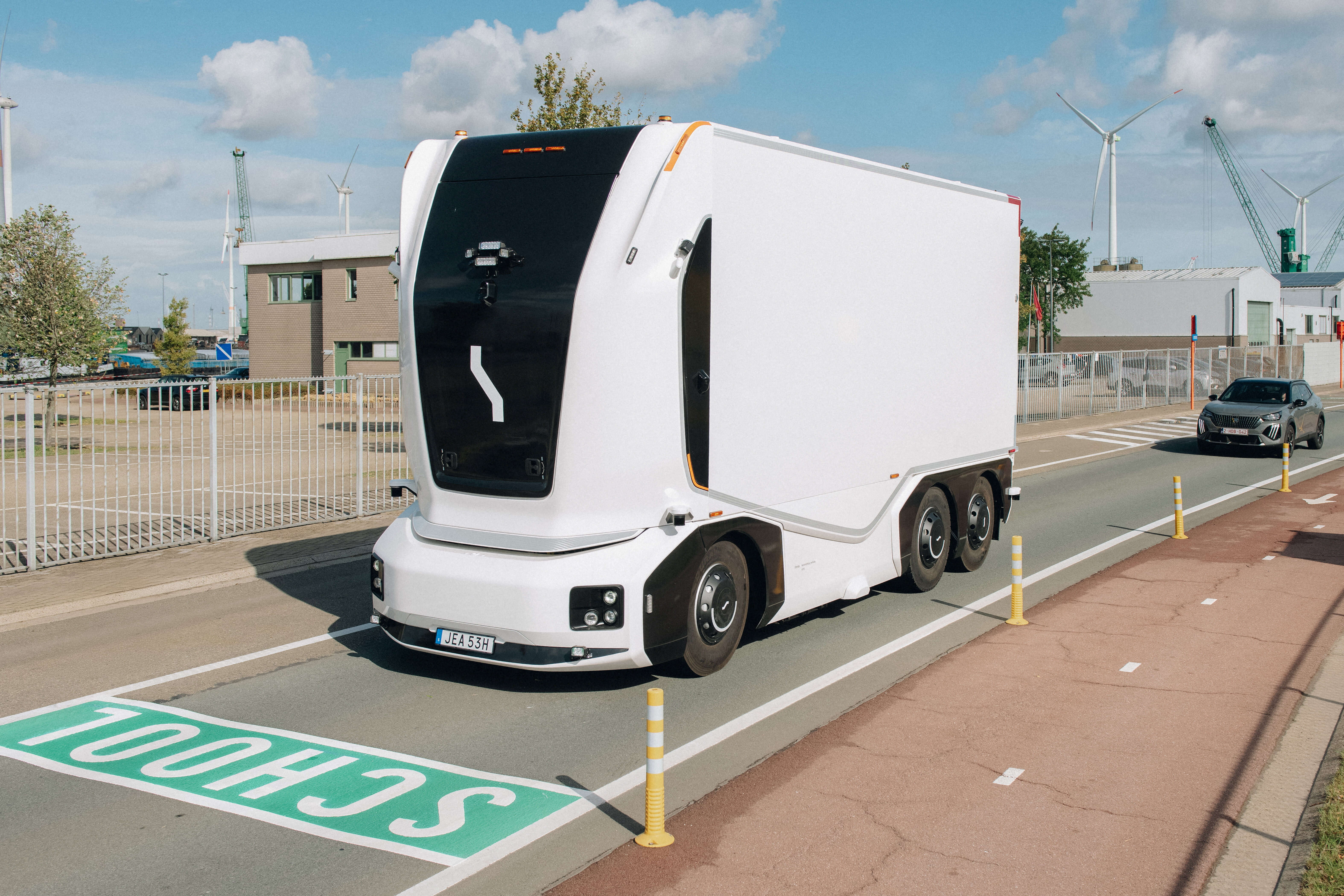
Self-driving truck company Einride said on Wednesday it would broaden its partnership with Nvidia by testing the chipmaker's AI reasoning model, Alpamayo, in its self-driving vehicles, aiming to speed up the expansion of autonomous freight services while lowering development costs
Fuse Energy, a British EnergyTech startup, has launched reservations for Fuse Compute, its inaugural commercial AI product. This offering provides access to NVIDIA GPUs in UK data centers powered by Fuse, marking a new venture into AI infrastructure. Interested parties can register their interest and reserve capacity immediately, with the initial GPUs scheduled to go online in December 2026.
CEO and co-founder Alan Chang emphasizes that power is the primary obstacle to constructing AI infrastructure, a challenge Fuse Energy has mastered. Chang explains, "Every AI company is fighting for the same scarce GPUs, and the grid cannot connect data centers fast enough to keep up. Fuse Compute utilizes this expertise for the companies developing the future of intelligence, ensuring the future is built in Britain."
Founded in 2022, Fuse Energy has raised €178 million ($199 million) since its inception. Previously, the company supplied electricity to 50,000 UK homes, reporting €76 million in annualized revenue and securing €8.5 million in funding. By December 2025, Fuse had expanded to over 200,000 households, generating €341 million in annual recurring revenue and successfully raising €59 million.
Expansion into AI compute follows a surge in funding for AI infrastructure companies; for instance, Nscale raised €1.7 billion for vertical AI compute integration, Volta secured €259.8 million for AI factories, and Orbital Industries raised €43 million for data-center technologies.
The UK government's Compute Roadmap projects that the nation will require at least 6GW of AI-capable data center capacity by 2030; however, new data centers are experiencing waiting periods of up to a decade for grid connections. Power has emerged as the primary constraint to expanding this capacity. The government aims to augment the UK's public compute capacity 20-fold by 2030, yet the country lacks many home-grown providers of large-scale compute, causing numerous British AI companies to depend on overseas capacity.
Fuse Compute offers bare-metal, single-tenant NVIDIA GPU nodes in UK data centers, ensuring jurisdiction and data pathway within the UK. The initial 128 NVIDIA B300 GPUs will become operational in December 2026, followed by 1,024 GPUs in Q2 2027, an additional 22MW in Q4 2027, and 116MW by 2028. On the energy front, Fuse Energy already powers 470,000 UK homes and holds supplier and meter operator licenses.
In the UK, the company owns and operates low-carbon generation assets, with 22MW currently active and over 1GW in pipeline across the UK, US, and Europe.
The near-term data center projects for Fuse Compute are expected to create 250 construction and operational jobs in the UK, representing a €1.1 billion (£1 billion) investment in UK infrastructure.
Written by urgent.news from EU-Startups's reporting — not their text. Machine-written — may contain errors; check the original before relying on it.
This story
This is one outlet's version. Read the fullest account.