Draft auto policy sent to cabinet
ISLAMABAD: Prime Minister Shehbaz Sharif on Tuesday approved the draft Auto Policy 2026-31, which aims to increase auto sector exports to $6 billion and boost local production, competitiveness and electric vehicle (EV) adoption. Although the Prime Minister’s Office did not issue an official statement, sources in the federal government shared the final draft, which was presented to the premier by…
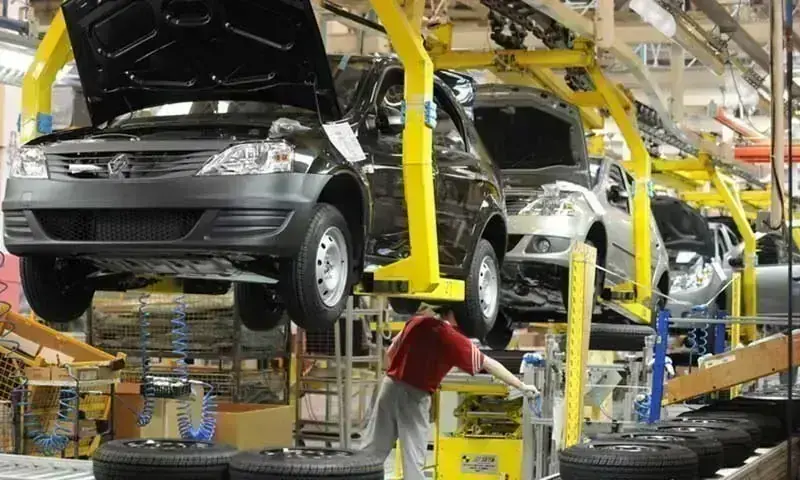
Islamabad: Prime Minister Shehbaz Sharif has signed off on the Auto Policy 2026-31, which seeks to escalate auto sector exports to $6 billion and bolster local manufacturing, competitiveness and electric vehicle (EV) uptake, according to sources in the federal government. The draft policy, presented to the premier by Law Minister Azam Nazeer Tarar and Industries and Production Adviser Haroon Akhtar, will undergo federal cabinet endorsement before seeking parliamentary approval.
The proposal aims to liberalize the auto sector by slashing tariffs on completely built-up units (CBUs) and completely knocked-down (CKD) kits to 15pc by 2030-31. Notably, battery electric vehicles will be taxed at 1pc during 2026-31, while range-extended electric vehicles and plug-in hybrids will face 6pc and 9pc sales tax, respectively.
Additionally, EVs valued above $75,000 will incur a 10pc federal excise duty. To spur EV adoption, the government has approved increased financing limits and longer repayment periods, making smaller vehicles more accessible for low-income consumers. The policy outlines a $6.01bn export target over five years, with mandatory export goals for manufacturers and financial incentives for those surpassing targets.
Companies falling short of export objectives or local production targets could face penalties and the cancellation of manufacturing certificates. The Automotive Development Levy, set to generate over Rs232bn over five years, will fund export incentives, industrial development programs, and technology upgrades for auto parts manufacturers.
The policy also establishes the Pakistan Automotive Testing Institute to bolster quality assurance and regulatory oversight, along with funding for research, certification, and third-party audits. However, Paapam Chairman Abdul Rehman Aizaz has cautioned that the policy's lower tariffs on parts could erode the local auto industry, potentially transforming Pakistan into an import hub for automobiles.
Written by urgent.news from Dawn Business's reporting — not their text. Machine-written — may contain errors; check the original before relying on it.