Can China turn national power into world leadership?
As turbulence grows in many countries, it is tempting to ask if there is a global hegemon that can sort everything out fairly. US President Donald Trump has threatened that his country would not defend Nato allies if they failed to spend enough on their defence. Together with new trade barriers, his words suggest that the US is scaling back its ambitions for global leadership and concentrating…
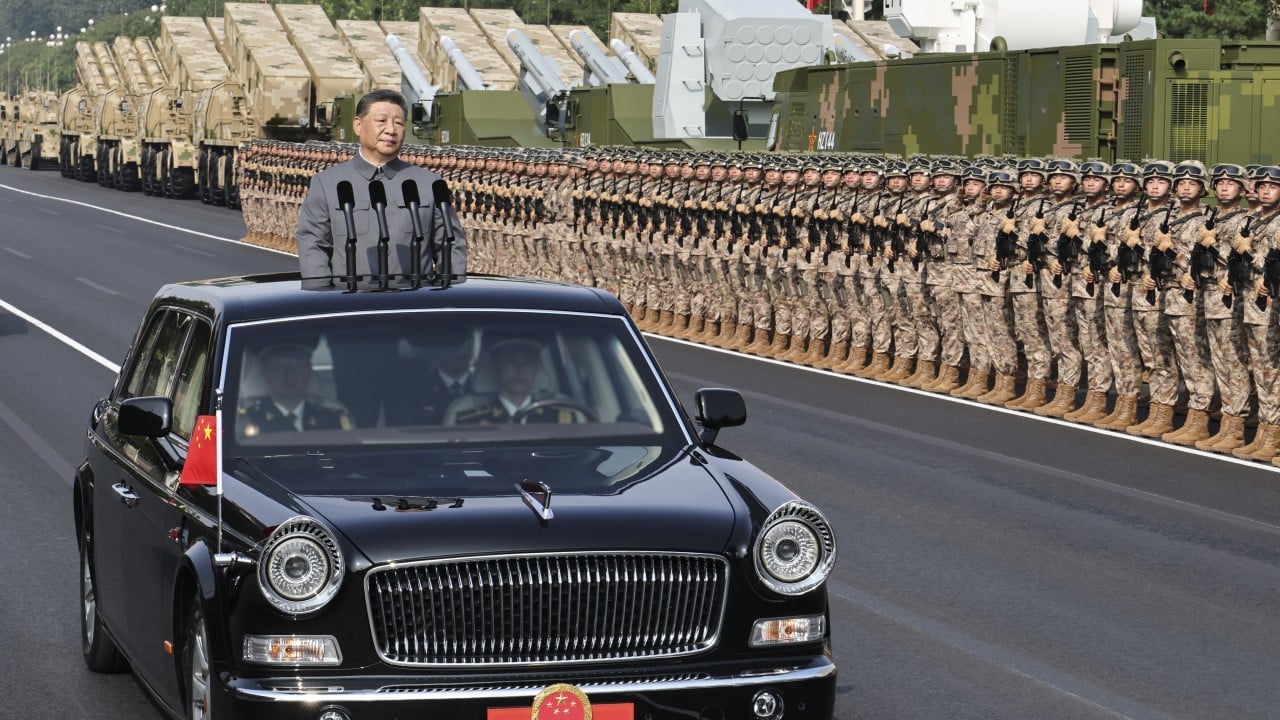
In turbulent times, some may ponder if a global hegemon could resolve conflicts fairly. US President Donald Trump has suggested his nation is reducing its global ambitions, focusing on its region while imposing trade barriers. Our latest projections of national strength for 2027 indicate China holds the top spot, with its lead widening. However, when will China move from being the strongest to exerting decisive influence worldwide?
To explore this, we must first understand how states assess national power. Historical rulers relied on separate metrics like population, revenue, troops, and ships. In the late 17th century, William Petty developed a more systematic method, comparing countries by territory, population, trade, shipping, revenue, and military capabilities. Today, advanced tools allow us to simultaneously analyze numerous dimensions of national strength through a national strength index, akin to a state's dashboard.
This index uses various gauges, such as GDP for economic size, defence spending for military commitment, territory, resources, population, and science. These factors work together to create overall strength. Among the 193 countries in our index, China ranks first, followed by the US and Russia.
China's lead stems mainly from its vast economy and industrial output. Its large domestic market, workforce, infrastructure, and extensive supply chains provide a robust foundation. These factors help China develop its scientific and technological capacity, strengthen its military, and expand its influence on the global economy.
However, America's relative strength is declining. Structural imbalances, slower growth, and rising debt pressures contribute to this trend. The US spends over $1 trillion annually on federal debt interest. Our index shows that the economy carries the most weight, followed by the armed forces. Defence spending is the military's material base, with factories, design centres, testing grounds, repair facilities, transport, energy supplies, and skilled workers supporting it.
In a prolonged confrontation, the ability to produce weapons and ammunition at scale, repair equipment, and quickly increase output becomes crucial.
Economic capacity also reflects a country's reserves and its ability to sustain military efforts. Large defence orders can further support the economy, creating steady work, investment in equipment, demand for various materials, and the development of new plants and infrastructure.
Military spending trends indicate that major powers view defence capacity as a long-term priority. Global military expenditure has risen significantly, with the US, China, and Russia accounting for about 51 per cent of the world total. Our ranking reflects this, although the order and gaps differ from the actual ranking.
While military spending matters, overall strength depends on all components. Europe saw rapid growth in military spending, reaching $864 billion last year, up 14 per cent, led by Germany and Spain. However, military protection is just one response to the fragmentation of the global economy into macro-regions. This may be the first stage of a broader change, potentially leading to "fractalisation," where large regional economies replicate functions of the former global system within their networks.
Chinese President Xi Jinping's recent proposals for a Brics special economic zone, a digital platform, and closer industrial cooperation may signal early steps toward this process. Our calculations show China first in national strength, but a ranking alone cannot predict whether other countries will accept China's leadership. This depends on whether China's links work beyond its closest partners and if others find them reliable and beneficial.
If stronger regional systems begin to connect more closely, they could lay the groundwork for a new phase of globalisation, ultimately determining whether China can shape the next world order.
Written by urgent.news from Reuters Business via SCMP's reporting — not their text. Machine-written — may contain errors; check the original before relying on it.