Brazil’s family farming backbone embraces Chinese AI to reverse vital sector’s decline
The family farmers who produce the lion’s share of Brazil’s staple foods are opening their arms to cutting-edge Chinese artificial intelligence in a bid to modernise operations and secure their future. Brazil and China agreed to a five-year cooperation programme in September aimed at giving smallholders – the backbone of the Brazilian agricultural sector – an AI boost after a decade of declining…
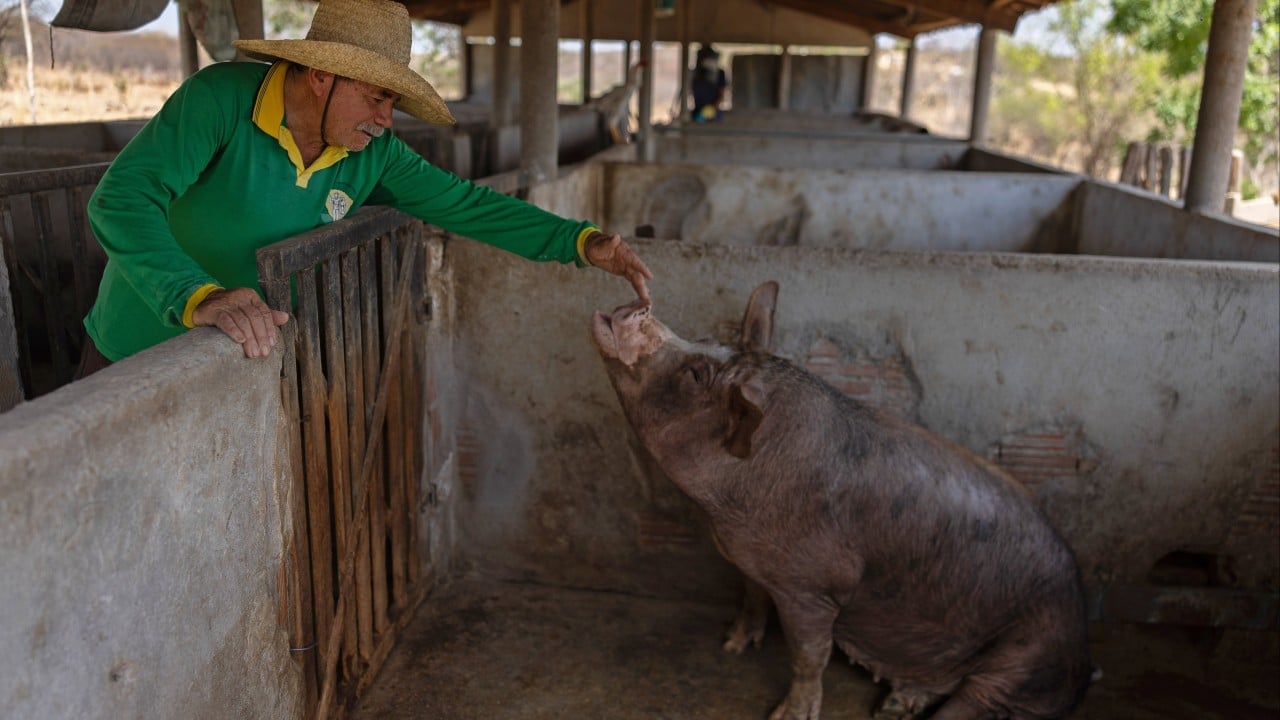
Brazilian family farmers are embracing Chinese artificial intelligence technology to modernize their operations and secure their future, as the two nations collaborate on a five-year program. The agreement, signed in Nanjing, China, brings together Embrapa, the Brazilian Agricultural Research Corporation, and four Chinese institutions. The Brazil-China Cooperation Centre for the Application of AI in Agriculture will focus on developing new technologies tailored to Brazil's production, social, and environmental conditions.
Family farms produce a significant portion of Brazil's staple foods, including 87% of cassava and 70% of beans. They also contribute 60% of milk, half of poultry, and 34% of rice. Family farms employ around 10.1 million people, playing a vital role in the country's economy. Luciana Romani, a researcher at Embrapa Digital Agriculture, explains that the collaboration will combine agronomic knowledge, artificial intelligence, computer vision, automation, and smart agricultural machinery.
The agreement aims to establish Smart Agricultural Machinery Centres in pilot family farming areas of Brazil. These centers will incorporate AI into agricultural machinery, helping with crop monitoring and management. Sinomach, a state-owned Chinese corporation, will provide an integrated platform for decision-making at various management levels, benefiting both farmers and managers.
The researchers will focus on adapting existing AI models to Brazil's diverse production systems, crops, environmental conditions, and producer profiles. They will not develop new models but will use data from sensors, machines, and other digital tools to interpret patterns, optimize resources, support diagnoses, and improve input and resource use.
By integrating AI with smart agricultural machinery, these technologies can help farmers interpret data, identify patterns, optimize resources, and diagnose agricultural problems.
Written by urgent.news from Reuters Business via SCMP's reporting — not their text. Machine-written — may contain errors; check the original before relying on it.
This story
This is one outlet's version. Read the fullest account.