BOOK EXCERPT: How dolerite turned the Karoo into an ancient canvas and a barrier to fracking
The dolerite that underpins the geo-history and water wealth of the Karoo became the ancient canvas for our First Artists. It has also dashed the dreams of would-be shale gas frackers.
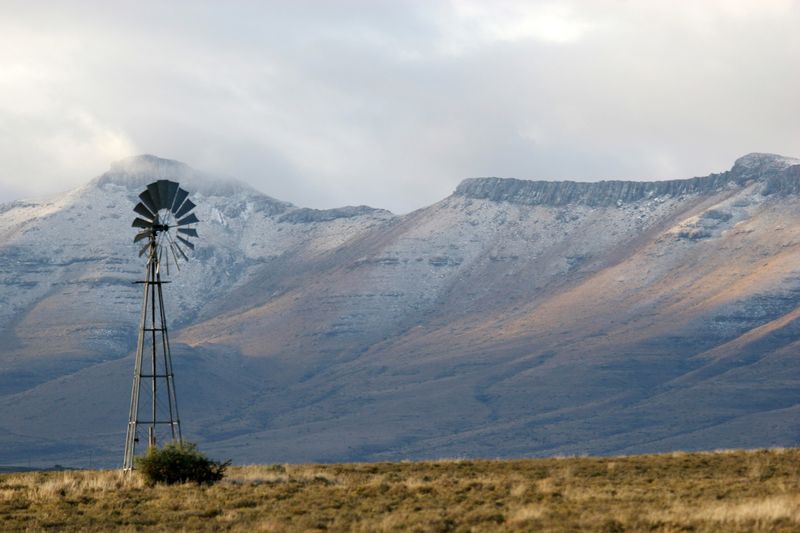
Dolerite, a type of igneous rock, played a crucial role in shaping the Karoo region's geography, water resources, and human history. This rock formed approximately 182.5 million years ago when magma rose through the Karoo's sedimentary layers, filling every crevice, fault, and crack. The resulting dolerite rock formations left behind distinct underground cracks and sills, which have since become vital to the Karoo's unique characteristics.
One of the most notable visual reminders of these dolerite formations are the characteristic flat-topped mountains and hills that dot the Karoo landscape. These dolerite sills protected the softer underlying sandstone from erosion, creating a landscape of iconic stone pillars and pop-up koppies. In addition to their striking appearance, these dolerite features also act as natural water traps, collecting groundwater in the surrounding sediment.
This phenomenon makes dolerite-rich areas prime locations for drilling water wells, supporting the region's abundant sheep population and thriving windpump infrastructure.
Beyond its geological impact, dolerite has also played a significant role in human evolution and South African culture. Dolerite's hard, fine-grained surface shale, known as hornfels, was instrumental in the creation of ancient stone tools used by early humans. These tools were made by heating the hornfels, transforming it into a hard and fracture-resistant material called conchoidal glass.
Professor Julian "Goonie" Marsh, a Karoo dolerite expert at Rhodes University, has identified numerous sites across the Karoo Basin where dolerite dykes intrude shales, littered with hundreds of worked hornfels fragments - effectively stone tool factories.
Moreover, dolerite's unique reaction to sunlight and oxidation gave rise to early human artistic expression. As the darkened and blackened rock varnish peels away, pale reddish-brown rock is exposed, providing a canvas for early humans to create their impressions. This process is evident at numerous rock etching sites scattered throughout the Karoo, such as the one near Nelspoort.
The combination of dolerite's geological properties and human cultural significance makes it clear that this ancient rock formation has left an indelible mark on the Karoo's history and environment.
Written by urgent.news from Daily Maverick's reporting — not their text. Machine-written — may contain errors; check the original before relying on it.