Are we in danger of outsourcing all of childhood’s learning curves to AI?
As artificial intelligence becomes part of childhood, we may be are we giving doing children a disservice if we allow them access to answers faster than they can develop the ability to find out for themselves
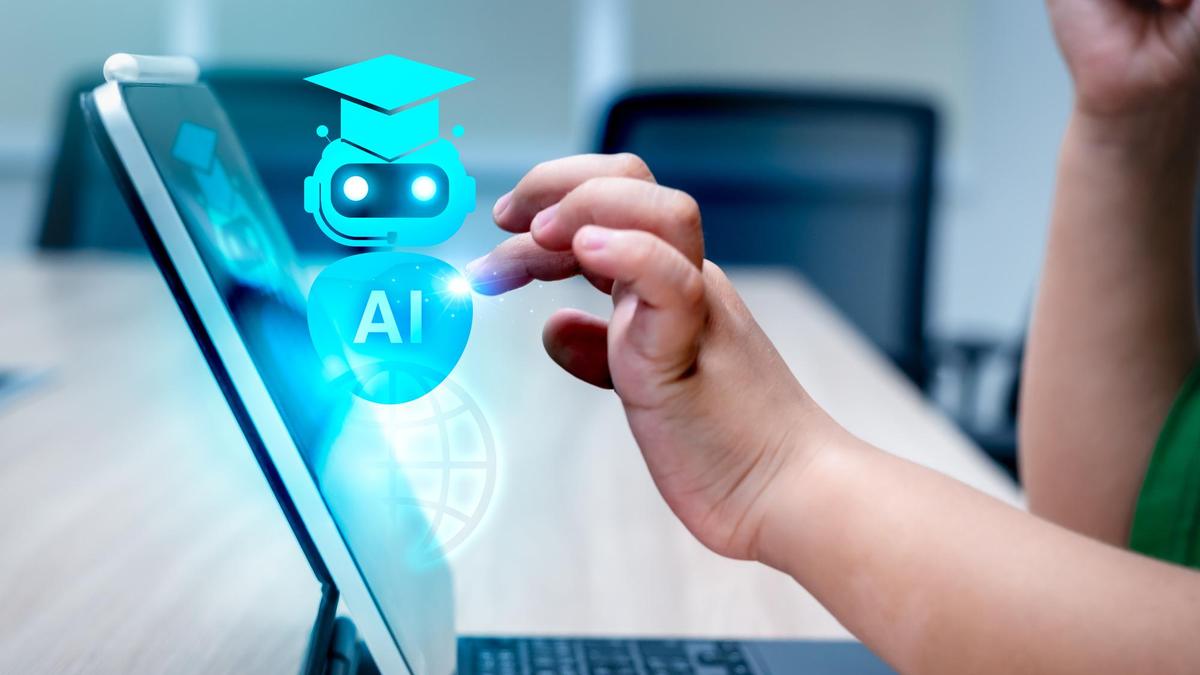
Are we in danger of outsourcing all of childhood's learning processes to AI? This question merits consideration as AI increasingly assists children with tasks and knowledge acquisition. While AI can be a valuable learning tool, there are concerns that it may hinder children's development of essential skills.
Relying on AI for answers robs children of the chance to practice problem-solving, reasoning, and critical thinking. When children struggle with a challenge, grapple with different approaches, and eventually arrive at a solution, they gain more than just the answer. They develop resilience, analytical skills, and a deeper understanding of the subject matter. Using AI to instantly provide solutions may eliminate this valuable learning experience.
Moreover, hands-on learning plays a vital role in childhood development. Maria Montessori believed that a child's hands are instrumental in their intelligence. Through activities such as building, experimenting, and manipulating physical objects, children learn through direct experience, making sense of the world around them. If AI provides answers, explanations, and solutions at a young age, children may miss out on the valuable process of learning through hands-on exploration and trial and error.
Language development is another area where AI may pose a risk. Language acquisition is deeply rooted in social interactions and relationships with caregivers. Children learn by observing and mimicking the responses of their caregivers, who adapt their communication to the child's level of understanding. This social interaction is critical for language development and cannot be replicated by a machine.
While AI-powered toys can engage children in conversation, they lack the emotional intelligence and responsiveness of a human caregiver.
Furthermore, AI toys may create an unrealistic expectation of instant gratification. Children may come to rely on AI for problem-solving and decision-making, failing to develop the ability to cope with frustration, uncertainty, or disappointment. Emotions are a crucial part of learning, and children need opportunities to experience and process a range of emotions under the guidance of a trusted adult.
If every challenge is immediately resolved by a convenient answer, children may miss out on the chance to develop coping mechanisms and reflect on their experiences.
In conclusion, while AI can undoubtedly enhance learning, it is essential to strike a balance between leveraging its capabilities and preserving opportunities for children to develop their skills through hands-on experiences and social interactions. Overreliance on AI for answers and solutions may hinder the development of critical thinking, problem-solving, emotional intelligence, and hands-on learning, ultimately limiting children's growth and learning potential.
Written by urgent.news from The Hindu - Sci-Tech's reporting — not their text. Machine-written — may contain errors; check the original before relying on it.