Agrar: Doch etwas größere Weinernte als befürchtet
Es bleibt dabei: Die Erntemenge beim 2026er Jahrgang ist unterdurchschnittlich. Aber ganz so schlimm, wie zuletzt vom Deutschen Weininstitut befürchtet, wird es doch nicht.
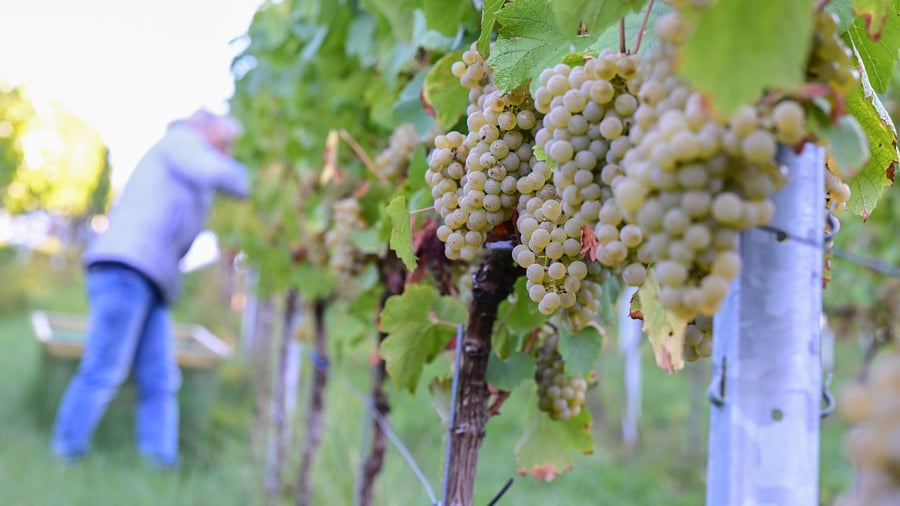
Germany's grape harvest in 2026 is not as meager as initially feared, according to final estimates from winemakers. While the total volume of grape must collected will be less than the average of recent years, it will not be as low as the Deutsche Weininstitut (DWI) originally predicted. The DWI now expects 7.7 million liters of grape must, which is equivalent to last year's level and ten percent below the ten-year average.
The institute had previously forecast a harvest 20 percent below the ten-year average of 8.7 million hectoliters, which would have marked the smallest harvest in 16 years. The Federal Statistical Office estimated a four percent lower harvest compared to the average of 2020-2025, totaling 8.0 million hectoliters. Regional variations prove significant, with some areas yielding higher quantities due to differing rainfall levels and soil water retention capabilities.
In the three largest wine-producing regions, the drought's impact was less severe than expected. Rheinhessen is projected to have an identical yield to last year, at 2.3 billion hectoliters. The Palatinate is expected to produce 2.1 million hectoliters, a twelve percent increase from 2025 but still 5 percent below the ten-year average.
Baden is also projected at around 1.0 million hectoliters, three percent above last year and 12 percent below the long-term average. In Hesse, the Mosel region is expected to produce 610,000 hectoliters, 13 percent below the ten-year average. Württemberg is estimated at 700,000 hectoliters, 21 percent below the ten-year average.
Hesse's Rheingau region is expected to produce 200,000 liters, 18 percent above last year and 6 percent below the average, while the Hessian Bergstraße region is predicted at 32,000 hectoliters, with both figures being 24 and 14 percent below the 2025 average. All 13 wine-growing regions anticipate an unusually high grape maturity and excellent health status of their vines, with wines expected to be exceptionally aromatic whites, concentrated reds, and first-class dessert wines.
Written by urgent.news from Handelsblatt's reporting — not their text. Machine-written — may contain errors; check the original before relying on it.