Activists Raise Human Rights Issues Ahead of Thailand’s Four-Yearly UN Review in Geneva
Activists and grassroots leaders held a press conference on 21 October to highlight persistent problems in half a dozen areas ahead of the Universal Periodic Review (UPR) process in Geneva, a United Nations process that examines the human rights records of member states every four years. The press conference was organised by Manushya, a Bangkok-based […] The post Activists Raise Human Rights…
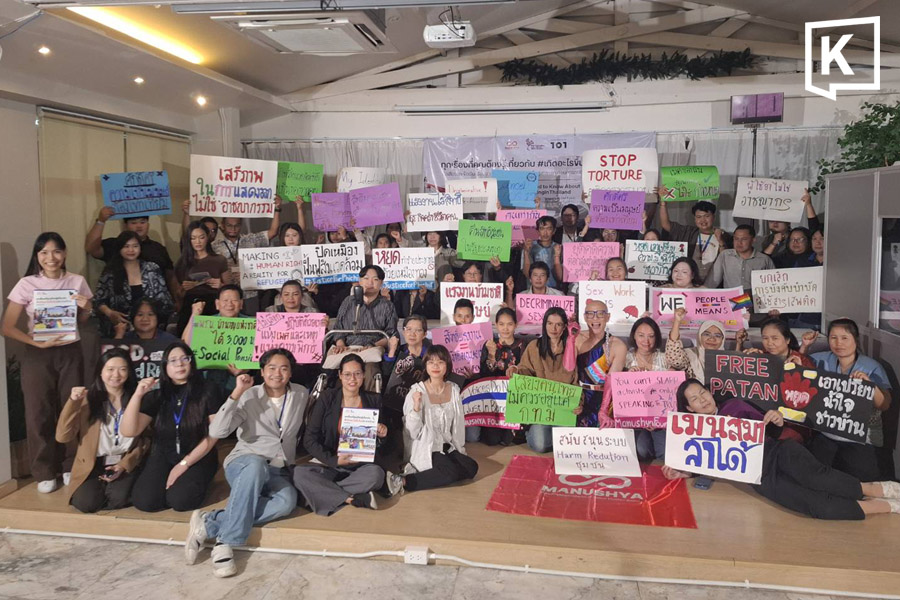
Activists gathered for a press conference on October 21st to bring attention to ongoing human rights issues in Thailand ahead of its Universal Periodic Review (UPR) in Geneva, a UN process that evaluates member states' human rights records every four years. The event was organized by Manushya, a Bangkok-based NGO, and the Thai CSO Coalition for the UPR and UN Mechanism, with 101 Media as the media partner.
The primary concerns discussed included migrant workers' rights, asylum seekers, LGBTQ+ people, ethnic minorities, people with disabilities, older people, among other human rights issues.
Thai-Malay Muslim rights in the Deep South were highlighted, with Abdulloh Ngoh, of the Justice for Peace and Development Network (JASAD) and the PATANI Working Group, discussing the persistent discrimination faced by Thai-Malay Muslims seeking to express their identity. Abdulloh revealed that 53 extrajudicial killings occurred between 2004 and 2026, and 34 people were forcibly disappeared. He called for monitoring of torture, with 640 cases reported during that period. Any peace talks should involve locals, he added.
Transnational repression was another concern, with Tanruthai Thanrut, a political activist from the Manushya Foundation, calling for a review of a Prime Minister Anutin Charnvirakul's amendment that would facilitate the deportation of foreigners. He insisted that human rights should be prioritized.
Wattana Sunsa, a trade unionist with the Thai Metal Products YMP Labour Union, pointed out that only 14,000 unions exist in Thailand and less than 3 percent of the workforce is unionized. He emphasized the challenges migrant workers face in accessing welfare benefits and exercising their rights.
Chalermsak Kittitrakul of FTA Watch raised concerns over the proposed Thailand-EU free trade agreement, especially regarding farmers' rights to seeds, impacts on generic medicines, and medicine prices. He also noted that the Thai government classified all information related to the Thailand-US Agreement on Reciprocal Trade (ART).
Indigenous rights were addressed by Naowwanit Chaemphit, a member of the Moken Indigenous sea peoples community on Koh Lao island in Ranong province, who said the government had yet to fully compensate the community for the effects of the 2004 tsunami. Many had no ID cards, which restricted their mobility, leaving them vulnerable to labor exploitation. Lack of access to electricity and drinking water was also a concern, with the community fearing extinction within 20 years.
Pasuta Chuenkhachorn, a policy advocacy officer at TamTang, discussed discrimination against intersex people, reporting a 49 percent discrimination rate at work, public hospitals, and schools. She emphasized the need for human rights, not just commercial benefits for Pride-related tourism.
Vorapat Veerapattanakup of the Union for Civil Liberty (UCL) highlighted discrimination faced by Thailand's 2.25 million people with disabilities in employment, as well as verbal and physical abuse. Over 1.8 million elderly Thais live alone without sufficient pensions, and HIV access to medicine is not universal. Schools fail to provide adequate HIV education, and some companies require HIV tests, rejecting applicants who test positive.
Nattaporn Artharn, an environmental activist with the Isan Democracy Movement, reported that 480,000 people were prosecuted as the government expanded forested areas by evicting people from community forests. She emphasized the need for addressing land rights.
Thailand's UPR will take place on November 9th in Geneva, where accredited civil society groups will present their concerns, including the issues mentioned above. Government representatives will then respond. Emilie Palamy Pradichit, founder and executive director of the Manushya Foundation, expressed concern that the UPR could become a ritual if Thailand repeats promises without addressing the issues of excluded communities.
Written by urgent.news from Khaosod English's reporting — not their text. Machine-written — may contain errors; check the original before relying on it.