You Can Believe Everything
What do Elizabeth Holmes and Elon Musk’s flying car have in common?
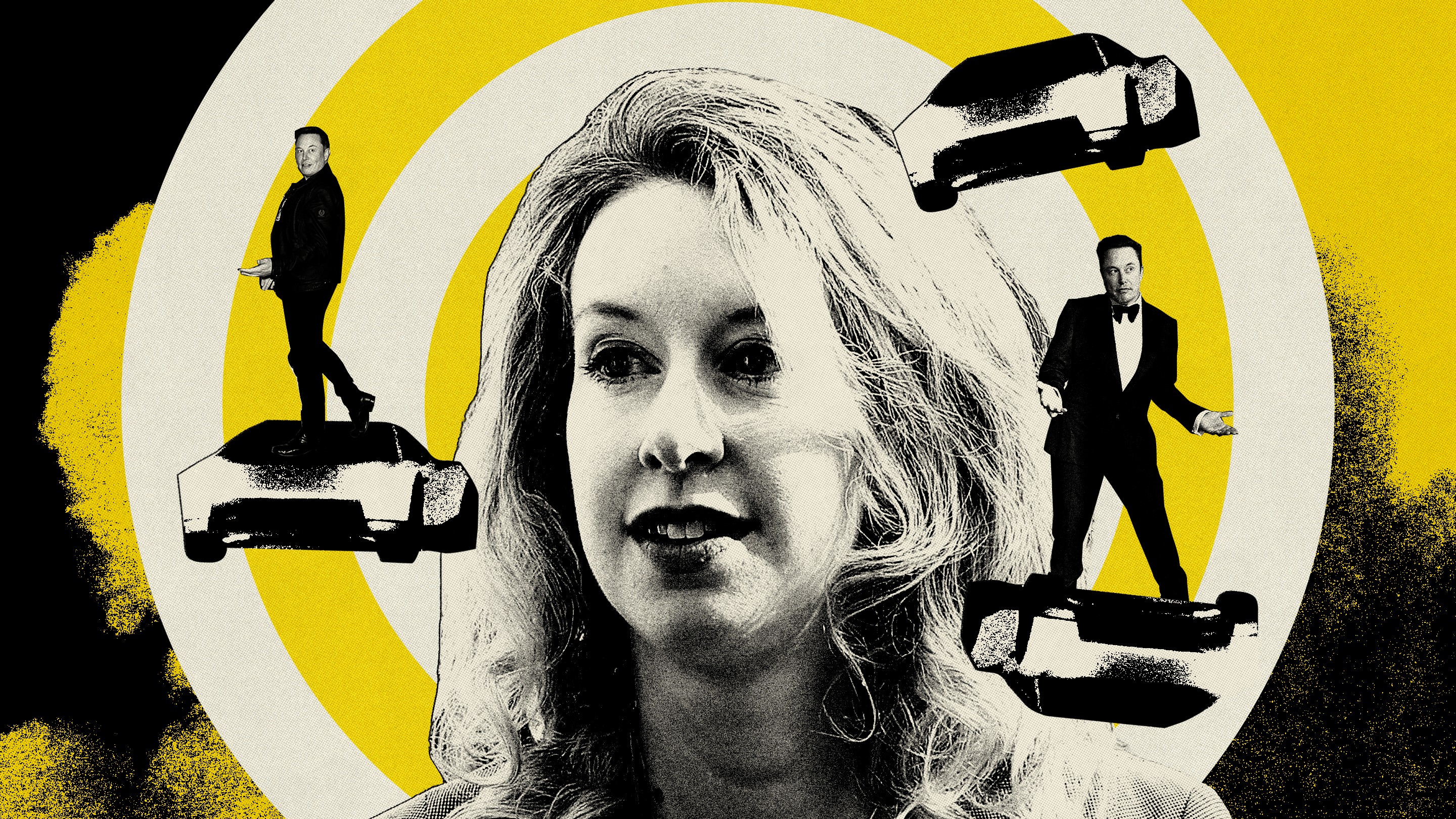
It was striking that, just after the initial public viewings of the Elizabeth Holmes documentary last Thursday, Elon Musk showcased an impressive demonstration of his own. In Texas, Musk unveiled a prototype of the Roadster, a vehicle that defied gravity. The company built a half-loop track, and the Roadster performed a series of daring maneuvers—climbing vertically, flipping, and gliding down—guided by air thrusters that ensured a safe landing.
The spectacle was undeniably impressive, yet I couldn't shake the feeling that my brain was grappling with the reality of what I was witnessing. Musk's history of grandiose claims adds an extra layer of uncertainty. "This will be an actual car on the roads," Musk proclaimed, drawing the headline he desired, but the question remains: will this car ever reach production?
There are reasons to doubt, as the roadster won't be manufactured until at least 2028 and features 10 thrusters powered by 600 liters of compressed air. The Roadster will be sold "invite-only," with an undoubtedly exorbitant price tag. While Musk isn't necessarily lying, he is making audacious assertions that require trust. A few days later, I found myself in a packed theater, watching the documentary "You Can See Everything," which delves into the life of Elizabeth Holmes and her husband, Billy Evans, the founders of Theranos.
In one scene, Holmes and Evans are trying to woo investors and talent to develop Theranos 2.0. This moment stands out as the only time in the film where the duo appears not consumed by existential dread. During their calls and virtual meetings, they spout jargon and display genuine excitement about what they can achieve if they "get the band back together."
At the conclusion of this sequence, when asked why she is spending her final days with her family building a company, Holmes responds that it is her destined path here on Earth. This is one of the few moments when I felt confident in her sincerity. Despite any doubts about her guilt, it became clear that her identity is deeply intertwined with her perception of herself as a builder—a high-agency, visionary type with a razor-sharp risk tolerance who creates things and isn't afraid to fail, because she is obsessively driven to push the limits of what's possible.
The film, which had the biggest opening for a documentary in over 20 years, is perfectly suited for our post-truth era. The filmmakers, Nathan Fielder and Lance Oppenheim, inundate the audience with unreliable narration, leaving viewers feeling like active participants in the film. It left me feeling exhilarated, slightly repulsed, and questioning my sanity.
This experience mirrors the challenges of navigating the informational landscape we all traverse. However, what most struck me about the film—more than the elusive nature of anyone or anything—is how Holmes's act and demeanor do not feel like an anomaly in 2026. In fact, her behavior embodies the prevailing ethos of Silicon Valley.
When she founded Theranos, Holmes was a college dropout with boundless ambition, emulating Steve Jobs. Jobs famously proclaimed, "People don't know what they want until you show it to them," and Holmes, like Jobs, projected an aura of someone ready to pull the future into the present by any means necessary. Jobs delivered on his promises, often keeping projects secret until they were ready for mass consumption.
Conversely, Holmes offered a fantastical version of a product that didn't exist, obscured actual capabilities, and lied about finances. She was not alone; numerous founders in hard tech industries presented fraudulent products at conferences, employing "faking it 'til you make it" as a strategy. The collapse of Theranos in 2018 did not extinguish the builder archetype.
If anything, the very fabric of Silicon Valley became more closely tied to the builder mindset. The concept of "fake it 'til you make it," provided the product remains hypothetical, has become a necessary outcome within an industry heavily reliant on venture capital, which often funds early-stage projects with unproven viability.
Consequently, VCs poured vast sums into half-baked ideas, overlooking failures and even celebrating them as necessary or instructive moments. In 2022, John Ganz highlighted how, in an industry driven by significant bets, the distinction between frauds and visionaries becomes increasingly blurred until everything unravels. "This is the Fyre Festival era of capitalism: outlandish promises and then a ludicrous debacle."
Much of this frenzied investment has been fueled by a culture increasingly gripped by the fear of missing out on the next industry-altering payout. The rush to invest has amounted to untold billions.
Written by urgent.news from The Atlantic's reporting — not their text. Machine-written — may contain errors; check the original before relying on it.