Where Atatürk’s legacy lives: Ankara, Baku, Nicosia
For Pakistan, Turkey is one of its closest countries: an ally, a partner, a country whose history is better known here than that of many others. But even a close country may not be known in its entirety. Turkey’s secularism is neither a borrowing nor a compromise, but the principle on which Mustafa Kemal Atatürk founded the republic and which was incorporated into its constitution in 1937. For…
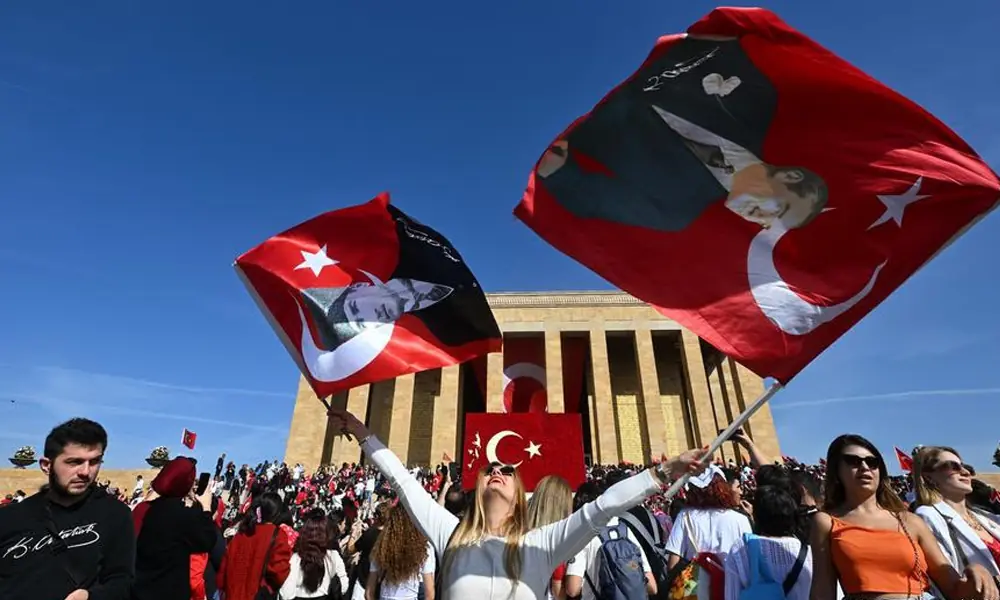
For the Muslim world, Turkey is one of its closest allies, a partner and a country whose history is better known than that of many others. Yet, even the closest ally may not be fully understood. The secularism of the Turkish Republic, established by Mustafa Kemal Atatürk, is not a borrowed principle or compromise, but the foundation on which the country was built, enshrined in its constitution in 1937.
This principle guided Turkish schools, universities and the civil service for seventy years. However, in recent years, a different tradition has emerged, a religious-conservative one, which has not always been remembered beyond Turkey's borders.
Recently, this older tradition resurfaced due to a dispute initiated by Azerbaijan, which approved uniform requirements for school dress in September 2026. The decision affected only public schools, but its discussion transcended these boundaries, most prominently in Turkey itself. In the country where the hijab is a common sight in schools, this reaction is understandable. However, it only reflects one of the two coexisting traditions within Turkey.
The other tradition deserves recognition. This is the tradition that was central to the establishment of the Turkish Republic and remains a significant part of its identity. Despite the lifting of restrictions on headscarves in universities and government institutions, the secular tradition persists. It is upheld by the Kemalist opposition, a substantial segment of academia, the judiciary and the military, and by a significant portion of society that views the secular state as an integral part of their national identity.
This ongoing debate was vividly illustrated by the events in Northern Cyprus, six months prior to the Azerbaijan incident. In April 2025, the Turkish Cypriot administration, which is allied with Turkey, permitted headscarves in public schools in upper secondary schools. This decision sparked the largest protests in Northern Cyprus' history, which culminated in a general strike and the election of Tufan Erhürman, leader of the secular opposition, as president in October.
Thus, Turkish Cypriots, a Turkic Muslim community under Turkey's protection and financial support, defended secular education in defiance of Ankara.
In response to the Azerbaijan decision, the ruling New Azerbaijan Party in Azerbaijan emphasized that 'one nation, two states' means one nation with two independent states, and neither has the right to interfere in the other's internal affairs. They reiterated that Azerbaijan is a secular state under its constitution and that the principle of individual faith and state education is enshrined in Turkey's constitution.
The party argued that the hijab should not be used as a political instrument, as it does not serve the unity of the Turkish people or the solidarity of the Muslim world.
Written by urgent.news from Business Recorder's reporting — not their text. Machine-written — may contain errors; check the original before relying on it.